Teotihuacan

Definition and stakes

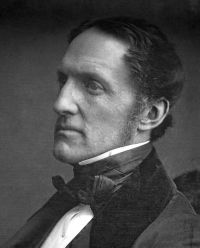
Portrait of William Hickling Prescott William Hickling Prescott,  The Conquest of Mexico (1922)

“ The monuments of San Juan Teotihuacan are, with the exception of the temple of Cholula, the most ancient remains, probably, on the Mexican soil. They were found by the Aztecs, according to their traditions, on their entrance into the country, when Teotihuacan, the habitation of the gods, now a paltry village, was a flourishing city, the rival of Tula, the great Toltec capital. The two principal pyramids were dedicated to Tonatiuh, the Sun, and Meztli, the Moon. ”
Source: Wikisource

Portrait of Guillermo Marín Ruiz Guillermo Marín Ruiz,  Translation:True History of the Profound Mexico (2010)

“ Thus, far from invoking coarse polytheistic beliefs, the Teotihuacan term evokes the concept of human divinity and points out that the city of the gods was nothing but the site where the snake miraculously learned to fly; that is, where the individual reaches the category of celestial being, from internal elevation." (Laurette Séjourné. 1957)
In fact, one of the great mysteries of history, not only in ancient Mexico, but of humanity itself, was the amazing and inexplicable disappearance of the Toltec in the Anahuac in less than one generation.
”
Source: Wikisource

Get perspective with Kwize: daily news enlightened by great literature