“ The marriage of Maurice to this little plebeian—this little female Croesus. Well, what of the argument—what?"Her manner is a little excited."I, for one, object to the marriage," says Margaret distinctly. "The child is too young and too rich! She should be given a chance; she should not be coerced and drawn into a mesh, as it were, without her knowledge.""A mesh? Do you call a marriage with my son a mesh?" asks Lady Rylton angrily. "He of one of the oldest families in England, and she a nobody!""There is no such thing as a nobody," says Miss Knollys calmly. ”
Lady Knollys
Definition and stakes
The theme of “Lady Knollys” has been addressed by authors such as James Young, Ruth Cranston, Sidney Lee, Anna Katharine Green and Various. It is often associated with terms like Knox, queen, John, Mary and England.
Quotes about “Lady Knollys”
 Warwick Deeping,
The King Behind the King
Warwick Deeping,
The King Behind the King
“ Knollys was in a playful mood.“It is not generous of us to set her to watch your beard grow, my son, yet she chose to come in that short cloak and her green hose. I can see petticoats in that big wallet strapped to the pad’s saddle. Sir Tristram and his lady! And no loving-cup needed!”Fulk was a little in the air, and had too much passion in him to be playful.“We owe her these heads on our shoulders.”“Tsst, lad! The girl is splendid. I would change with you, if I could. To start again on adventures in strange lands with such a mate to keep your blood afire! Ha! ”
1911 Encyclopædia Britannica, Volume 15… (1911)
“ In 1584 he introduced into the House of Commons, where since 1572 he had represented Oxfordshire, the bill legalizing the national association for Elizabeth’s defence, and he was treasurer of the royal household from 1572 until his death on the 19th of July 1596. His monument may still be seen in the church of Rotherfield Grays, Oxfordshire. Knollys was repeatedly free and frank in his objections to Elizabeth’s tortuous foreign policy ”
Sidney Lee, Dictionary of National Biography… (1892)
“ In October, when schemes for marrying Mary to an English nobleman were under consideration, Knollys proposed that his wife's nephew, George Carey, might prove a suitable match. In November the inquiry into Mary's misdeeds which had begun at York, was reopened at Westminster, and Knollys pointed out that he needed a larger company of retainers in order to keep his prisoner safe from a possible attempt at rescue. In December he was directed by Elizabeth to induce Mary to assent to her abdication of the Scottish throne. ”
Sidney Lee, Dictionary of National Biography… (1892)
“ About the same date he was granted the manors of Caversham in Oxfordshire and Cholsey in Berkshire. At the end of 1552 he visited Ireland on public business. The accession of Mary darkened Knollys's prospects. His religious opinions placed him in opposition to the government, and he deemed it prudent to cross to Germany. On his departure the Princess Elizabeth wrote to his wife a sympathetic note, expressing a wish that they would soon be able to return in safety (Green, Letters of Illustrious Ladies, iii. 278–9) . ”
 Anna Katharine Green,
Lost Man's Lane: A Second Episode in the Life of Amelia Butterworth
Anna Katharine Green,
Lost Man's Lane: A Second Episode in the Life of Amelia Butterworth
“ I had a light, but had I anything else in case William Knollys—but with this thought Miss Knollys's look and reassuring words recurred to me. "Whatever you may hear—if you hear anything—will have no reference to yourself and need not disturb you." ”
Sidney Lee, Dictionary of National Biography… (1892)
“ Before Mary's death he returned to England, and as a man ‘of assured understanding and truth, and well affected to the protestant religion,’ he was admitted to Elizabeth's privy council in December 1558 (Hayward, Annals, p. 12) . He was soon afterwards made vice-chamberlain of the household and captain of the halberdiers, while his wife and her sister—first cousins of Elizabeth—became women of the queen's privy chamber (Hatfield MSS. i. 158) . In 1560 Knollys's wife and son Robert were granted for their lives the manor of Taunton, part of the property of the see of Winchester. ”
John Richard Green, History of the English People, Volume IV
“ Her beauty, her exquisite grace of manner, her generosity of temper and warmth of affection, her frankness of speech, her sensibility, her gaiety, her womanly tears, her manlike courage, the play and freedom of her nature, the flashes of poetry that broke from her at every intense moment of her life, flung a spell over friend or foe which has only deepened with the lapse of years. Even to Knollys, the sternest Puritan of his day, she seemed in her later captivity to be "a notable woman." ”
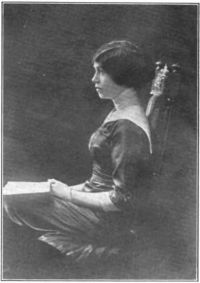 Ruth Cranston,
The unpretenders
(1916)
Ruth Cranston,
The unpretenders
(1916)
“ When she said that, Gladys-Marie looked up with a smile that did things to Knollys’s throat. A House!“Nollsie! Nollsie!” Before he could answer the little maid, some one called from the kitchen porch. “I’m going to make the icing now—you can come and help, if you like.” Looking up from the strawberry-patch, one could see Ellen, pink-cheeked and swayingly girlish in her blue cotton frock. “Why, Nollsie Verplanck!” As she caught sight of the overalls her laugh rang out as Knollys had almost forgotten it used to ring. “Whatever are you doing?” ”
Anna Katharine Green,
Lost Man's Lane: A Second Episode in the Life of Amelia Butterworth
“ I signified my satisfaction and perfect comprehension of his meaning, and, feeling that something important lay behind his words, I endeavored to make him speak more explicitly."The Misses Knollys show no terror of their home," I observed. "They cannot believe in spirits either.""Miss Knollys is a woman of a great deal of character," said he. "But look at Lucetta. There is a face for you, for a girl not yet out of her twenties ”
Various, Stories by American Authors, Volume 2
“ Mary Knollys!Human lives rarely look more than a year, or five, ahead; Mary Knollys looked five and forty. Many of us wait, and grow weary in waiting, for those few years alone, and for some living friend. Mary Knollys waited five and forty years—for the dead. Still, after that first year, she never wore all black; only silvery grays, and white with a black ribbon or two. I have said that she almost seemed to think her husband living. She would fancy his doing this and that with her ”
Sidney Lee, Dictionary of National Biography… (1892)
“ In that year Knollys fought a duel with his brother-in-law, Captain Philip Lawson, and killed him. He was arrested, and on 7 Dec. 1692 was indicted for murder under the style of ‘Charles Knollys, esq.’ He at once stated, in a petition to the House of Lords, that as Earl of Banbury he was entitled to a trial by his peers. On 9 Jan. 1692-3 the lords heard arguments for and against the plea. Finch and Sir Thomas Powis represented Knollys, while Sir John Somers, attorney-general, appeared for the crown and resisted his pretensions. ”
Various, Stories by American Authors, Volume 2
“ There was a plain stone in the little Surrey churchyard, now gray and moss-grown with the rains of forty years, on which you remember reading: “Charles Knollys—lost in Carinthia”——This was all she would have inscribed; he was but lost; no one knew that he was dead. Was he not yet to be found? There was no grassy mound beside it; the earth was smooth. Not even the date was there. But Mrs. Knollys never went to read it. She waited until he should come ”
Anna Katharine Green,
Lost Man's Lane: A Second Episode in the Life of Amelia Butterworth
“ How could he have hoped to find any clue to such a mystery as he is engaged to unearth, in a house presided over by Miss Knollys?""How could he, indeed! Yet," I added, determined to allay this man's suspicions, which, notwithstanding the openness of his remark, were still observable in his tones, "you say that with an air I should hardly expect from so good a neighbor and friend. Why is this, Mr. Trohm? Surely you do not associate crime with the Misses Knollys?""Crime? Oh, no, certainly not. No one could associate crime with the Misses Knollys. ”
Ruth Cranston,
The unpretenders
(1916)
“ Knollys—couldn’t we—don’t you think we might pretend it’s ten years ago? Don’t you think we might start over and be just plain married people?”And Gladys-Marie, coming round the corner of the porch just in time to see Knollys’s answer, stole noiselessly back into the house with Marmaduke. ”
Sidney Lee, Dictionary of National Biography… (1892)
“ But while lamenting his occupation, Knollys conscientiously endeavoured to convert his prisoner to his puritanic views, and she read the English prayer-book under his guidance. In his discussions with her he commended so unreservedly the doctrines and forms of Geneva that Elizabeth, on learning his line of argument, sent him a sharp reprimand. Knollys, writing to Cecil in self-defence, described how contentedly Mary accepted his plain speaking on religious topics (8 Aug. 1568) . Mary made in fact every effort to maintain good relations with him. ”
Anna Katharine Green,
Lost Man's Lane: A Second Episode in the Life of Amelia Butterworth
“ Gryce turned towards us, changing his whole appearance as he advanced, till no one could look more cheerful and good-humored."Well, that is over," he sighed, with a forced air of infinite relief. "Mere form, Mr. Knollys—mere form. We have to go through these pretended investigations at times, and good people like yourself have to submit; but I assure you it is not pleasant, and under the present circumstances—I am sure you understand me, Mr. Knollys—the task has occasioned me a feeling almost of remorse; but that is inseparable from a detective's life. ”
Henry Knollys, Dictionary of National Biography… (1892)
“ Notwithstanding his disappointment, he resumed his labours at Aldershot with undiminished energy. Although Lord Hardinge was then commander-in-chief, the principal moving spirit in the English army, as regarded the practical training of the troops, was Prince Albert, and from him Knollys received the most encouraging support against the ill-will and obstruction of which Aldershot, at that time unpopular with the public, was the object. The queen and prince consort were frequent residents for days together at the Pavilion. Success exceeded expectation. ”
Obituary: Sir Henry Knollys, K.C.V.O. (1930)
“ Henry Knollys was born on June 20, 1840, was educated at Westminster School, and joined the Royal Artillery from Woolwich in 1860. He was on the staff of General Sir James Scarlett and of General Sir Hope Grant, and was subsequently Brigade Major, R.A., Aldershot, and D.A.Q.M.G., Northern District. From 1889 to 1891 he commanded the R.A. in South Africa. ”
Sidney Lee, Dictionary of National Biography… (1892)
“ In May 1568 Mary Queen of Scots fled to England, and flung herself on Elizabeth's protection. She had found refuge in Carlisle Castle, and the delicate duty of taking charge of the fugitive was entrusted jointly to Knollys and to Henry Scrope, ninth baron Scrope. On 28 May Knollys arrived at the castle, and was admitted to Mary's presence. At his first interview he was conscious of Mary's powerful fascination. ”
James Young, The Unchastened Woman (1925)
“ When Aunt Susan came... "I don't blame you, dear—but why not tell Hubert your precious secret and—" "I refuse to bargain for his loyalty and faithfulness—he's forfeited his right to know." "But it's madness to leave him here with that Madden person!" "Then there's method in my madness!" "I shall find a way to make him suffer—as I have suffered." "Mr. Knollys was so busy—he sent me up with your tickets." "You have meant so much to Mr. Knollys—I want to give you this almost new frock!" "Why are you so kind to me, Mrs. Knollys?" "Virtue has its own reward, dear——among women." ”
Various, Stories by American Authors, Volume 2
“ All this would be vindication of his father’s science. Splüthner, too, was a very old [Pg 88] man, and Zimmermann the younger (for even he was no longer young) was fearful lest Splüthner should not live to witness his own refutation. The woman and the man never spoke to each other.Alas, no one could have known Mrs. Knollys for the fair English girl who had been there in the young days of the century; not even the innkeeper, had he been there. But he, too, was long since dead. Mrs. Knollys was now bent and white-haired; she had forgotten, herself, how she had looked in those old days. ”
Warwick Deeping,
The King Behind the King
“ Knollys had not spoken, but had watched and listened. He came forward now, and spoke in Salisbury’s ear.“Love fires the blood, sir. There is a man’s heart in his words. Leave me alone with him.”They went out, Cavendish remaining on guard outside the door.Knollys walked to the window and laid a hand on Fulk’s shoulder.“Lad, speak out; it is a woman.”Fulk did not stir.“True, a woman. I thought her dead. I saw her—living—to-day.”“Isoult—Isoult of the Rose? She who——?”“Isoult—aye, Isoult. In the hands of these scullions! God—I’ll not suffer it! ”
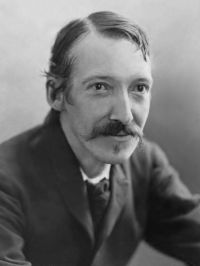 Robert Louis Stevenson,
The Works of Robert Louis Stevenson - Swanston Edition…
Robert Louis Stevenson,
The Works of Robert Louis Stevenson - Swanston Edition…
“ He has been tacking indeed, and he has indeed been seeking the favour of a queen; but what man ever sought a queen’s favour with a more virtuous purpose, or with as little courtly policy? The question of consistency is delicate, and must be made plain. Knox never changed his opinion about female rule, but lived to regret that he had published that opinion. Doubtless he had many thoughts so far out of the range of public sympathy, that he could only keep them to himself, and, in his own words, bear patiently with the errors and imperfections that he could not amend. ”
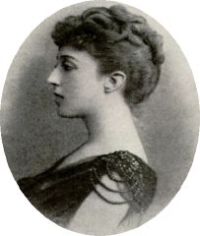 Martin Ross,
Some Experiences of an Irish R.M
Martin Ross,
Some Experiences of an Irish R.M
“ Animals and children are, as a rule, alike destructive to conversation; but Mrs. Knox, when she chose, bien entendu, could have made herself agreeable in a Noah's ark, and Philippa has a gift of sympathetic attention that personal experience has taught me to regard with distrust as well as respect, while it has often made me realise the worldly wisdom of Kingsley's injunction: "Be good, sweet maid, and let who will be clever." Family prayers, declaimed by Mrs. Knox with alarming austerity, followed close on breakfast, Philippa and a vinegar-faced henchwoman forming the family. ”
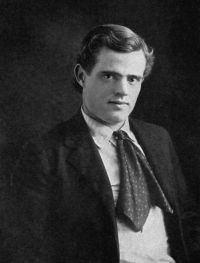 Jack London,
Theft: A Play In Four Acts
Jack London,
Theft: A Play In Four Acts
“ He is very liable to be here this afternoon, any time, now. (Connie displays irritation at Margaret.) Starkweather (Continuing imperturbably.) Your house—you, my daughter, and the wife of Senator Chalmers. As I said, I have not interfered with you since your marriage. But this Knox affair transcends household arrangements. It is of political importance. The man is an enemy to our class, a firebrand. Why do you have him here? Margaret Because I like him. Because he is a man I am proud to call "friend." Because I wish there were more men like him, many more men like him, in the world. ”
Martin Ross,
Some Experiences of an Irish R.M
“ That young Knox hasn't a notion how to draw these woods." "Well, the best run we had last year out of this place was with Flurry's hounds," struck in Miss Sally, sole daughter of Sir Valentine's house and home, from her place half-way down the table. It was not difficult to see that she and her mother held different views on the subject of Mr. Flurry Knox. "I call it a criminal thing in any one's great-great-grandfather to rear up a preposterous troop of sons and plant them all out in his own country," Lady Knox said to me with apparent irrelevance. "I detest collaterals. ”
“ And this arbitrary power of one man became, if possible, a little more absurd when it happened to be the power of one woman. In 1557, Knox had found himself confronted with a Queen of England, a Queen of Scotland, and a Queen-Regent in Scotland—all of them ladies immersed in Catholicism, and each in a position which, in his view, implied the duty of selecting religion for all her lieges. We, in our time, have a very simple way of getting rid of such an intolerable difficulty. But in that age a man even of the boldness of Knox was thankful to mitigate it. ”
 Henry Glassford Bell,
Life of Mary Queen of Scots, Volume 1…
Henry Glassford Bell,
Life of Mary Queen of Scots, Volume 1…
“ Knox’s History of the Reformation, p. 287, & seq.—Keith, p. 188. It is worth observing, that Knox is the only person who gives us any detailed account of these interviews, and he, of course, represents them in as favourable a light for himself as possible. “The report,” says Randolph, “that Knox hath talked with the Queen, maketh the Papists doubt what will become of the world.”—“I have been the more minute in the narrative of this curious conference,” says M’Crie, “because it affords the most satisfactory refutation of the charge that Knox treated Mary with rudeness and disrespect.” ”
Henry Glassford Bell,
Life of Mary Queen of Scots, Volume 1…
“ Knox’s answer is characteristic, and does him credit, “Why should the pleasing face of a gentlewoman affray me? I have looked in the faces of many angry men, and yet have not been afraid above measure.”The third time that Knox was admitted into Mary’s presence was at Loch Leven. This, as indeed every interview she had with the celebrated Reformer, and she had only four, exhibits her character in a very favourable point of view. It appears, that whilst the Queen reserved [Pg 171] for herself the right of celebrating mass in her own chapel, it was prohibited throughout the rest of the kingdom. ”

