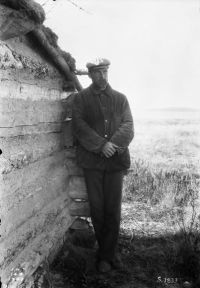
 James William Tyrrell,
Across the sub-Arctics of Canada
(1898)
James William Tyrrell,
Across the sub-Arctics of Canada
(1898)
“ North shore of Lake Athabasca.The sandy eskers near Hinde and Boyd lakes were thinly covered with fine large trees of this species. Groves of large trees were also growing on the wet but well drained flats or slopes beside the Telzoa River down to within a short distance of Tobaunt Lake. Many large drifted trunks were also found at the Forks below this lake. Its northern [266] limit on the shore of Hudson Bay is at Little Seal River, north of Fort Churchill, where it replaces the preceding species in the wet swamps near the shore.—J. B. T.155. ”