Maine woods

Definition and stakes

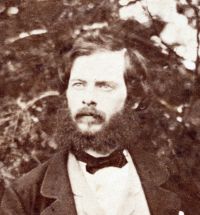
Portrait of Henry David Thoreau Henry David Thoreau,  The Maine Woods (1864)

“ What is most striking in the Maine wilderness is the continuousness of the forest, with fewer open intervals or glades than you had imagined. Except the few burnt-lands, the narrow intervals on the rivers, the bare tops of the high mountains, and the lakes and streams, the forest is uninterrupted. It is even more grim and wild than you had anticipated, a damp and intricate wilderness, in the spring everywhere wet and miry. ”
Source: Wikisource

Portrait of Henry David Thoreau Henry David Thoreau,  The Maine Woods

“ The earth is comparatively bare and smooth and dry. The most primitive places left with us are the swamps, where the spruce still grows shaggy with usnea. The surface of the ground in the Maine woods is everywhere spongy and saturated with moisture. I noticed that the plants which cover the forest floor there are such as are commonly confined to swamps with us,—the Clintonia borealis, orchises, creeping snowberry, and others; and the prevailing aster there is the Aster acuminatus, which with us grows in damp and shady woods. ”
Source: Gutenberg

Portrait of Henry David Thoreau Henry David Thoreau,  The Maine Woods (1864)

“ Within a dozen miles of Bangor we passed through the villages of Stillwater and Oldtown, built at the falls of the Penobscot, which furnish the principal power by which the Maine woods are converted into lumber. The mills are built directly over and across the river. Here is a close jam, a hard rub, at all seasons; and then the once green tree, long since white, I need not say as the driven snow, but as a driven log, becomes lumber merely. ”
Source: Wikisource

Get perspective with Kwize: daily news enlightened by great literature