Mappila

Definition and stakes

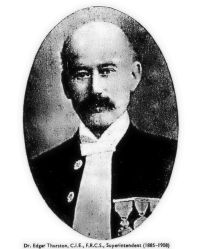
Portrait of Edgar Thurston Edgar Thurston,  Castes and Tribes of Southern India (1909)

“ The islanders generally dress like ordinary Māppilas. The Mēlāc'cheris, however, may use only a coarser kind of cloth, and they are not allowed intermarriage with the other classes. If any such marriage takes place, the offender is put out of caste, but the marriage is deemed a valid one. The current tradition is that these Laccadive Māppilas were originally the inhabitants of Malabar — Nambūdiris, Nāyars, Tiyyas, etc. — who went in search of Chēraman Perumāl when the latter left for Mecca, and were wrecked on these islands. ”

Source: Wikisource

Portrait of Edgar Thurston Edgar Thurston,  Castes and Tribes of Southern India (1909)

“ In order further to enlist the sympathies of the people, extensive charities have been organised. Sixteen branches of the Sabha have been opened all over South Malabar and the States of Travancore and Cochin. A very large number of domestic quarrels — divorce cases, partition cases, etc. — have been settled by arbitration through these branch associations. It is an immense power for good."
The Māppillas have been summed up, as regards their occupations, as being traders on the coast, and cultivators in the interior, in both of which callings they are very successful and prosperous.
”
Source: Wikisource

J. Theodore Bent,  The ruined cities of Mashonaland… (1892)

“ Mapanda’s is, indeed, a sorry place: not a tree to give one shade, only a store or two, built of that unsightly corrugated iron so much beloved by the early colonists of South Africa, and a few daub huts. It is a paradise only for those who arrive weary and worn from the interior, and for the sportsman, affording him a pied-à-terre in the very midst of the land where ‘the deer and the antelope roam.’ It has, however, certain points on which it justly prides itself. ”
Source: Gutenberg

Get perspective with Kwize: daily news enlightened by great literature