
“ They belong to the class which admits of more, Socrates; for pleasure would not be perfectly good if she were not infinite in quantity and degree. SOCRATES: Nor would pain, Philebus, be perfectly evil. And therefore the infinite cannot be that element which imparts to pleasure some degree of good. But now—admitting, if you like, that pleasure is of the nature of the infinite—in which of the aforesaid classes, O Protarchus and Philebus, can we without irreverence place wisdom and knowledge and mind? ”
Philebus
Definition and stakes
The Philebus, a Platonic dialogue, examines the nature of pleasure, the good, and the hierarchy of knowledge. Plato questions whether pleasure represents the highest good, contrasting it with wisdom and reason, while Benjamin Jowett emphasizes its division of sciences into practical and theoretical domains.
Other interpreters, such as Matthew Henry, associate the theme with moral and spiritual contemplation, though their attention often turns to related works like Philemon. The dialogue’s metaphysical depth and logical precision, as observed in selected passages, demonstrate its lasting impact on philosophical discussion.
Quotes about “Philebus”
Benjamin Jowett, Statesman (Jowett) — Introduction
“ We shall find, in the Philebus, a division of sciences into practical and speculative, and into more or less speculative: here we have the idea of master-arts, or sciences which control inferior ones. Besides the supreme science of dialectic, 'which will forget us, if we forget her,' another master-science for the first time appears in view--the science of government, which fixes the limits of all the rest. ”
“ On other subjects of which they treat in common, such as the nature and kinds of pleasure, true and false opinion, the nature of the good, the order and relation of the sciences, the Republic is less advanced than the Philebus, which contains, perhaps, more metaphysical truth more obscurely expressed than any other Platonic dialogue. ”
“ PROTARCHUS: That seems to be very near the truth, Socrates. Happy would the wise man be if he knew all things, and the next best thing for him is that he should know himself. Why do I say so at this moment? I will tell you. You, Socrates, have granted us this opportunity of conversing with you, and are ready to assist us in determining what is the best of human goods. For when Philebus said that pleasure and delight and enjoyment and the like were the chief good, you answered--No, not those, but another class of goods ”
1911 Encyclopædia Britannica, Volume 21… (1911)
“ With this most serious inquiry there is combined (as in the Sophistes and Politicus) an ironical and controversial use of dialectic, by which the juggler and false pretender (who is in this case the goddess of pleasure) , after claiming the highest place, is thrust down to the lowest. It must be admitted that the style of the Philebus is far from brilliant, or even clear. In the effort of connecting abstractions Plato's movement is more laboured than in his first glad realization of them. ”
Rachel Harriette Busk, Roman Legends: A collection of the fables and folk-lore of Rome
“ Padre Filippo was walking one day through the streets of Rome when he saw a great crowd very much excited. ‘What’s the matter?’ asked ‘good Philip.’‘There’s a man in that house up there beating his wife fit to kill her, and for nothing at all, for she’s an angel of goodness. Nothing at all, but because she’s so ugly.’Padre Filippo waited till the husband was tired of beating her and had gone out, and all the crowd had dispersed. Then he went up to the room where the poor woman lived, and knocked at the door. ”
Matthew Henry, Commentary on the Whole Bible… (1700s)
“ The apostle's thanksgiving and prayer for Philemon are here set forth by the object, circumstance, and matter of them, with the way whereby much of the knowledge of Philemon's goodness came to him. 1. Here is the object of Paul's praises and prayers for Philemon: I thank my God, making mention of thee in my prayers, v. 4. Observe, (1.) God is the author of all the good that is in any, or that is done by them. ”
Matthew Henry, Commentary on the Whole Bible… (1700s)
“ Philemon, the master of Onesimus, was the principal, to whom the letter is inscribed, the head of the family, in whom were the authority and power of taking in or shutting out, and whose property Onesimus was: with him therefore chiefly lay the business. To Philemon our dearly beloved, and fellow-labourer; a good man he was, and probably a minister, and on both accounts dearly beloved by Paul. A lover of good men is one property of a good minister (Tit. i. 8) , and especially must such love those who labour with them in the work of the gospel, and who are faithful therein. ”
The World English Bible — Philippians
“ In everything and in all things I have learned the secret both to be filled and to be hungry, both to abound and to be in need. 13 I can do all things through Christ, who strengthens me. 14 However you did well that you shared in my affliction. 15 You yourselves also know, you Philippians, that in the beginning of the Good News, when I departed from Macedonia, no assembly shared with me in the matter of giving and receiving but you only. ”
Matthew Henry, Commentary on the Whole Bible… (1700s)
“ He will gladly do Philip the honour to take him into the coach with him, if Philip will do him the favour to expound a portion of scripture to him. Note, In order to our right understanding of the scripture, it is requisite we should have some one to guide us; some good books, and some good men, but, above all, the Spirit of grace, to lead us into all truth. ”
Matthew Henry, Commentary on the Whole Bible… (1700s)
“ Good thoughts and expectations of us more strongly move and engage us to do the things expected from us. The apostle knew Philemon to be a good man, and was thence persuaded of his readiness to do good, and that not in a scanty and niggardly manner, but with a free and liberal hand. Observe, Good persons will be ready for good works, and not narrow and pinching, but abundant in them. ”
Matthew Henry, Commentary on the Whole Bible… (1700s)
“ The communion of saints does not destroy distinction of property: Onesimus, now converted, and become a brother beloved, is yet Philemon's servant still, and indebted to him for wrongs that he had done, and not to be discharged but by free and voluntary remission, or on reparation made by himself, or some other in his behalf, which part, rather than fail, the apostle undertakes for him. [2.] Suretiship is not in all cases unlawful, but in some is a good and merciful undertaking. ”
Matthew Henry, Commentary on the Whole Bible… (1700s)
“ How tenderly does Paul here speak! Not that Onesimus's sin was small, nor that he would have any, much less himself, to take it so; but having been humbled for it, and doubtless taken shame to himself on account thereof, the apostle now would not sink his spirit by continuing to load and burden him therewith, but speaks thus tenderly when he is pleading with Philemon not to make severe reflections on his servant's misconduct, but to forgive. (2.) What happy changes conversion makes—of evil good! of unprofitable useful! Religious servants are a treasure in a family. ”
Matthew Henry, An Exposition of the Old and New Testament (1828)
“ That is all the account given us of Philip's sermon, because it was the same in effect with Peter's sermons, which we have had before. The business of gospel-ministers is to preach Jesus, and that is the preaching that is likely to do good. It is probable that Philip had now occasion for his gift of tongues, that he might preach Christ to this Ethiopian in the language of his own country. And here we have an instance of speaking of the things of God, and speaking of them to good purpose, not only as we sit in the house, but as we walk by the way, according to that rule, Deut 6. ”
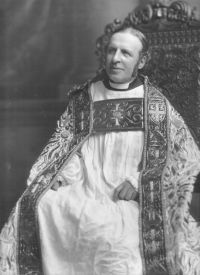 H. C. G. Moule,
Philippian Studies
H. C. G. Moule,
Philippian Studies
“ His love is still the same.'"May the Spirit bring home to our spirit this great witness of the Epistle; it has its perfect adaptation to each heart, to every life, to every hour."Then hereafter we shall give God thanks yet better for 'Philippians,' as we too enter, late or soon, into that world where the Apostle, and Timotheus, and Epaphroditus, and Euodia, and Syntyche, and Clement, and the saints of Caesar's household, have so long beheld the Lord. In that land of light we, who have believed, shall rest with them. ”
Matthew Henry, Commentary on the Whole Bible… (1700s)
“ Archippus was a minister in the church of Colosse, Philemon's friend, and probably co-pastor with him; Paul might think him one whom Philemon would advise with, and who might be capable of furthering the good work of peace-making and forgiveness, and therefore might judge fit to put him in the inscription of the letter, with the adjunct of fellow-soldier. He had called Philemon his fellow-labourer. Ministers must look on themselves as labourers and soldiers, who must therefore take pains, and endure hardship; they must stand on their guard, and make good their post ”
 Origen,
Ante-Nicene Fathers Vol. IV, Origen…
(1885)
Origen,
Ante-Nicene Fathers Vol. IV, Origen…
(1885)
“ Moreover, that these words, “He that hath seen Me, hath seen the Father who sent Me,” are not to be taken in their grosser sense, is plain from the answer which He gave to Philip, “Have I been so long time with you, and yet dost thou not know Me, Philip?” after Philip had asked, “Show us the Father, and it sufficeth us.” He, then, who perceives how these words, “The Word was made flesh,” are to be understood of the only-begotten Son of God, the first-born of all creation, will also understand how, in seeing the image of the invisible God, we see “the Creator and Father of the universe.” ”
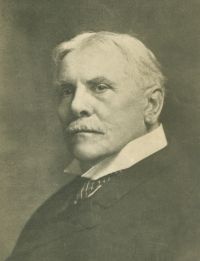 Cyrus Ingerson Scofield,
Scofield Reference Bible Notes…
(1800s)
Cyrus Ingerson Scofield,
Scofield Reference Bible Notes…
(1800s)
“ The theme of Philippians is Christian experience. Soundness of doctrine is assumed. There is nothing in church order to set right. Philippi is a normal New Testament assembly--"saints in Christ Jesus, with the bishops (elders) and deacons." The circumstances of the apostle are in striking contrast with his Christian experience. As to the former, he was Nero's prisoner. As to the latter, there was the shout of victory, the paean of joy. Christian experience, he would teach us, is not something which is going on around the believer, but something which is going on within him. ”
“ The first of Plato's categories or elements is the infinite. This is the negative of measure or limit; the unthinkable, the unknowable; of which nothing can be affirmed; the mixture or chaos which preceded distinct kinds in the creation of the world; the first vague impression of sense; the more or less which refuses to be reduced to rule, having certain affinities with evil, with pleasure, with ignorance, and which in the scale of being is farthest removed from the beautiful and good. To a Greek of the age of Plato, the idea of an infinite mind would have been an absurdity. ”
1911 Encyclopædia Britannica, Volume 21… (1911)
“ According to Polycrates, bishop of Ephesus, in his controversial letter written to Victor of Rome towards the end of the 2nd century (ap Euseb. H. E., iii. 31, v 24) , the graves of Philip “of the twelve apostles,” and of his two aged virgin daughters were in (the Phrygian) Hierapolis; a third daughter, “who had lived in the Holy Ghost,” was buried at Ephesus. With this may be compared the testimony of Clement of Alexandria, who incidentally (Strom. iii 6) speaks of “Philip the Apostle” as having begotten children and as having given daughters in marriage. ”
 Philip Schaff,
Ante-Nicene Fathers Vol. VIII, Apocrypha of the New Testament…
(1885)
Philip Schaff,
Ante-Nicene Fathers Vol. VIII, Apocrypha of the New Testament…
(1885)
“ The philosophers say: Who is it that thou callest thy Lord? Philip says: My Lord is Jesus in heaven. And they said to him: Show him to our comprehension without envy, that we also may believe in him. And Philip said: He with whom I am about to make you acquainted as Lord, is above every name; there is no other. ”
“ And he desired Philip that he would come up and sit with him. The place of the scripture which he read was this, He was led as a sheep to the slaughter; and like a lamb dumb before his shearer, so opened he not his mouth: in his humiliation his judgment was taken away: and who shall declare his generation? for his life is taken from the earth. And the eunuch answered Philip, and said, I pray thee, of whom speaketh the prophet this? of himself, or of some other man? Then Philip opened his mouth, and began at the same scripture, and preached unto him Jesus. ”
 Justin Martyr,
Ante-Nicene Fathers — On the Sole Government of God
(1885)
Justin Martyr,
Ante-Nicene Fathers — On the Sole Government of God
(1885)
“ But many of us mortals err in heart, And set up, for a solace in our woes, Images of the gods in stone and brass, Or figures carved in gold or ivory; And, furnishing for these, our handiworks, Both sacrifice and rite magnificent, We think that thus we do a pious work.”And Philemon also, who published many explanations of ancient customs, shares in the knowledge of the truth; and thus he writes:—“Tell me what thoughts of God we should conceive? One, all things seeing, yet Himself unseen.” ”
“ There have been many reasons why not only Plato but mankind in general have been unwilling to acknowledge that 'pleasure is the chief good.' Either they have heard a voice calling to them out of another world; or the life and example of some great teacher has cast their thoughts of right and wrong in another mould; or the word 'pleasure' has been associated in their mind with merely animal enjoyment. They could not believe that what they were always striving to overcome, and the power or principle in them which overcame, were of the same nature. ”
 Robert Rainy,
The Expositor's Bible: The Epistle to the Philippians
Robert Rainy,
The Expositor's Bible: The Epistle to the Philippians
“ For every Christian and for every Christian community much depends on the shaping influence of the providences of life. The Apostle, therefore, must have regard to the circumstances of the Philippians. We are all ready, commonly, to exert ourselves, as we say, to "improve our circumstances"; and, in one view, it is natural and fitting enough. Yet it is of more importance—much more—that in the circumstances as they stand we should bear ourselves in a manner worthy of the gospel. ”
Phileas, Ante-Nicene Fathers Vol. VI, The Epistle of the Same Phileas of Thmuis to Meletius… (1885)
“ And thou wert not persuaded to delay such procedure or restrain thy purpose readily even by the word of the Apostle Paul, the most blessed seer, [10] and the man who put on Christ, who is the Christ of all of us no less; for he, in writing to his dearly-beloved son Timothy, says: “Lay hands suddenly on no man, neither be partaker of other men’s sins.” [11] And thus he at once shows his own anxious consideration for him, [12] and gives him his example and exhibits the law according to which, with all carefulness and caution, parties are to be chosen for the honour of ordination. ”
Matthew Henry, Commentary on the Whole Bible… (1700s)
“ Jesus Christ finds us, and by his grace works a change in us, and then intercedes for us with the Father, that we may be received into his favour and family again, and past offences may be forgiven; and we are sure that the Father heareth him always. There is no reason to doubt but Paul prevailed with Philemon to forgive and receive Onesimus: and more reason have we to be confident that the intercession of Christ with the Father is prevalent for the acceptance of all whose case he takes in hand and recommends to him. From these general observations we come to the epistle itself. ”
H. C. G. Moule,
Philippian Studies
“ Looking at the other Epistles, each with its own divine and also deeply human characteristics, we find Philippians more peaceful than Galatians, more personal and affectionate than Ephesians, less anxiously controversial than Colossians, more deliberate and symmetrical than Thessalonians, and of course larger in its applications than the personal messages to Timothy, Titus, and Philemon. ”
“ Here is one absurdity, and not the only one, to which the friends of pleasure are reduced. For is there not also an absurdity in affirming that good is of the soul only; or in declaring that the best of men, if he be in pain, is bad? ”
“ SOCRATES: Why, I shall reply, that dissimilar as they are, you apply to them a new predicate, for you say that all pleasant things are good; now although no one can argue that pleasure is not pleasure, he may argue, as we are doing, that pleasures are oftener bad than good; but you call them all good, and at the same time are compelled, if you are pressed, to acknowledge that they are unlike. And so you must tell us what is the identical quality existing alike in good and bad pleasures, which makes you designate all of them as good. ”
Cyrus Ingerson Scofield,
Scofield Reference Bible Notes…
(1800s)
“ Read first chapter of Philemon The Epistle of Paul the Apostle to Philemon WRITER: The Apostle Paul ( 1:1) DATE: Probably A.D. 64. It is one of the Prison Epistles. See Introductions to Ephesians and Colossians. THEME: Onesimus ("profitable") , a slave of Philemon, a Christian of Colosse, had robbed his master and fled to Rome. There he became a convert through Paul, who sent him back to Philemon with this letter. It is of priceless value as a teaching (1) in practical righteousness; (2) in Christian brotherhood; (3) in Christian courtesy; (4) in the law of love. ”
