Saint Olaf

Definition and stakes

The Junior Classics, Volume 7: Stories of Courage and Heroism

“ The people, sorrowful at their rebellion against King Olaf, forgot his stern and cruel ways, and magnified all his good deeds so mightily that he was at last declared a saint, and the shrine of Saint Olaf is still one of the glories of the old cathedral in Drontheim. And, after King Magnus died, his descendants ruled Norway for nearly four hundred years; and thus was brought to pass the promise of the dream that, in the "fore-hold" of the great dragon-ship, under the walls of old Bordeaux, came so many years before to the daring and sturdy young Olaf of Norway, the boy viking. ”
Source: Gutenberg

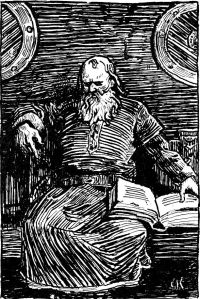
Portrait of Snorri Sturluson Snorri Sturluson,  Heimskringla; Or, The Chronicle of the Kings of Norway

“ Saint Olaf was thirty-five years old when he fell, according to what Are Frode the priest says, and he had been in twenty pitched battles. So says Sigvat the skald:—
"Some leaders trust in God—some not; Even so their men; but well I wot God-fearing Olaf fought and won Twenty pitched battles, one by one, And always placed upon his right His Christian men in a hard fight. May God be merciful, I pray, To him—for he ne'er shunned his fray."
We have now related a part of King Olaf's story, namely, the events which took place while he ruled over Norway
”
Source: Gutenberg

Portal:The Folk-Lore Society,  Folk-Lore (1910)

“ Just as people in old days believed that Thor could grant good harvests, so even in the nineteenth century they have supposed Olaf to be in possession of the same power. Stories from the south of Sweden and from Denmark tell how the peasants were wont to drag the image of Saint Olaf round the fields after the sowing. The image of Saint Olaf in Vånga church in Vestergötland was carried round in that way, in spite of vigorous protests from the clergy. The peasants had given it the name of the "corn god." ”
Source: Wikisource

Get perspective with Kwize: daily news enlightened by great literature