Thomas Armstrong

Definition and stakes

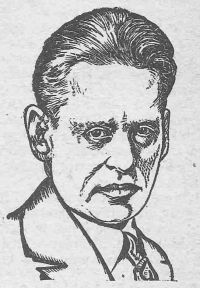
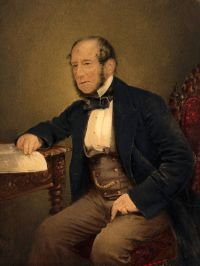
Portrait of George W. M. Reynolds George W. M. Reynolds,  The Mysteries of London, v. 1/4

“ I am the friend of my fellow-countrymen and my fellow-creatures: the upright and the enlightened denominate me a philanthropist: my enemies denounce me as a disturber of the public peace, a seditious agitator, and a visionary. You have undoubtedly heard of Thomas Armstrong?"
"I have not only heard of you, sir," said Richard, surveying the great Republican writer with profound admiration and respect, "but I have read your works and your essays with pleasure and interest."
”
Source: Gutenberg

Thomas Finlayson Henderson,  Dictionary of National Biography… (1885)

“ While tutor in a family in Edinburgh, Armstrong pursued the theological studies necessary to qualify him to become a preacher in the church of Scotland, but in 1790 he removed to London, where he obtained employment on one of the daily papers at a small weekly salary. In 1791 he published a collection of poems, under the title 'Sonnets from Shakspeare.' His literary prospects continued gradually to improve, and he was in receipt of a considerable income, when his health began suddenly to give way. He retired to Leith, where he died of a rapid decline, July 21, 1797. ”
Source: Wikisource

Portrait of Henry Adams Henry Adams,  History of the United States 1801-09… (1909)

“ In forwarding these documents to Washington, Armstrong expressed in plain language his opinion of Napoleon and Champagny. "With one hand they offer us the blessings of equal alliance against Great Britain; with the other they menace us with war if we do not accept this kindness; and with both they pick our pockets with all imaginable diligence, dexterity, and impudence." Armstrong's patience was exhausted. He besought the Government to select its enemy, either France or England; but "in either case do not suspend a moment the seizure of the Floridas." ”
Source: Wikisource

Get perspective with Kwize: daily news enlightened by great literature