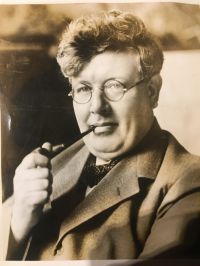
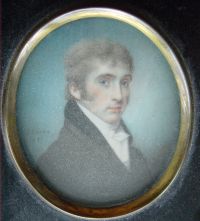
“ A fort had been built at the mouth of the Richelieu, a small trading settlement existed at Three Rivers, and Maisonneuve had laid the foundations of Montreal. Between Quebec and these new centres of population there was more or less intercourse, and the river bore up and down the vessels of fur-trader and merchant, priest and soldier. The St. Lawrence was the highway of commerce, the path of the missionary, the road of war, and the one and only means of communication for the scattered colonists. Up stream came warlike expeditions against the troublesome Iroquois ”
Three Rivers, Quebec
Definition and stakes
Quotes about “Three Rivers, Quebec”
Emily P. Weaver, Canada and the British immigrant
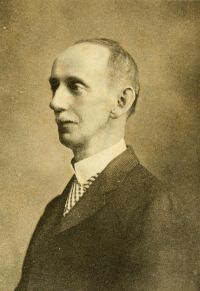
“ The census of 1911 showed a total of nearly two million three thousand persons, of whom the males outnumbered the females by almost twenty thousand; and the gain during the preceding decade was greater than in any other eastern province. Four-fifths of the people in Quebec are French-speaking, and of these 70 per cent. live in villages and rural districts.Quebec is a beautiful province of mountain and valley, forest, lake and river. It was along the rivers and the coasts of the gulf that its settlement first began. In fact, it was the St. Lawrence that made New France ”
William Dawson LeSueur,
Count Frontenac
“ The population of Quebec at this time was 555, of Montreal 584, and of Three Rivers 461. The seigniory of Beaupré below Quebec had 678 inhabitants and the Island of Orleans 471. The French government had for some years been showing much zeal in sending out settlers to Canada, and it was chiefly owing to its efforts that the population had increased to the extent indicated by the census. The total number of state-directed immigrants from 1664 to the close of the year 1671 is estimated at over 2500—a most substantial addition to the strength of the colony. ”
Samuel de Champlain,
Voyages of Samuel De Champlain…
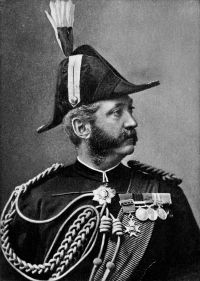
“ CHAPTER VI. OF THE POINT ST. CROIX AND THE RIVER BATISCAN.—OF THE RIVERS, ROCKS, ISLANDS, LANDS, TREES, FRUITS, VINES, AND FINE COUNTRY BETWEEN QUEBEC AND THE TROIS RIVIÈRES. On Monday, the 23d of this month, we set out from Quebec, where the river begins to widen, sometimes to the extent of a league, then a league and a half or two leagues at most. The country grows finer and finer; it is everywhere low, without rocks for the most part. The northern shore is covered with rocks and sand-banks; it is necessary to go along the southern one about half a league from the shore. ”
Pehr Kalm,
Travels into North America, Volume 3…
(1770)
“ The place is called Petite Riviere, and they say, its inhabitants are very poor, which seems very probable. They have no more land to cultivate, than what lies between the mountains and the river, which in the widest part is not above three musket shot, and in most parts but one broad. About seventeen French miles from Quebec the water is so salty in the river, that no one can drink it, our rowers therefore provided themselves with a kettle [200] full of fresh water this morning. ”
Sir William Francis Butler,
The Wild North Land
“ Canadians will understand these items. I have looked from the ramparts of Quebec on the second last day of April, and seen the wide landscape still white with the winter’s snow.In the foregoing sentences I have briefly pointed out the advantages of the Peace River Pass, the absence of mountain-ranges in the valleys of the Parsnip and Nacharcole Rivers, and the fertile nature of the country between the Lesser Slave Lake and the eastern base of the Rocky Mountains. It only remains to speak of the connecting line between the Saskatchewan territory and the Smoking River prairies. ”
F. S. Brereton, How Canada Was Won: A Tale of Wolfe and Quebec
“ To the west Quebec is even more strongly protected by natural obstacles, for the ridge on the edge of which the fair city is built runs westward for many miles, falling almost perpendicularly into the river, while the St. Lawrence, just opposite the town, is suddenly constricted by a projecting spit of land, known as Point Lévis, which narrows the bed till it is barely three-fourths of a mile across, a distance which the French rightly considered could be commanded by their batteries. ”
Henry David Thoreau,
A Yankee in Canada, with Anti-slavery and reform papers
(1866)
“ The Swedish traveller and naturalist, Kalm, who descended this river in 1749, says: “It could really be called a village, beginning at Montreal and ending at Quebec, which is a distance of more than one hundred and eighty miles; for the farm-houses are never above five arpens, and sometimes but three asunder, a few 20places excepted.” Even in 1684 Hontan said that the houses were not more than a gunshot apart at most. Erelong we passed Cape Rouge, eight miles above Quebec, the mouth of the Chaudière on the opposite or south side, New Liverpool Cove with its lumber rafts and some shipping ”
Agnes C. Laut, The Canadian Commonwealth
“ Beyond, back up from the rivers, lies literally a no-man's-land of furs plentiful as of old, of timber of which only the edge has been slashed, of water power unestimated and of mineral resources only guessed. It seems incredible at this late date that you can count on one hand the number of men who have ascended the rivers of Quebec and descended the rivers of Labrador to Hudson Bay. The forest area is estimated at one hundred and twenty million acres; but that is only a guess. The area of pulp wood is boundless. ”
Sir J. M. Le Moine, Picturesque Quebec : a sequel to Quebec past and present
“ Lawrence, traversed by steamboats, by vessels heavily laden, and by light bark canoes, we may see early in the season immense rafts of timber that are brought down from the dense northern forests, hewn where they are felled, drawn to the rivers upon the snow, and made up into rafts. The Canadian crews erect masts and spread their sails, and by the aid of wind and current, and sometimes by rowing, they boldly guide these acres of fir down the rapids to Quebec, while they animate their labours with the melody of their popular songs. ”
Agnes C. Laut, Canada: the Empire of the North
“ The precipice is Quebec City: Upper Town and the convents and the ramparts and Castle St. Louis nestling on an upper ledge of the rock below Cape Diamond; Lower Town crowding between the foot of the precipice and tide water. Look again how the St. Lawrence turns in a sharp angle at the precipice. Three sides of the city are water,—St. Charles River nearest Wolfe, then the St. Lawrence across the steep face of the rock, then the St. Lawrence again along a still steeper precipice to the far side. Only the rear of the city is vulnerable ”
George McKinnon Wrong,
A Canadian Manor and Its Seigneurs…
(1908)
“ After all it is man and his activities which give to nature's scenes their deepest interest; Quebec's chief charm is due to Wolfe and Montcalm, St. Helena's to Napoleon. The shaggy mountain crests which we view from our valley, the glistening blue river, the strong north-east wind which clouds the sky, turns the river to grey, and sprinkles its surface with white caps,—all are full for us of joyous beauty. But how much less of interest would there be did the white spire of the village church not peep out above the green trees up the bay to tell of man's weakness and his hopes! ”
Intercolonial Railway, Summer Provinces by the Sea
“ This grand system of waterways has no parallel elsewhere. Canoeing, fishing, etc., over such an extensive chain of rivers is a joy that, once tasted, calls back the happy nature lover again and again to the fascination of continued exploration in a country that is full of variety and beauty.By this time the traveller has fairly entered New Brunswick, and he cannot have failed to observe many differences between this province and that he has recently left. Quebec is the old world, with scarcely anything of the new in it, save its scenery, distinctive of the Western Continent. ”
Joel Cook,
America, Volume 4 (of 6)
“ Along the river bank is a sparsely scattered strip of humanity, which is likened to a rosary, having the primitive farmhouses for beads, and at every few miles a tall, cross-crowned church spire. Set in between the river banks, just below Quebec, is the broad and fertile Isle of Orleans, but beyond this the St. Lawrence is six miles wide, and steadily broadens, attaining twenty-four miles width at Tadousac, the mouth of the Saguenay, and thirty-five width at Metis, one hundred and fifty miles below Quebec. ”
Willard W. Glazier, Peculiarities of American Cities
“ The narrow strand between the cliff and the rivers is occupied by breweries, distilleries, manufactories, and numerous ship-yards; while the many coves of the St. Lawrence, from Champlain street to Cape Rouge, are filled with acres of vast lumber rafts. Quebec is one of the greatest lumber and timber [Pg 409] markets in America, supplying all the seaboard cities of the United States. It also builds many ships, and produces sawed lumber, boots and shoes, furniture, iron ware and machinery. ”
Pehr Kalm,
Travels into North America, Volume 3…
(1770)
“ Here is likewise a fine little church of stone. To the west of the village are some very high mountains, which cause the sun to set three or four hours sooner here, than ordinary. The river St. Lawrence annually cuts off a piece of land, on the east side of the village, so that the inhabitants fear they will in a short time lose all the land they possess here, which at most is but a musket shot broad. All the houses here are very full of children. The lime-slates on the hills are of two kinds. One is a black one, which I have often mentioned, and on which the town of Quebec is built. ”
Anthony Trollope,
North America — Volume 1
“ But Quebec has very little to recommend it beyond the beauty of its situation. Its public buildings and works of art do not deserve a long narrative. It stands at the confluence of the St. Lawrence and St. Charles rivers; the best part of the town is built high upon the rock,—the rock which forms the celebrated plains of Abram; and the view from thence down to the mountains which shut in the St. Lawrence is magnificent. ”
Narrative and Critical History of America…
“ A map engraved by T. Kitchen, in Mante’s Hist. of the Late War, London, 1772, p. 30, shows the river from Lake Ontario to its mouth, defining on the lake the positions of Forts Niagara, Oswego, and Frontenac; and (p. 333) is one giving the course of the river below Montreal.In the Atlantic Neptune of Des Barres, 1781, Part ii. no. 1, is the St. Lawrence in three sheets, from Quebec to the gulf ”
Frank G. Carpenter,
Canada and Newfoundland
(1924)
“ Besides the Rideau Canal, there is the river of the same name, with well-kept parks along its banks. The most commanding sites on the hillsides overlooking the rivers are occupied by fine public buildings and millionaires’ residences. There are numerous yacht and canoe clubs, while on the Quebec side of the Ottawa River, above the Chaudière Falls, are several golf courses. In their clubs the Canadians seem to be content to do things on a less elaborate scale than is common in the States, thus making it possible for men and women of moderate means to belong without feeling extravagant. ”
William Wood, The Father of British Canada: a Chronicle of Carleton
“ The battle of Three Rivers was the last action fought on Canadian soil. The American army retreated to Sorel and up the Richelieu to St Johns, where it was joined by Arnold, who had just evacuated Montreal. Most of the Friends of Liberty in Canada fled either with or before their beaten forces. So, like the ebbing of a whole river system, the main and tributary streams of fugitives drew south towards Lake Champlain. The neutral French Canadians turned against them at once; though not to the extent of making an actual attack. ”
Harry Johnston, Pioneers in Canada
“ From Lake Ontario to the sea along the St. Lawrence there is uninterrupted navigation, though there are rapids that require careful steering both with steamers and boats. Quebec marks the place where the St. Lawrence River suddenly broadens from a river into a tidal gulf of brackish or salt water. Ocean steamers from all over the world can come (except during the height of the winter, when the water freezes) to Quebec. But for the ice in wintertime Quebec would be the great sea-port of eastern Canada. ”
Sir Oliver Lodge,
Pioneers of Science
“ Quebec and New York are cities on such magnificent rivers that the current required to keep open channel is supplied without any tidal action, although Quebec is nearly 1,000 miles from the open ocean ”
Logan Marshall, The Tragic Story of the Empress of Ireland…
“ Tourmente, there is this wall of mountains, like a sea of rolling rocks, cleft here and there by such recesses as Murray Bay or the Saguenay. Everywhere, also, are footprints of the early explorers. Here Cartier landed, there Champlain camped, here De Roberval is supposed to have disappeared forever between the wide walls of the Saguenay, there Pont-Gravé or Chauvin left traces of adventurous exploits.QUEBECAt Quebec there looms up the sentinel on the rock which overlooks all the pages of Canadian history and still stands as the most picturesque and impressive city of the new world. ”
Justin McCarthy,
A History of the Four Georges, Volume II
“ Lawrence River, some eight miles from Quebec. The whole world, perhaps, hardly holds a scene more picturesque, whether looked at from above or from below, from the rock or from the river, than that which is given by the city of Quebec. At some places the bold mass of rock and clay descends almost sheer to the lower level and the river-shore. ”
Henry David Thoreau,
Yankee in Canada
(1866)
“ Every emigrant who arrives in this country by way of the St. Lawrence, as he opens a point of the Isle of Orleans, sees the Montmorenci tumbling into the Great River thus magnificently in a vast white sheet, making its contribution with emphasis. Roberval's pilot, Jean Alphonse, saw this fall thus, and described it, in 1542. It is a splendid introduction to the scenery of Quebec. Instead of an artificial fountain in its square, Quebec has this magnificent natural waterfall to adorn one side of its harbor. ”
Agnes C. Laut, The Canadian Commonwealth
“ All the characteristics of the Old Empire are in Quebec to-day. Quebec is French to the core, not in loyalty to republican France, but in loyalty to the religious ideals which the founders brought to the banks of the St. Lawrence three centuries ago. Church spire, convent walls, religious foundations occupy the most prominent site in every city and town and hamlet of Quebec. From Tadousac to Montreal, from Labrador to Maine or New Hampshire, you can follow the thread of every river in Quebec by the glitter of the church spires round which nestle the hamlets. ”
Sir J. M. Le Moine, Picturesque Quebec : a sequel to Quebec past and present
“ It was built of branches, covered with earth. Having been rendered unserviceable by the fire, the inhabitants had it widened six feet, as they had to travel three miles, after the conflagration, to enter the upper town by another hill."— (T. B. Bédard.) In the summer season, our forefathers journeyed by water, generally in birch-bark canoes. In winter they had recourse to snow-shoes.To what year can we fix the advent of wheeled vehicles? We have been unable to discover.The first horse presented by the inhabitants to the Governor of the colony arrived from France on the 25th June, 1647. ”
James Oliver Curwood,
The Valley of Silent Men: A Story of the Three River Country
“ He had always thought of Quebec as a rare old bit of time-yellowed lace among cities—the heart of the New World as it had once been, still beating, still whispering of its one-time power, still living in the memory of its mellowed romance, its almost forgotten tragedies—a ghost that lived, that still beat back defiantly the destroying modernism that would desecrate its sacred things. ”
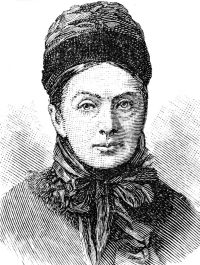
Isabella Lucy Bird,
The Englishwoman in America
(1856)
“ And then there is the river Charles, no longer clear and bright, as when trees and hills and flowers were mirrored on its surface, but foul, turbid, and polluted, with ship-yards and steam-engines and cranes and windlasses on its margin; and here Quebec ends. From the rich, the fashionable, and the pleasure-seeking suburb of St. Louis few venture down into the quarter of St. Roch, save those who, at the risk of drawing in pestilence with every breath, mindful of their duty to God and man, enter those hideous dwellings, ministering to minds and bodies alike diseased. ”
Sir J. M. Le Moine, Picturesque Quebec : a sequel to Quebec past and present
“ Upon our coquettish rivers in Europe they may whisper of loves along their flowery banks and under the vine-clad terraces that overhang them, like the curtains of a saloon; but here, in this grand severity of nature, upon these immense, half desert plains, in the silence of these gloomy forests, on the banks of this majestic river that is ever speeding onward to the eternal ocean, we may feel emotions that are truly sublime. If, in this quiet solitude, should we open the soul to a dream of love, it takes the serious tone ”