Tostig, a figure deeply embedded in medieval Norse and Saxon histories, appears in literature as an emblem of conflict, leadership, and moral uncertainty. Authors like Alfred Tennyson present him as a nobleman caught between duty and ambition, as illustrated in his tense exchanges with Harold in Queen Mary; and, Harold. William O.
Stoddard depicts him as a steadfast Viking leader in works such as Ulric the Jarl, where Tostig’s unwavering composure in the face of violence highlights his role in tumultuous sagas. Jack London references him in a more chaotic, almost mythical light, associating him with primal struggles. These diverse interpretations collectively portray Tostig as a focal point of historical discord and a subject for literary examination of the intricacies of power.
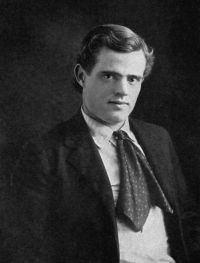 Jack London,
The Jacket (The Star-Rover)
Jack London,
The Jacket (The Star-Rover)