“ The soft Virginia landscape, swelling in gentle waves of forest, field, and fallow to the great mountains that lie piled up far away against the western sky, is naked still and bare, save for the splashes of green pine woods here and there upon the land. But there is a light in the sky and a feel in the air that seems almost to chide the earth for its slow response. The blood courses quicker through the veins of even easy-going Virginia farmers at the thoughts of seeding-time. ”
Western Virginia
Definition and stakes
The theme of “Western Virginia” has been addressed by authors such as Philip Alexander Bruce, Dorothy Margaret Torpey, Charles Campbell, Thomas Jefferson Wertenbaker and John Fiske. It is often associated with terms like Ohio, river, England, West and Maryland.
Quotes about “Western Virginia”
Various, The Continental Monthly, Vol. 1…
“ What we saw of Western Virginia and its inhabitants left anything but a favorable impression on our minds. The country is wild and romantic, but good for little or nothing for farming purposes. The houses are mostly built of logs, being little more than mere huts, and around each of these 'mansions' may be seen at least a dozen young 'tow-heads,' who are brought up in ignorance and filth. ”
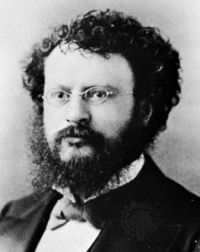 John Fiske,
Old Virginia and Her Neighbours…
John Fiske,
Old Virginia and Her Neighbours…
“ Those who went to Pennsylvania received grants of land in the western mountain region. The policy of the government was to interpose them as a buffer between the expanding colony and the Indian frontier. Once planted in the Alleghany region, they spread rapidly and in large numbers toward the southwest along the mountain country through the Shenandoah Valley and into the Carolinas. At a later time they formed almost the entire population of West Virginia, and they were the men who chiefly built up the commonwealths of Kentucky and Tennessee. ”
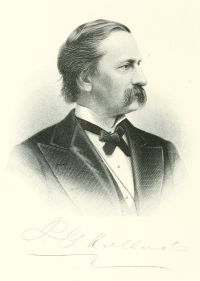 Josiah Gilbert Holland,
The Life of Abraham Lincoln (Holland…
(1866)
Josiah Gilbert Holland,
The Life of Abraham Lincoln (Holland…
(1866)
“ Western Virginia was loyal, and, on the seventeenth of June, in convention at Wheeling, repudiated the ordinance of secession passed by the state convention, and promptly inaugurated a new state government, with Francis H. Pierpoint for Governor. This was the first step toward "reconstruction," and it was taken under the direct sanction of Mr. Lincoln. The doctrine of secession thus early returned to plague the inventors. Rebel forces and rebel sympathizers were of course in Western Virginia ”
Various, The Southern Literary Messenger…
“ When we recal those events, when we recollect the services of Virginia, in defending the western settlements, and her magnanimity in yielding up to the general government the broad lands of this Great Valley, the larger portion of which were her own by right and by possession, it will be seen that there is no state to whom the inhabitants of this region owe so much, and none whose history is so nearly connected with our own. ”
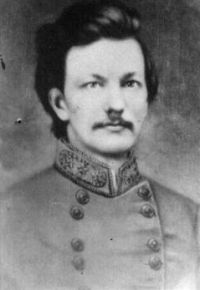 Clement Anselm Evans,
Confederate Military History
(1899)
Clement Anselm Evans,
Confederate Military History
(1899)
“ The West Virginia secessionists, those that by act of Congress, when its membership was almost exclusively Northern, seceded from Virginia in 1861, were mainly confined to the Trans-Appalachian counties of Northwestern Virginia, where there were but few slaves and still fewer slaveholders, and where the larger portion of the population was more in sympathy with the adjacent States of Ohio and Pennsylvania than with the rest of Virginia. ”
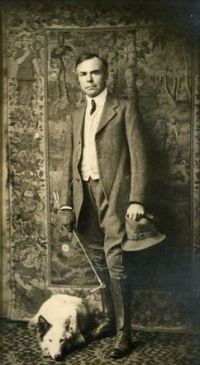 Melville Davisson Post,
The Strange Schemes of Randolph Mason
Melville Davisson Post,
The Strange Schemes of Randolph Mason
“ IV. The traveller crossing the continent in a Pullman car is convinced that West Virginia is one continuous mountain. He has no desire to do other than to hurry past with all the rapidity of which the iron horse is capable. He can have no idea that in its central portion is a stretch of rolling blue-grass country, as fertile and as valuable as the stock-farm lands of Kentucky; with a civilization, too, distinctly its own, and not to be met with in any other country of the world. ”
The New International Encyclopædia…
“ The general shape is that of an oval, 210 miles long from southwest to northeast and 125 miles wide, but two narrow tongues extend northward between Pennsylvania and Ohio and northeastward between Virginia and Maryland, each of them being known as ‘panhandles.’ The area of the State is 24,780 square miles, making it thirty-seventh in size among the States. Topography. The surface of West Virginia is, as a whole, uneven, and in the east mountainous. The main range of the Alleghanies crosses the northeastern section, and farther south forms the State boundary toward Virginia. ”
Jr. Thomas Dixon, The Clansman: An Historical Romance of the Ku Klux Klan
“ To create the State of West Virginia by the consent of two states, one of which was dead, and the other one of which lived in Ohio? By what authority have you appointed military governors in the ‘sovereign’ States of Virginia, Tennessee, and Louisiana? Why trim the hedge and lie about it? We, too, are revolutionists, and you are our executive. ”
Philip Alexander Bruce, Economic History of Virginia in the Seventeenth Century (1896)
“ The West was settled by an influx of population which, under the homestead law, became at once a community of small landowners, but in Virginia in the seventeenth century, the mass of the inhabitants were men and women who had no interest in the soil. ”
Various, The Catholic World, Vol. 01, April to September…
“ The Virginians differ essentially from the people of the North, not only in the nature of their climate, soil, and agriculture, but in that indelible character which is imprinted on every nation at the moment of its origin, and which, by perpetuating itself from generation to generation, justifies the great principle that 'everything which is partakes of that which has been.' The settlement of Virginia took place at the commencement of the seventeenth century. ”
James Gillespie Blaine, Twenty Years of Congress, Vol. 1
“ Indeed from the very origin of the settlement of West Virginia, which had made but little progress when the Federal Constitution was adopted, its citizens were in large degree alienated from the Eastern and older section of the State. The men of the West were hardy frontiersmen, a majority of them soldiers of the Revolution and their immediate descendants, without estates, with little but the honorable record of patriotic service and their own strong arms, for their fortunes. ”
Philip Alexander Bruce, Economic History of Virginia in the Seventeenth Century (1896)
“ But for the introduction of the indented servant into the Colony upon the threshold of its settlement, its progress would have been slow. Virginia, without laborers from England and without slaves, would have become a community of peasant proprietors, each clearing and working his ground with his own hands and with the aid of his immediate family. ”
Various, The Continental Monthly, Vol. 5…
“ In order to realize the truth, we must behold Virginia as she would have been, with New York railroads and canals, farms, manufactures, commerce, towns, and cities. Then we must consider the superior natural advantages of Virginia, her far greater area, her richer soil, her more genial sun, her greater variety of products, her mines of coal, iron, gold, copper, and lead, her petroleum, her superior hydraulic power, her much larger coast line, with more numerous and deeper harbors—and reflect what Virginia would have been in the absence of slavery. ”
Charles Campbell, History of the Colony and Ancient Dominion of Virginia
“ The inhabitants of tramontane Virginia are very imperfectly acquainted with its history. This remark applies particularly to that section commonly called the Valley of Virginia, which, lying along the Blue Ridge, stretches from the Potomac to the Alleghany Mountains. Of this many of the inhabitants know little more than what they see. They see a country possessing salubrity and fertility, yielding plentifully, in great variety, most of the necessaries of life, a country which has advantages, conveniences, and blessings, in abundance, in profusion, it may almost be said in superfluity. ”
Philip Alexander Bruce, Economic History of Virginia in the Seventeenth Century (1896)
“ The colony at Jamestown was the first swarm which, issuing from the central hive in England, established a permanent home abroad. Since the 13th of May, 1607, how many swarms have gone forth from the same hive, how vast a portion of the surface of the earth has now been populated by the same race! The same practical aspirations which in the present century have led to the formation of so many English commonwealths in the Australasian seas, influenced men of the same manly and self-reliant stock to remove to Virginia. ”
Dorothy Margaret Torpey, Hallowed Heritage: The Life of Virginia
“ People who settled there came originally for several purposes: to acquire fertile but cheap land, to enjoy new personal freedom (in many cases, the settlers were former indentured servants) , to carry on fur trade with the Indians, to obtain fresh pasture land for cattle and to establish plantations. After the Piedmont area became heavily settled, the westward movement continued. The settlements in the Shenandoah Valley of Virginia followed directly after the crossing of the Blue Ridge Mountains. ”
Philip Alexander Bruce, Economic History of Virginia in the Seventeenth Century (1896)
“ The respectable but slow and ceremonious Governor, in his report to the Council as to his administration in the Colony, which appears to have been rather inglorious, states that during the winter he passed in Virginia he directed that much ground should be sowed in roots. [31] These roots were doubtless turnips and carrots, which had a few years before been found to thrive in the valley of the Powhatan. ”
Charles Campbell, History of the Colony and Ancient Dominion of Virginia
“ On the eighteenth of August, the governor's daughter, Eleanor, wife to Ananias Dare, one of the council, gave birth to a daughter, the first Christian child born in the country, and hence named Virginia. Dissensions soon arose among the settlers; and, although not in want of stores, some, disappointed in not finding the new country a paradise of indolent felicity, as they had fondly anticipated, demanded permission to return home; others vehemently opposed; at length all joined in requesting White to sail for England, and to return thence with supplies. ”
Philip Alexander Bruce, Economic History of Virginia in the Seventeenth Century (1896)
“ So numerous had the slaves become towards the close of the seventeenth century that a planter, stocking a new estate with slaves, was not compelled to rely entirely on the merchants engaged in importing negroes. They could be secured in the Colony of his fellow-planters. The proportion of those who were born in Virginia must now have been important, and it was this class that was justly regarded as being most desirable. ”
Hugh Jones, The Present State of Virginia
“ That all these Goods are to be transported to England, so that in reality Virginia would be only as a Yard or Work-House where these Servants and Journeymen would labour for the English; besides several of these Things are such as we are wholly or in part supplied with from other Nations; and certainly we had better have Goods of the Produce of our own People and Countries, than buy them of Strangers, who make them for us ”
 Hallie Erminie Rives,
The Valiants of Virginia
Hallie Erminie Rives,
The Valiants of Virginia
“ If it were only Long Island, or even Pike County! The sorriest, out-at-elbow, boulder-ridden, mosquito-stung old rock-farm there would bring a decent sum. But Virginia! The place where the dialect stories grow. The paradise of the Jim-crow car and the hook-worm, where land-poor, clay-colored colonels with goatees sit in green wicker lawn-chairs and watch their shadows go round the house, while they guzzle mint-juleps and cuss at lazy ‘cullud pussons.’ Where everybody is an F. F. V. and everybody’s grandfather was a patroon, or whatever they call ’em, and had a thousand slaves ‘befo de wah’! ”
John Fiske,
Old Virginia and Her Neighbours…
“ But, with all this beauty and richness of the interior country, the obstacles presented at the coast turned the first great wave of English colonization into Virginia; and thereafter the settlement of North Carolina was determined largely, and by no means to its advantage, by the social conditions of the older colony.Unkempt life.In its early days North Carolina was simply a portion of Virginia’s frontier; and to this wild frontier the shiftless people who could not make a place for themselves in Virginia society, including many of the “mean whites,” flocked in large numbers. ”
Various, The International Monthly, Volume 5…
“ There are even yet to be found, on the borders of James River and in other parts of Virginia, the wealthy, intelligent, and hospitable planter, living in style and entertaining with liberality scarcely unequal to that which distinguished Virginia in bygone days. ”
Charles Campbell, History of the Colony and Ancient Dominion of Virginia
“ A new epoch dawns with the administration of Robert Dinwiddie, who arrived in Virginia as lieutenant-governor early in 1752, with the purpose of repressing the encroachments of the French, of extending the confines of Virginia, and of enlarging the Indian trade. A vast tract of land, mostly lying west of the mountains and south of the Ohio, was granted by the king about the year 1749, to a company of planters and merchants. ”
Annie Lash Jester, Domestic Life in Virginia in the Seventeenth Century
“ Except for its ports of entry, such as Jamestown, Norfolk and Kecoughtan, Virginia in the seventeenth century was not adapted to urban living.Upon arrival in Virginia, the colonists faced a vast forest. [26] Before them in the April sunshine was a massive wall of shimmering green in the stately pines, cedars and holly, intermingled with the freshly unfolded leaves of the venerable oak, walnut, hickory and beech. There were no grassy plains, no open fields, save the garden plots of small tribes of Indians. Clearing the land, in itself, was a tremendous task. ”
 Archibald Henderson,
The Conquest of the Old Southwest…
Archibald Henderson,
The Conquest of the Old Southwest…
“ During the ensuing years it began to dawn upon the minds of men of the stamp of William Byrd and Joshua Gee that there was imperative need for the establishment of a chain of settlements in the trans-Alleghany, a great human wall to withstand the advancing wave of French influence and occupation. By the fifth decade of the century, as we have seen, the Virginia settlers, with their squatter's claims and tomahawk rights, had pushed on to the mountains; and great pressure was brought to bear upon the council to issue grants for vast tracts of land in the uncharted wilderness of the interior. ”
 James Lane Allen,
The Reign of Law; a tale of the Kentucky hemp fields
James Lane Allen,
The Reign of Law; a tale of the Kentucky hemp fields
“ The Anglo-Saxon farmers had scarce conquered foothold, stronghold, freehold in the Western wilderness before they became sowers of hemp—with remembrance of Virginia, with remembrance of dear ancestral Britain. ”
Philip Alexander Bruce, Economic History of Virginia in the Seventeenth Century (1896)
“ A few negroes doubtless would have been brought into the Colony in the seventeenth century even if its soil had been incapable of producing tobacco. In this respect, the history of New England would have been repeated. The enlargement of the area under cultivation in that plant in Virginia signified an enormous increase in the number of imported slaves as soon as the proper facilities for their transportation had been established ”
Philip Alexander Bruce, Economic History of Virginia in the Seventeenth Century (1896)
“ Freedom from undergrowth was one of the most notable features of the original woods of Virginia, and the same characteristic is observed to-day in a modified form in every forest in the State, growing upon land which has never been cleared. ”
The New International Encyclopædia…
“ The charter of 1609 had fixed the limits of the colony at 200 miles north and 200 miles south of Point Comfort and west and northwest from sea to sea. Under this vague description Virginia claimed that the northwest line was the upper one, and hence her territory increased as it went westward. Maryland and Pennsylvania had included territory that she claimed, but her title to the northwest was undisputed until French colonization expanded. Toward the middle of the eighteenth century English occupation of the territory began. ”
1911 Encyclopædia Britannica, Volume 28… (1911)
“ In 1716 an expedition of Governor Alexander Spotswood over the mountains advertised to the world the rich back-country, now known as the Valley of Virginia; a migration thither from Pennsylvania and from Europe followed which revolutionised the province. The majority of blacks over whites soon gave way before the influx of white immigrants, and in 1756 there was a population of 292,000, of whom only 120,000 were negroes, and the small farmer class had grown so rapidly that the old tide-water aristocracy was in danger of being overwhelmed. ”
Philip Alexander Bruce, Economic History of Virginia in the Seventeenth Century (1896)
“ There are few countries in the world possessing in so limited a space such magnificent rivers as the Potomac, Rappahannock, York, and James. Indeed, in their lower sections they are estuaries rather than rivers. At some points the York and James are only five miles apart, while the distance between the Rappahannock and Potomac in several places does not exceed eight miles. Observing the vast floods of these broad streams, many persons among the early colonists were disposed to think that the day would arrive when Virginia would be the Netherlands of America. ”
Related terms
Authors who wrote about “Western Virginia”
Philip Alexander BruceDorothy Margaret TorpeyCharles CampbellThomas Jefferson WertenbakerJohn FiskeHugh JonesHenry Chandlee FormanWesley Frank CravenAnnie Lash JesterG. MacLaren BrydonHarrison WilliamsArchibald Henderson Frederick Jackson TurnerRobert BeverleyClement Anselm Evans
 Mrs. John A. Logan
 Archer Butler HulbertJr. Thomas Dixon
 Thomas Jefferson
 Henry Adams
John FiskeHugh JonesHenry Chandlee FormanWesley Frank CravenAnnie Lash JesterG. MacLaren BrydonHarrison WilliamsArchibald HendersonFrederick Jackson TurnerRobert BeverleyClement Anselm EvansMrs. John A. LoganArcher Butler HulbertJr. Thomas DixonThomas JeffersonHenry Adams