Zerah

Definition and stakes

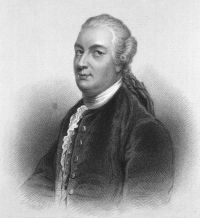
Portrait of James Bruce James Bruce,  Travels to Discover the Source of the Nile (1790)

“ Here, then, is an obvious triumph for infidelity, because, as I have said, no supernatural means are pretended. But had it been translated, that Zerah was a black-moor, a Cushite-negro, and prince of the Cushites, that were carriers in the Isthmus, an Ethiopian shepherd, then the wonder ceased. Twenty camels, employed to carry couriers upon them, might have procured that number of men to meet in a short space of time, and, as Zerah was the aggressor, he had time to choose when he should attack his enemy ”
Source: Wikisource

1911 Encyclopedia Britannica (1911)

“ The Book of Chronicles relates a story of a sensational defeat of Zerah the “Cushite,” and a great religious revival in which Judah and Israel took part (2 Chron. xiv.–xv. 15) (see Chronicles) . Asa was succeeded by his son Jehoshaphat.
“Cushite” may designate an Ethiopian or, more probably, an Arabian (Cush, the “father” of the Sabaeans, Gen. x. 7) . “If by Zerah the Ethiopian or Sabaean prince be meant, the only real difficulty of the narrative is removed. No king Zerah of Ethiopia is known at this period, nor does there seem to be room for such a person.”
”
Source: Wikisource

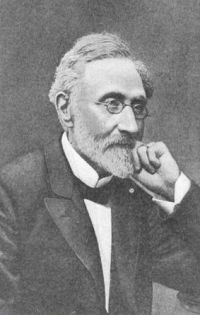
Portrait of Franz Delitzsch Franz Delitzsch,  Biblical Commentary Old Testament… (1872)

“ It is certainly very probable that Zimri was a son, if he be identical with the Zabdi of Jos 7:1; Ethan and Heman may have been later descendants of Zerah, if they were the wise men mentioned in 1Ki 5:11; but as to Calcol and Dara no further information is to be obtained. From 1Ch 2:7 and 1Ch 2:8, where of the sons (בּני) of Zimri and Ethan only one man in each case is named, it is perfectly clear that in our genealogy only individuals, men who have become famous, are grouped together out of the whole posterity of Zerah. ”
Source: Wikisource

Get perspective with Kwize: daily news enlightened by great literature