Celestial pole

Definition and stakes

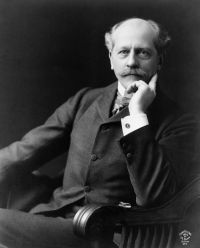
Portrait of Harold Jacoby Harold Jacoby,  Practical Talks by an Astronomer

“ The pole of the frozen North is not the only pole sought with determined effort by more than one generation of scientific men. Up in the sky astronomers have another pole which they are following up just as vigorously as ever Arctic explorer struggled toward the difficult goal of his terrestrial journeying. The celestial pole is, indeed, a fundamentally important thing in astronomical science, and the determination of its exact position upon the sky has always engaged the closest attention of astronomers. ”

Source: Gutenberg

Various,  Encyclopaedia Britannica, 11th Edition…

“ This line, extended upwards, meets the celestial sphere in the zenith. The earth’s axis, continued indefinitely upwards, meets the sphere in a point called the Celestial Pole. This point in our middle latitudes is between the zenith and the north horizon, near a certain star of the second magnitude familiarly known as the Pole Star. As the earth revolves from west to east the celestial sphere appears to us to revolve in the opposite direction, turning on the line joining the Celestial Poles as on a pivot. ”
Source: Gutenberg

J. Ellard Gore,  Astronomical Curiosities: Facts and Fallacies

“ It is a popular idea with some people that the Pole Star is the nearest of all the stars to the celestial pole. But photographs show that there are many faint stars nearer to the pole than the Pole Star. The Pole Star is at present at a distance of 1° 13′ from the real pole of the heavens, but it is slowly approaching it. The minimum distance will be reached in the year 2104. From photographs taken by M. Flammarion at the Juvisy Observatory, he finds that there are at least 128 stars nearer to the pole than the Pole Star! ”
Source: Gutenberg

Get perspective with Kwize: daily news enlightened by great literature