Eternal life, a cornerstone of Christian eschatology, signifies continued existence after death, grounded in beliefs about resurrection and communion with the divine. While the Synoptic Gospels present it as a future reward, the Gospel of John highlights its present reality, declaring that believers "pass from death to life" through faith in Christ. This duality—between immediate spiritual transformation and ultimate bodily resurrection—echoes throughout theological interpretations, from the Catholic Catechism’s vision of a renewed Earth to N.T.
Wright’s claim that God’s plan restores creation. Authors like Brigham Young describe it as an everlasting existence attainable through faith, while Miguel de Unamuno connects it to the "thirst of eternity" intrinsic to human love. Charles Kingsley, on the other hand, portrays eternal life as a blend of grace and truth, reflecting God’s divine nature. These viewpoints collectively emphasize eternal life as both a present spiritual blessing and a future realization, linking earthly faith with cosmic redemption.
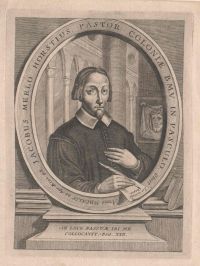 Jacob Merlo Horstius,
The paradise of the Christian soul
(1877)
Jacob Merlo Horstius,
The paradise of the Christian soul
(1877)