Maritime power

Definition and stakes

Portrait of Ronald Reagan Ronald Reagan Proclamation 5343

Since its birth as a Nation, the United States has relied on the oceans for commerce and as avenues for the protection of national interests. The United States is truly a maritime power by necessity.
Maritime power has two principal components. One component, the Navy and the Coast Guard, guards America's free use of the seas while the other component, the Merchant Marine, supports trade with nations and, in an emergency, becomes a part of our military establishment-integral with our military forces.
Source: Wikisource

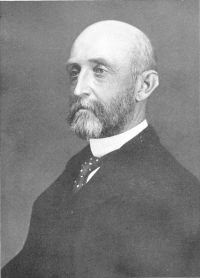
Portrait of A. T. Mahan A. T. Mahan Mahan on naval warfare (1890)

Let us start from the fundamental truth, warranted by history, that the control of the seas, and especially along the great lines drawn by national interest or national commerce, is the chief among the merely material elements in the power and prosperity of nations. It is so because the sea is the world’s great medium of circulation. From this necessarily follows the principle that, as subsidiary to such control, it is imperative to take possession, when it can be done righteously, of such maritime positions as contribute to secure command.
Source: Gutenberg

The Diplomatic Correspondence of the American Revolution…

Our maritime power will always be sufficient to protect our islands. Our naval forces will never want anything so long as we shall have divers markets, where our vessels may go. The northern powers of Europe, and the northern States of America, will be competitors to serve us, so long as we preserve the superiority upon the sea, and while, by means of our manufacturers, we can pay for them, or make an advantageous exchange, with the one and the other.
Source: Gutenberg

Get perspective with Kwize: daily news enlightened by great literature