Military bivouac

Definition and stakes

1911 Encyclopædia Britannica, Volume 4… (1911)

“ The use of bivouacs permits an army to remain closely concentrated for all emergencies, and avoids the necessity for numerous wagons carrying tents. Constant bivouacs, however, are trying to the health of men and horses, and this method of quartering is never employed except when the military situation demands concentration and readiness. Thus the outposts would often have to bivouac while the main body of the army lay in billets. ”
Source: Wikisource

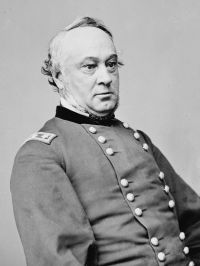
Portrait of H. W. Halleck H. W. Halleck,  Elements of Military Art and Science

“ Troops may be kept in bivouac for a few days, when in the vicinity of the enemy, but the exposure of the soldier in ordinary bivouacs, especially in the rainy seasons or in a rigorous climate, is exceedingly destructive of human life, and moreover leads to much distress to the inhabitants of the country occupied, in the destruction of their dwellings and the most common necessaries of life. ”
Source: Gutenberg

J. Kincaid,  Adventures in the Rifle Brigade…

“ There are several degrees of comfort to be reckoned in a bivouac, two of which will suffice.
The first, and worst, is to arrive at the end of a cold wet day, too dark to see your ground, and too near the enemy to be permitted to unpack the knapsacks or to take off accoutrements; (p. 044) where, unincumbered with baggage or eatables of any kind, you have the consolation of knowing that things are now at their worst, and that any change must be for the better. You keep yourself alive for a while, in collecting material to feed your fire with.
”
Source: Gutenberg

Get perspective with Kwize: daily news enlightened by great literature