Polar circle

Definition and stakes

Garrett Putman Serviss,  Astronomy in a nutshell (1912)

“ At any point within the polar circle concerned, the sun, at the hour of 113midnight approaches the horizon but does not touch it, its midnight elevation increasing with nearness to the pole, while exactly at the pole itself the sun simply moves round the sky once in twenty-four hours in a circle practically parallel to the horizon. ”
Source: Gutenberg

Edward Luther Stevenson,  Terrestrial and Celestial Globes Volume 1

“ The circle representing the course of the sun and that made to represent the course of the moon are made to revolve on the axis of the ecliptic, and a small ball, of recent construction, representing the earth, is placed in the common center of the armillae, and is made to revolve on the axis of the equator. A dial attached to the axis of the earth below the meridian circle marks the hours, which are engraved on the Arctic polar circle. A few points marked on the colures indicate the position of the principal stars. All of the circles have been carefully graduated. ”
Source: Gutenberg

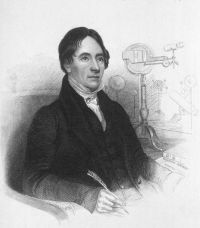
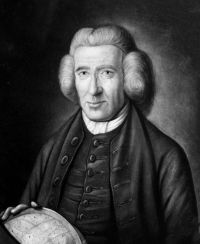
Portrait of James Ferguson James Ferguson,  Astronomy Explained Upon Sir Isaac Newton's Principles

“ Thus we see the reason why the days lengthen and shorten from the Equator to the polar Circles every year; why there is no day or night for several turnings of the Earth, within the polar Circles; why there is but one day and one night in the whole year at the Poles; and why the days and nights are equally long all the year round at the Equator, which is always equally cut by the circle bounding light and darkness. ”
Source: Gutenberg

Get perspective with Kwize: daily news enlightened by great literature