Shagbark hickory

Definition and stakes

Portrait of J. Horace McFarland J. Horace McFarland,  Getting Acquainted with the Trees

“ One of the commonest nut trees, and certainly one of the most pleasing, is the hickory. There are hickories and hickories, and some are shellbarks, while others are bitternuts or pignuts. The form most familiar to the Eastern States is the shagbark hickory, and its characteristic upright trees, tall and finely shaped, never wide-spreading as is the chestnut under the encouragement of plenty of room and food, are admirable from any standpoint. ”
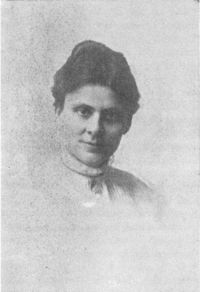
Source: Gutenberg

Henry S. Fitch,  The Forest Habitat of the University of Kansas Natural History Reservation

“ Numerous young trees and seedlings noted all were growing in dense woods of larger hickories, oaks, or mature elms. None has been found in open fields or even in edge situations. This hickory is resistant to drought; relatively few died during the drought of 1952-1954, and these were mostly small trees in crowded stands.
In parts of the woodland dominated by shagbark hickory the trees are mostly 5 to 6 inches or even smaller in trunk diameter and 20 to 30 feet high, sometimes growing in nearly pure stands, and with a leaf canopy so dense that shrubs and herbaceous vegetation are sparse.
”
Source: Gutenberg

Northern Nut Growers Association Report of the Proceedings at the Fifteenth Annual Meeting

“ We will begin with No. 1—Original Taylor Shagbark hickory. Nut large, thin shelled, good cleavage and high quality. This is practically an annual bearer. The weevil likes it because it is very thin-shelled. Consequently we seldom get a good crop. Most of the trees were defoliated. This is the best all-around hickory that I have found. I gave prizes for years and got seedlings from all over the country, and this is the best one that I obtained growing right here at my gate. It is defoliated by both the tent caterpillar and the canker worm. ”
Source: Gutenberg

Get perspective with Kwize: daily news enlightened by great literature