Tank (weapon)

Definition and stakes

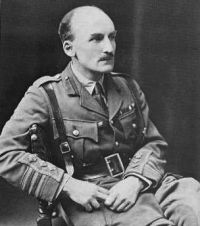
Amabel Williams-Ellis,  The Tank Corps

“ More than once in the course of the chequered career of the Tanks it was this consideration which saved the Corps from extinction.
But it is not, of course, enough that the Tank offers protection to those who fight in it. A trench or a hole in the ground will do the same. But the Tank is essentially a mobile weapon of offence. It is the weapon for the nation which does not fight willingly, but when it fights, fights to win, and to win quickly with as little bloodshed as possible.
”

Source: Gutenberg

Amabel Williams-Ellis,  The Tank Corps

“ Tanks would not do admirably.
Another point is that “minor wars” are fought by us with as much avoidance of bloodshed as is compatible with the bringing of our opponents to reason.
A weapon which admittedly affected the moral even of admirably disciplined troops like the Germans to a phenomenal degree, is particularly well adapted to this purpose.
It is infinitely more humane to appal a rioter or a savage by showing him a Tank than to shoot him down with an inoffensive looking machine-gun.109
There is yet one final consideration.
”
Source: Gutenberg

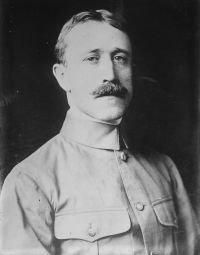
Portrait of Benedict Crowell Benedict Crowell,  America's Munitions 1917-1918

“ The tank, more than any other weapon born of the great war, may be called the joint enterprise of the three principal powers arrayed against Germany—America, France, and Great Britain. An American produced the fundamental invention, the caterpillar traction device, which enables the fortress to move. A Frenchman took the idea from this and evolved the tank as an engine of war. The British first used the terrifying monster in actual fighting. ”
Source: Gutenberg

Get perspective with Kwize: daily news enlightened by great literature