Zooxanthellae

Definition and stakes

Marcus Hartog,  The Cambridge natural history, Vol… (1906)

“ The larvae of the Cerianthidea, however, are remarkable and exceptional. After the larva of these animals has passed through the gastrula stage, a certain number of mesenteries and tentacles are formed, and it rises in the water to live a pelagic life of some duration. This larva is known as Arachnactis, and is not unfrequently found in the plankton.
The character of the food of the Zoantharia varies with the size of the zooids, the occurrence of Zooxanthellae in the endoderm, and local circumstances; but in general it may be said to consist mainly of small living animals.
”
Source: Gutenberg

Marcus Hartog,  The Cambridge natural history, Vol… (1906)

“ Experimenting upon Alcyonium digitatum, Miss Pratt [369] has found that the zooids seize and swallow various small organisms of a surface-net gathering, and that they will also swallow finely minced fragments of the muscle of fish, but that they reject many kinds of fish ova. In many tropical and some extra-tropical species the superficial canal systems and the inter-mesenterial spaces of the zooids contain a large number of Zooxanthellae, and their presence seems to be associated in some cases with a decided degeneration of the digestive organs. ”
Source: Gutenberg

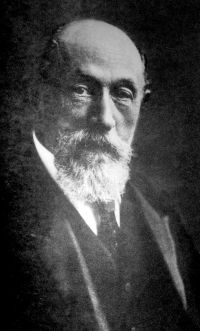
Portrait of Ernst Haeckel Ernst Haeckel,  Report on the Radiolaria Collected by H.M.S. Challenger During the Years 1873-1876…

“ The Extracapsular Xanthellæ.—Xanthellæ or Zooxanthellæ, symbiotic "yellow cells," are very commonly found in the extracapsulum of the Radiolaria, especially in many Spumellaria and Nassellaria; whilst in the Acantharia similar yellow cells usually only occur within the central capsule, and in the Phæodaria their {lviii}presence has not been certainly demonstrated. The extracapsular Xanthellæ are found most abundantly in the Collodaria, both in the monozootic Thalassicollida and in the polyzootic Sphærozoida. ”
Source: Gutenberg

Get perspective with Kwize: daily news enlightened by great literature