Cyclostomata

Definition and stakes

Frederick Parsons, John Broadbent and Edmund Owen,  1911 Encyclopædia Britannica (1911)

“ In the Cyclostomata (lamprey and hag) , and Fishes, the heart has the same arrangement which has been noticed in the human embryo. There is a smooth, thin-walled sinus venosus, a thin reticulate-walled auricle, produced laterally into two appendages, a thick-walled ventricle, and a conus arteriosus containing valves. ”
Source: Wikisource

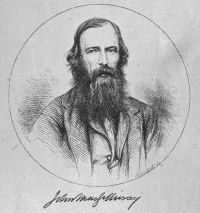
Portrait of John MacGillivray John MacGillivray,  Narrative of the Voyage of H.M.S. Rattlesnake…

“ The order, Polyzoa infundibulata, is divided into three suborders, coinciding very nearly with the Tubuliporina, Celleporina, and Vesicularina of the work above referred to, but as the characters of these suborders are derived from the conformation of the opening of the cell, I have thought it more convenient to name them accordingly. The first suborder, having a round, simple opening to the cell, is here termed the Cyclostomata ”
Source: Gutenberg

Walter Holbrook Gaskell,  The Origin of Vertebrates

“ Dohrn, however, gives absolutely no evidence of a former gnathostomatous condition either in Petromyzon or, in its larval state, Ammocœtes. He simply assumes that the Cyclostomata are degenerated fishes and then proceeds to point out the rudiments of skeleton, etc., which they still possess. Every point that Dohrn makes can be turned round; and, with more probability, it can be argued that the various structures are the commencement of the skeletal and other structures in the higher fishes, and not their degenerated remnants. ”
Source: Gutenberg

Get perspective with Kwize: daily news enlightened by great literature