Cestode

Definition and stakes

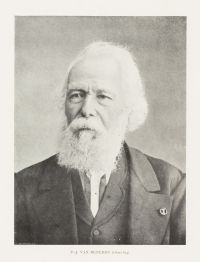
Portrait of P. J. van Beneden P. J. van Beneden,  Animal Parasites and Messmates

“ We repeat that each animal has its parasites, and these in their turn are not always exempt from them. We have already cited some examples of this.
Man has the dental system of a vegetable feeder; but, thanks to fire, which he alone knows how to produce and maintain, he eats flesh. It is by these means that he nourishes the solitary worm, which, by its crown of hooks, is a cestode belonging to the carnivora, and the Tænia mediocanellata with the Botriocephalus, which [Pg 213] are cestodes peculiar to vegetable-feeders.
”
Source: Gutenberg

1911 Encyclopædia Britannica (1911)

“ The transition of the larva from the intermediate to the final host is accomplished by the habits of carnivorous animals. The Elasmobranchs swallow infected molluscs or fish; pike and trout devour smaller fry; birds pick up sticklebacks, insects and worms which contain Cestode larvae; and man lays himself open to infection by eating the uncooked or partially prepared flesh of many animals.
The peculiar feature of the larval history of Cestodes is the development in most cases of a cyst or hydatid on the inner wall of which the scolex is formed by invagination.
”
Source: Wikisource

Portrait of P. J. van Beneden P. J. van Beneden,  Animal Parasites and Messmates

“ We have reason to think so, from the presence of certain agamous cestodes, which have been frequently found in too great number to allow us to suppose that they have lost their way in these aquatic mammals. There have been seen in the substance of the muscles of many species, or rather in the layer of blubber which covers the skin, agamous cestode worms of the genus Phyllobothrium, which can only accomplish their evolution in some large squalus. ”
Source: Gutenberg

Get perspective with Kwize: daily news enlightened by great literature