Taenia solium

Definition and stakes

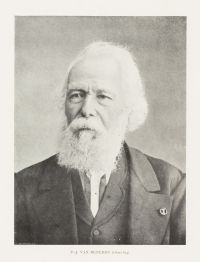
Portrait of P. J. van Beneden P. J. van Beneden,  Animal Parasites and Messmates

“ Man harbours not only the Tænia solium, but another species very similar, which naturalists have only learned to distinguish from it during the last few years, the Tænia medio-canellata. We give a magnified representation of the scolex, that is to say, of the head of this [Pg 219] worm, which has no crown of hooks in the middle of its four suckers. ”
Source: Gutenberg

1911 Encyclopædia Britannica (1911)

“ Scolex with four suckers, rarely hooked, and with a rostellum. Mostly parasitic in homoiothermic (warm-blooded) vertebrates. Selected forms: Taenia solium, intestine of man (fig. 3, C) . Taenia saginata (fig. 3) without hooklets on the rostellum; intestine of man. T. murina, in the rat and mouse, the adult in the lumen of the intestine, the larvae in the villi. This species therefore undergoes no change of host. Cystotaenia coenurus, intestine of dog and wolf, larva (a coenurus, fig. 11) in the brain of sheep; allied forms occur mature in the dog and larval in the rabbit. ”
Source: Wikisource

Popular Science Monthly (1879)

“ A single root often contains as many as fifty million of these parasites.
The larva of the tapeworm known as Tænia solium comes from "measly" pork, and the mature worm has a head bearing a crown of hooks. Tænia mediocanellata is derived from beef and mutton; it has a larger head, which is unarmed. It has commonly been supposed that the former species is more frequently found in human subjects than the latter, but Professor Leidy is of the contrary opinion. Thorough cooking of meats is a sure preventive of the development of these unwelcome entozoa.
”
Source: Wikisource

Get perspective with Kwize: daily news enlightened by great literature