AI-generated from sources
Hunger and Conscience in Lancashire, How the Cotton Famine Tested the King Cotton Wager
In Brief
- The King Cotton doctrine treated the British factory worker as a stomach with no judgment of its own: a hostage of the planter and evidence that free labor was no better than slavery.
- Abolitionists and slaveholders agreed that Lancashire rested on slave-grown cotton; what they disputed was whether material interest governs political opinion.
- The fight over Lancashire's distress was first a fight over causes: blaming the blockade pointed toward recognizing the South, blaming the rebellion pointed the other way.
- The famine displaced the dependence rather than ending it, as new cotton fields opened in Egypt under another system of bondage.
Main authors
Few episodes of the 19th century bring together so many forces at once as the Lancashire cotton famine: a single raw material, a civil war on another continent, an industrial workforce with no reserves, and a moral question that had been debated for decades. Underneath runs a question of political philosophy that outlives its period. Can material dependence decide where a people's sympathies lie? Before the war, the defenders of American slavery built a full doctrine on that premise. In their view, Britain was bound to the plantation by its looms, and any blow to the cotton crop would bring hunger to millions of English mouths [1, 2]. The war turned that doctrine into an experiment, and the blockade of the Southern ports supplied the conditions for it [3].
Memory has mostly kept the result in its heroic form: mill families who went hungry with patience because they understood that the Union's success meant freedom for the enslaved, and workers who asked their own government not to interfere [4, 5]. The sources closest to the events tell a rougher story. The hardship was real enough to arm the South's British friends [6]. Rival meetings competed for public opinion [7]. Many people put the blame for their distress on America rather than on slavery [8]. That disagreement does not weaken the example. It is what makes it one. If hunger had settled the question by itself, no one would have had to choose, and the King Cotton wager would have been neither lost nor won, only confirmed.
The King Cotton wager, dependence as a political weapon
The pro-slavery case collected in Cotton is King, and Pro-Slavery Arguments rested on a simple chain of reasoning. Slave-grown cotton made up so large a share of British prosperity that no British government could survive if the supply were cut off [9]. The compilation went as far as enlisting a British voice for the point: nearly two million of that writer's countrymen lived on the American crop, and a disaster in the cotton country would stop ten thousand mills and starve their workers . Dependence was presented less as a policy choice than as a law of nature, a mechanical link between a field in Georgia and a kitchen in Lancashire.
From there the argument grew more ambitious. If cotton's monopoly gave slavery its economic value, then free labor itself had become subordinate to slavery and had a stake in keeping it going and extending it . Even British statesmen, the same writers claimed, knew that free labor could not meet rising demand anywhere in the world, and that the spindles had to keep turning or the population would face starvation or emigration [10]. Morality had little place in this account. British denunciations of slavery became a sort of hypocrisy, since the same public that condemned the institution never protested against importing what it produced .
The British factory worker appears twice in this literature, and the double appearance gives the strategy away. First he is a hostage, a mouth that the planter could leave unfed simply by withholding a crop. Second he is evidence: one Southern writer, addressing a British reader, points to the rags and thin porridge of employed operatives to suggest that labor which British reformers call free could hardly be made any cheaper [11]. In both roles the worker has a stomach and no judgment of his own. The wager assumes that his political loyalty will follow his wages, and that a lost wage will produce a change of mind.
Abraham Lincoln, speaking in the years just before the war, put the opposite assumption into its simplest form. There are only two ways to get men to work, he observed: hire them and win their consent, or buy them and drive them [12]. The distinction matters for Lancashire. If the hired laborer's allegiance amounted to nothing more than his pay, the gap between the two systems would close, and the Southern theorists would be right that free labor had become an appendage of slave labor. In that sense the cotton famine tested whether consent was anything more than a price.
A shared diagnosis, the insecure foundation of Lancashire
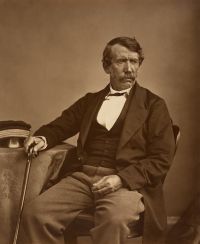
The striking thing is that the opponents of slavery agreed with the diagnosis. John Bright, the Manchester radical, acknowledged that everyone knew the country was running a vast industry on an insecure foundation, and that slavery in the United States was the commonly named danger [13]. David Livingstone went further and turned the dependence into a charge of complicity: British demand for cotton and sugar kept alive the very wrong that Britain claimed the right to condemn, a fault he framed in the racial vocabulary of his time as a division within one Anglo-American family [14]. Harriet Beecher Stowe, writing in 1854, traced the same mechanism from the American side: rising cotton consumption had pushed up the market value of slaves and lined up greed and political ambition behind the institution [15].
Private correspondence shows how far the premise of the wager was shared among Britain's elite. In a letter that the historian Ephraim Douglass Adams brings to light, Charles Greville admitted before the fighting began that what Britain really cared about was the cotton crop. Behind all its abuse of slavery, he wrote, the country was as invested in the prosperity of the slave interest as the planters themselves, and Lancashire would mourn a successful slave revolt [16]. That frankness exposes how fragile Britain's moral position was. Its anti-slavery reputation had been easy to keep while the bales kept arriving, and nothing guaranteed it would survive their absence.
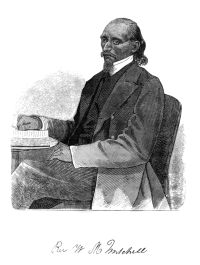
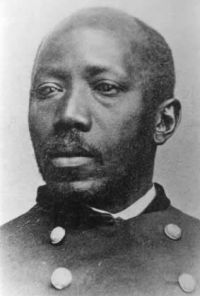
Black abolitionists read the same fragility as leverage. William M. Mitchell, writing in 1860, imagined enslaved workers refusing to grow cotton without wages, and the immediate effect: mills closed in Lancashire, capitalists helpless, streets full of the destitute [17]. Martin Robison Delany described a prosperity hanging on a single thread that a blight, a frost, a rise in Northern demand or a slave insurrection could break, and he feared it would bring Lancashire a famine like the one Ireland had suffered [18]. In these accounts the enslaved worker is the hidden actor of the whole cotton economy, the person whose labor everyone depends on and whom no one consults.
Henry Charles Carey stated the dependence most harshly. For the Lancashire operative, he argued, food or no food was decided by the size of the cotton crop, so a busy slave trade meant wages for the spinner's household [19]. If Carey was right, opposing the South meant opposing one's own bread, and the operatives' sympathy for the Union could not have been a reflex of interest. It had to be a decision taken against interest. So the shape of the dependence was never in dispute. Both sides accepted it. The open question was whether interest governs opinion, and that is exactly the point on which the famine forced a verdict.
Hunger in the open, who was to blame for the distress
The hardship was not rhetorical. Adams, looking back as a historian, judges that it was serious enough to cause real alarm and to hand an argument to the South's British sympathizers . The state took part directly: in 1863 an engineer was sent to Lancashire by the prime minister to organize relief works for the thousands of operatives left idle by the stoppage of American supply [20]. Hunger thus became a public fact that could be counted, administered and used in argument, and every camp in the debate tried to claim it.
The fight was first of all about causes. Adams notes that most of the British public sincerely believed America was responsible for the distress, and he argues that this mistaken belief mattered more politically than the truth. In his account, the great manufacturers, whom he calls by the period's label of Cotton Lords, deliberately presented the war as the only cause and said nothing of others . Harriet Martineau, writing in 1862 from inside the crisis, offers one of those other causes. Some employers worked their cotton at a loss to keep their people employed, while others profited from scarcity, and the Lancashire capitalists did almost nothing to secure Indian stocks or a larger future crop [21]. Part of the famine, on this view, came from management and not only from the blockade.
Bright's answer was to rebuild the chain of causes link by link. Lancashire's distress came from the failure of supply, the failure of supply from the war, and the war from the slaveholders' attempt to destroy a free government in order to make slavery permanent. It followed that nothing in Lancashire's suffering justified friendship with the South [22]. He even predicted that America would never again grow a cotton crop with slave labor [23]. The whole argument depended on where blame was placed. If the blockade was the cause, hunger pointed toward recognizing the South. If the rebellion was the cause, hunger pointed the other way.
The dispute was fought in public meetings as much as in speeches. A pro-Northern piece printed in The Atlantic Monthly in 1864 admits that the South's British supporters had organized rival demonstrations, backed by wealth and personal influence, and claims that they mostly failed despite the distress. It adopts the opponents' sneer as a badge of honor: the Union's British friends were indeed the untitled and undistinguished mass of the people . Gilbert Seldes, writing generations later, turns this into a clean opposition between a government, a press and a propertied class eager to see America divided, and the men and women of Manchester begging them not to interfere . His version reads more like a parable than the contemporary text, which describes a contest that was won but genuinely fought.
The two governments concerned read the episode from opposite sides. Lincoln, writing to the workingmen of Manchester, acknowledged their suffering and named it as coercion: the trials inflicted on Europe's workers were meant to extract their support for a government founded on slavery [24]. The Confederacy's diplomatic correspondence records the failure of that pressure in its own words. It complains that the blockade had seriously damaged British trade and pushed thousands onto the poor rates, and that the British government had nonetheless observed it scrupulously, to the nation's cost [25]. Hunger was present everywhere in the debate, and yet it never became British policy.
What the famine proved, and the limits of the lesson
On its economic side, the wager was beaten on more than one front. Nathaniel W. Stephenson, the South's chronicler, holds that the blockade ruined the entire policy built on King Cotton . Rosa Luxemburg, writing much later as a theorist of capital accumulation, describes the other half of the defeat. When American supply failed, vast new plantations appeared in Egypt almost at once, opened to European capital through a long-established system of bondage [26]. The monopoly the Southern writers had treated as permanent proved fragile once capital looked elsewhere. Yet Luxemburg's account is uncomfortable for any purely moral reading: the dependence moved rather than disappeared, and coerced labor moved with it.
Adams warns against settling the matter with economics alone. He criticizes historians who saw only material causes, and he includes the argument, already made by pro-Northern Britons during the war, that Northern wheat had defeated Southern cotton [27]. One determinism had replaced another. In the first, cotton dictates British policy. In the second, grain does. Neither leaves room for what people thought. At the opposite extreme, Amelia E. Barr's fiction depicts starvation borne with faith because the blockade's success meant freedom for the enslaved . That moral reading restores agency, but it comes from a novel, a form of memory with its own reasons to simplify.
The social history complicates both versions. Edwin Waugh, who observed home life in the mill towns during the famine, reported more sympathy between employers and employed than the cotton trade had ever known, with each side discovering the other's humanity [28]. A magazine piece from 1852 had described the same relationship as bare opposition, employer and employed held together only by the requirements of work [29]. If the famine brought about a local truce between classes, the operatives' transatlantic sympathy may have been sustained in part by relief and by the conduct of employers who chose to share the loss, alongside others who did not . Solidarity abroad and paternalism at home are not mutually exclusive.
Read against Lincoln's two ways of getting work done, the operatives' stance takes on a definite meaning: by refusing to let hunger dictate their sympathies, they asserted that a hired worker's consent was not simply a function of his wages . That interpretation needs a caution. In these sources the operatives almost never speak for themselves. Their voices reach the reader through Bright , through Waugh , through a pro-Northern magazine , through a later popular historian and through a novelist . The example is real, but it has been told by others, and each of them had an interest in the moral it carried.
The cotton famine did not refute the King Cotton doctrine on every point. The dependence it described was real, acknowledged by its opponents and conceded in private by members of the British elite . The hunger was real too . What failed was the political conclusion drawn from it, the belief that a population deprived of its staple would turn its government toward the slaveholders. That conclusion failed in the streets, where rival meetings were held and lost , in the argument over causes that Bright won , and in the government's continued observance of the blockade . The episode matters because the outcome was contested, not because it was inevitable or unanimous.
The memory of those years stayed in British industrial thinking long after the mills reopened. In 1887 a writer in Popular Science Monthly, reflecting on the prospects of the Lancashire and Yorkshire workforce, called up the cotton famine to imagine something worse: a famine of customers, in which goods made by that labor could be bought more cheaply elsewhere [30]. The comparison shows what the episode had become, a reference point for the vulnerability of a society that lives on distant inputs and distant markets. The question it raised, whether material dependence leaves people free to judge, did not close with the war. Each later shift in the geography of supply raised it again in a new form.