AI-generated from sources
The Abolitionist Nation, How Britain Turned the End of Slavery into a Story of Its Own Virtue
In Brief
- Early British abolitionists treated slavery as a national sin: the metropolis that encouraged the trade, and the bystanders who did nothing, were held almost as guilty as the planters.
- The twenty million pounds paid at emancipation was celebrated as a sacrifice without parallel, yet it went to slaveholders as compensation for their lost property; contrition took the shape of a payment to the masters.
- Apprenticeship, the regime that followed the 1833 Act, kept freed people working most of their time for their former masters without pay; the abolitionist Theodore Dwight Weld saw in it “the cardinal principle of slavery”, yet later accounts dated freedom to 1833.
- Once told as accomplished, Britain's abolitionist virtue became an instrument abroad, underwriting diplomacy and a civilising mission, and a mirror that critics turned against its continued trade in slave-grown goods.
Main authors

In February 1848, Blackwood's Edinburgh Magazine treated the matter as settled. To end slavery in the colonies, the nation had agreed without a murmur to pay twenty millions sterling, a sacrifice to principle and philanthropy that every reader, it said, must allow to be “unparalleled in the annals of the world” [1]. The same passage that crowned the gesture also hedged it. The magazine warned at once against letting praise slide into extravagance or exaggeration [1]. Yet what it took for granted is more striking than its caution. The payment was a sacrifice; the sacrifice was the nation's; its object was principle. Who received the money, and on what grounds, did not need saying.
That ease had a history. Within a few decades, British abolitionism travelled from confession to self-congratulation. Its first voices spoke of a sin shared by the metropolis [2]; later, an American anti-slavery publication could relay Thomas Fowell Buxton's declaration that England had become “one great Anti-Slavery Society” [3]. The passage between the two was made by a story. In it, guilt was not denied but converted: confessed, then paid off, then turned into a title to judge others. The conversion had a cost in memory. The money went to slaveholders [4], and the freedom proclaimed in 1833 was followed by a regime of unpaid forced labour that the story of virtue had trouble holding [5, 6]. A contrition told as complete leaves little room for an account that remains open.
Granville Sharp and the Guilt of the Metropolis
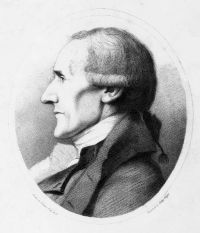
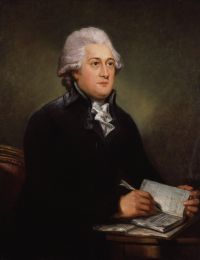
Before abolition was a virtue, it was a confession, and the confession was national. Granville Sharp, whose memoir appeared in 1836, refused to let the mother country hide behind its planters. He judged the inhabitants of Britain and those of the colonies almost equally guilty of oppression [2]. His reasoning inverted the usual geography of blame. The colonists held slaves while protesting against the trade; Britain kept none, but publicly encouraged the traffic and brushed aside every petition the colonists sent against it [2]. A text that Thomas Clarkson reproduced in his history of 1808 went further. It called the plantation laws the most merciless ever tolerated on earth, and singled out the English slaveholder for wielding their authority with rigour and brutality [7]. In these early pages, Englishness is no alibi. It is an aggravating circumstance.
Guilt also reached those who merely watched. A passage of The History of Mary Prince condemns, almost as harshly as the oppressors, those who could prevent the crimes but stay idle from indifference [8]. It blames them for letting the sophistry and avarice of the planters dissuade them from throwing the shield of British power over the victim. The conclusion is collective: slavery is “the reproach and the sin of England”, and the passage prays that the country be spared the ruin its national guilt deserves [8]. That language soon found a public. Samuel J. May, recalling the years 1825 to 1827, describes the benevolent people of England roused by Clarkson, Wilberforce and Macaulay to a consciousness of their nation's wickedness [9]. Immediate emancipation, he writes, was debated everywhere, down to the debating club a young George Thompson had joined [9]. The guilt was owned. It was also becoming a cause one could join.
From the start, however, the confession came with a timetable. A voice quoted in Clarkson's history argued that one must find “some middle line at first”, since humanity alone could not be expected to govern mankind [10]. Another speaker, reported in the 1839 edition, ranked justice above honour and honour above gain. He then drew an image for emancipation. Freeing a man used to slavery all at once, he said, might be as dangerous as exposing someone who had never seen daylight to the full glare of a meridian sun [11]. He claimed to share this view with Wilberforce and Pitt [11]. The image is revealing. It makes the enslaved person someone to be shielded from his own freedom. The sin was total in the words; the remedy would be measured out in doses. Nothing in this frame made the freed person a creditor.
Twenty Millions and the Arithmetic of Penance
Twenty millions sterling became the emblem of repentance. C. H. Thomas, writing on the origins of the Anglo-Boer War, tells it as a moral sequence. The nation, he says, “hid its shame and contrition” in acts meant to remedy its share of the evil [12]. Those acts were the twenty millions spent on emancipation, the costly measures against the trade, and the proclamation of freedom for all slaves in the dominions [12]. He means it as praise. The verb, whatever he intended by it, carries a double sense: the expenditure is at once the expression of shame and its covering. Once the money is spent, the account looks closed. Thomas moves straight on to a new colonial and native policy, offered as further proof of the same desire to do justice to coloured races, in his words [12].
The arithmetic looked different to an economist. John Stuart Mill, in the 1871 edition of his Principles of Political Economy, judged that in the rich and under-peopled West Indies the balance of profits lay greatly on the side of slavery [4]. The compensation granted to the slave-owners was therefore, in his view, not more, perhaps even less, than an equivalent for their loss [4]. Read this way, the payment was no gift to principle. It was a settlement with property holders, fair or even mean by the measure of what they gave up. Ralph Waldo Emerson wanted the United States to copy the model. In his Miscellanies he proposed to buy that property of the planters, as the British nation had bought the West Indian slaves [13]. The admirer and the economist share the vocabulary of purchase. In both, the seller is the master.
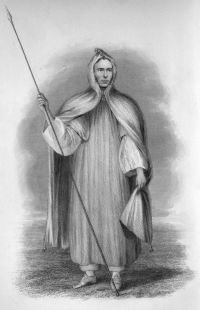
In that bargain, one party had no seat. A text in Chambers's Edinburgh Journal, discussing slaves held in ships or colonies without special slave laws, weighed the objection of lost property against the principle of liberty, which British justice, it said, had always held superior to mere expediency [14]. If the question was who gains or loses most, it answered, the man whose freedom had been taken from him had the greatest of all claims for indulgence [14]. James Richardson, travelling in the Sahara in 1845 and 1846, drew the consequence for the British ledger. He asked how British sincerity could be believed while public men called for something like a revived slave trade and churches were built with slave-labour money [15]. The Act of Abolition and “the famous twenty millions”, he added, were not so wonderful when Britain owed a hundred millions to the descendants of its slaves [15]. The figure is a polemical estimate, not an audit. Its force lies in the change of creditor.
Over time, the motives of abolition were purified in the telling. A text collected in William O. Blake's History of Slavery and the Slave Trade, published in 1861, did not deny that humanity had weighed heavily in the British decision [16]. But it added what it called a fallacious calculation. Britain believed that free African and East Indian labour would produce tropical goods more cheaply, and it knew full well what those goods meant for its commerce, navy and revenue [16]. Sixty years later, William Emerton Heitland held that religion, personal and humanitarian, was alone enough to explain the spirit raised by Clarkson and Wilberforce [17]. His proof was political. The reform passed two generations before England's manual workers won power, so it could not express free labour's jealousy of slave competition [17]. Both are arguments, not findings. Yet the drift is plain: the calculation drops out, and what remains is a nation moved by conscience alone.
Weld and the Apprentice, Slavery Under Another Name
The Emancipation Act did not end forced labour at once. It created apprenticeship, and contemporaries fought over what to call it. For Theodore Dwight Weld, writing in 1838, the system retained “the cardinal principle of slavery” [5]. The apprentice was still forced to labour and robbed of his earnings for three-quarters of his time, with a legal officer to flog him if he objected [5]. Weld granted that slavery's bloodiest features had been erased [5]. The opposite case also circulated. One text reproduced in The Anti-Slavery Examiner described a reciprocal bond, in which the law fixed and enforced the apprentice's wages [18]. Each party, it argued, held property in the services of the other, and neither held the other as property; it closed by asking whether this was slavery [18]. The same institution, depending on the eye, was a contract or a theft of time.
Its function, according to another report in the same publication, was plainer. The system had been mainly devised to serve as “an additional compensation” for the masters [19]. It failed even at that, since it was estimated to cost little less than slavery and more than free labour [19]. The masters, in other words, were meant to be paid twice: once in sterling, once in the unpaid hours of the people they had owned. The burden fell lower still. The apprenticeship law made no provision for the free children, a report noted, so parents who worked the most and best part of their time for their masters unrewarded had to support them alone [20]. Complaints against mothers for absence from work were, it added, on the rise [20]. Freedom had been granted to the children. Its cost had been charged to their parents.
By several accounts, the transition was harsher than what it replaced. Cassell's History of England states that apprentices were treated worse than under the old condition of slavery, because the planters knew the time of enfranchisement was at hand [21]. When the appointed hour of liberty, 1 August 1840, came near, the Jamaica Assembly ended the system early on its own—and attached an angry protest against any interference by the British Parliament [21]. Even the last step of emancipation was thus claimed by the masters as an act of their own authority. Its legacy proved long. Writing in 1919, The Journal of Negro History saw very little progress in the labouring man's condition in Jamaica since the picture Sturge and Harvey had drawn of the island in 1837, more than eighty years before [6].
Later memory compressed this interval into a single date. William J. Long's English Literature states in passing that the slaves had been freed in 1833 [22]. In 1885, Popular Science Monthly recalled that England had struck the manacles from its slaves over fifty years before [23]. Neither passage is about the West Indies. In both, emancipation serves as a yardstick for new evils at home: the industrial slavery of mines and factories for Long, the trade in children by men of the most favoured class for the magazine [22, 23]. That use helps explain the compression. A yardstick must be clean, and a freedom granted in 1833 is cleaner than one completed in 1838, after years of forced labour [6, 5].
Splendid Diplomacy and the Mirror of Hypocrisy
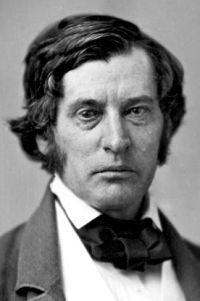
Once told as done, the virtue could be exported. Charles Sumner counted among the great acts of national intercession the moment when Great Britain alone, by “splendid diplomacy”, set herself against slavery throughout the world [24]. Abolition had become a foreign policy. In a speech by the Prince of Wales, the future Edward VII, it becomes a programme. The best chance of complete abolition, he argued, lay in civilisation, in opening up Asia and Africa and spreading education [25]. The freeman, he predicted, would work far better than the man forced to labour [25]. C. H. Thomas drew the same line, from the twenty millions to a transformed colonial and native policy [12]. Repentance, once closed, opened a mission.
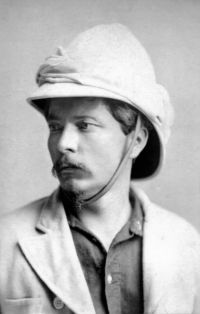
The reputation also served as a lever over others. In South Africa, Henry M. Stanley records a speaker's grievance against the British. As soon as his people act, the British raise the cry that they are barbarous and are reducing rebels to slavery, and so stir up the population [26]. The reply Stanley records is just as telling. If the British nation came to believe such a thing, Parliament would raise the question and might well pass a law against it [26]. The anti-slavery sentiment here is not remorse. It is a claim to jurisdiction: British opinion, through Parliament, may legislate against the sins of others.
A virtue so public could be turned back on its owner. In 1863, Harriet Beecher Stowe's reply to the women of Great Britain and Ireland carried a pointed question. Why did the nation “memorable to all time as the destroyer of negro slavery” feel no sympathy with those fighting the slaveholding conspiracy, and even desire its success [27]? The question turns the story's own terms into a charge. Nine years earlier, an address printed in Stowe's Sunny Memories of Foreign Lands had named a deeper anomaly: a country putting down slavery by law while supporting it by its trade and commerce [28]. Its authors concluded that their position should dispel all self-complacency [28]. A. W. Weston, also in 1854, observed that British friends of the cause could not take the wider view the American struggle required, since no British institution, civil or ecclesiastical, had been in the least affected by the abolition of West India slavery [29]. Virtue at a distance is cheap to keep.
Hostile writers used the same mirror. John C. Cobden titled his book The White Slaves of England and set out to prove that the oligarchy owning Great Britain was the best friend of human slavery [30]. Its feudal institutions, he claimed, were perpetuated wherever British sway extended [30]. The charge is partisan, and the extract says nothing of the West Indies. But it shows how the story of virtue had raised the stakes. Having made itself the standard, Britain could be measured by it on every count, from its factories to its dominions [22, 30]. Such trials rarely reopened the original account. They added new charges to a file the nation believed it had closed.
British abolitionists began by naming slavery a national sin, shared by the metropolis that encouraged the trade and by the bystanders who did nothing [2, 8]. Within a generation, the twenty millions sterling voted for emancipation had become the proof of repentance, told as a sacrifice without parallel [1, 12]. The money went to slaveholders, as an equivalent for what they counted as lost property [4, 13]. The freed people then laboured for their former masters, unpaid for most of their time, under an apprenticeship that one report described as a further compensation to the owners [5, 19]. Later accounts dated freedom to 1833 and used it as a measure of other evils [22, 23]. Abroad, the same virtue underwrote diplomacy and a civilising mission, and drew charges of hypocrisy against a country that still traded in slave-grown goods [24, 25, 28].
The story did not deny the guilt; it confessed it at length. Its strength was to confess and to settle in a single movement, so that contrition took the form of a payment already made [12, 1]. The voice that kept the account open stood outside the ledger: Richardson, setting the famous twenty millions against the hundred millions owed to the descendants of the slaves [15]. His objection bore on the size of the sum, and on its direction. A nation that remembers having paid can easily forget to whom it paid.