AI-generated from sources
Twenty Million Pounds for the Masters, How British Emancipation Chose Its Injured Party
In Brief
- When Britain abolished colonial slavery, it paid twenty million pounds to the slaveholders rather than to the people freed: the law treated the owner deprived of his property as the injured party.
- The freed paid part of the price themselves: under apprenticeship they owed their former masters years of unpaid labour, which American abolitionists described as an additional compensation for the planters.
- Even after the payment, Blackwood's Edinburgh Magazine complained that the indemnity covered less than a quarter of the slaves' value and calling the high wages earned by the freed an evil.
- Abolitionists answered that slavery violated the very principle of property, a person's right to the fruit of his labour; on that view the creditor was the enslaved, and Timothy Thomas Fortune, writing on land and labour in the American South, reckoned that a billion dollars would have bought every slave in 1860 while fifty billions would not repay their forced labour.
Main authors
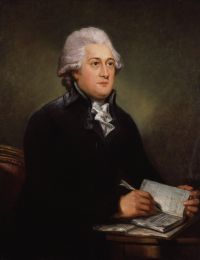

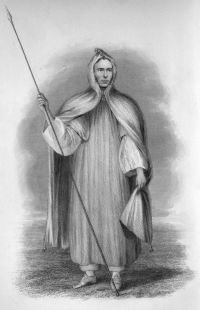
In the account of his travels across the Sahara in 1845 and 1846, James Richardson pauses over a question of British credit. Foreigners, he argues, have little reason to believe in British sincerity about abolition, since people judge by actions rather than by declarations [1]. Measured that way, the record looked thinner than the reputation. The Act of Abolition and “the famous twenty millions” were not such wonderful things, he wrote, when the country owed a hundred millions to the descendants of its slaves [1]. The remark is an aside. It nonetheless moves emancipation from the language of virtue to the language of accounts, and it names a creditor whom the twenty millions had not paid.
No one in these debates denied that ending colonial slavery had a cost, or that someone was entitled to be paid. The quarrel lay in the choice of that someone. The twenty millions went to the owners, and Barlow Cumberland, a historian of the Union Jack, later praised exactly this: the British, he wrote, had refused to exercise their compassion “at any other person's expense” [2]. The other person, in his sentence, was the master. Between the owner stripped of a property and the labourer stripped of a lifetime's wages, the law of emancipation had to recognize one injured party. Which one it chose, and what that choice concealed, is the real substance of the argument over what slavery left owing.
The Famous Twenty Millions and the Nation's Good Conscience
To its admirers, the payment proved British virtue, and its size was the proof. A writer in Blackwood's Edinburgh Magazine recalled in 1848 that the nation had paid twenty millions sterling without a murmur, “a sacrifice to principle and philanthropy” without equal in the annals of the world [3]. Tellingly, the same writer warned readers not to let admiration slide into exaggeration [3]. A later book on the origins of the Boer War described the money as the way a nation hid its shame and contrition, a remedy for its share of the evil committed [4]. In both versions the sum is a moral gesture. It settles an account with the nation's conscience, not with any particular creditor.
This moral framing produced a curious slippage between who was thanked and who was paid. Hinton Rowan Helper, author of The Impending Crisis of the South, held that no nation had repented of slavery more honourably, nor acted with more prompt magnanimity toward its outraged bondsmen [5]. The generosity, in his telling, is addressed to the enslaved. Yet British generosity, as Cumberland describes it, consisted in paying the owners for the emancipation of their slaves [2]. The beneficiary of the moral act and the recipient of the money were not the same person. Praise of the twenty millions lived on that confusion.
The sum soon became a yardstick of national merit, and its exact amount mattered less than the lesson drawn from it. George R. Parkin, pleading for imperial federation, set the £30,000,000 added to England's debt to extinguish slavery beside what the United States had paid for “the same national purification” [6]. The comparison was meant to silence colonial critics of British policy. Cumberland spoke of one hundred million dollars [2], Blackwood's of twenty millions sterling [3], Parkin of thirty millions added to the debt. The reckonings vary; the self-image holds. Emancipation became a debt the nation had discharged, and discharged handsomely.
Abroad, the British model turned into a recipe. Ralph Waldo Emerson asked why the United States did not end its dispute over slavery by buying the planters' property, as the British nation had bought the West Indian slaves [7]. His bargain had two sides: fair compensation for the planters, and satisfaction for the conscience of the free states [7]. The enslaved appear in it only as the goods to be purchased. That is the deepest legacy of the twenty millions. Even an opponent of slavery could describe abolition as a transaction between owners and a public, with the freed as its object.
Wellington's West India Property and the Owner as Injured Party
Compensation rested on a prior decision: that a slave was property like any other. The Duke of Wellington stated it without hedging. West Indian property, he insisted, was “as much entitled to protection as any other property” in Great Britain, and the petitioners clamouring for immediate abolition forgot the enormous holdings of the king's subjects at stake [8]. Grant that premise and everything else follows. If the slave is property, emancipation is an expropriation, and the owner is the party it wrongs.
Contemporaries contested the premise, though rarely to the end. Chambers's Edinburgh Journal noted that, where slaves were held in ships or in colonies without special laws for slavery, British subjects stood to lose many millions' worth of property which they believed they justly possessed [9]. The verb keeps its distance: belief is not title. The journal then put the question bluntly, asking who gains or loses most, and answered that the man robbed of his freedom had the greatest of all claims [9]. Its vocabulary, however, stops short of payment. The journal speaks of human liberty above mere expediency and of a claim for indulgence; it names no price.
Even paid, the owners were not held to have been made whole. In January 1848, Blackwood's complained that the compensation had not averaged a fourth of the value of the slaves set free [10]. The same issue foresaw that, by mid-century, the nation would have added twenty millions to its debt to no purpose and annihilated £130,000,000 of property in its own dominions [11]. In 1844 the magazine had gone further. It counted another £10,000,000 paid by British consumers through dearer produce, money that had flowed into the high wages of the freed labourers, “the giant evil” afflicting the West Indies [12]. The inversion is complete. In this ledger, wages paid to people who had worked unpaid are counted as the injury.
The precedent travelled, and the owner's claim travelled with it. In Assam, Major John Butler reported, slaveholders argued, following the example of the West India proprietors, that their slaves were lawful property like houses, grain or cattle, and that the government must pay for every man released [13]. In the United States, the Atlantic Monthly reduced the constitutional question in 1863 to a single formula: could Congress take private property for public use and destroy it, making just compensation [14]? Once emancipation is framed as a taking, the grammar of law leaves room for only one claimant.
What compensation actually achieved was the conversion of a power over persons into a claim on things. A speaker in a parliamentary debate on socialism, preserved in The World's Famous Orations (1906), drew the lesson long after the fact: when the law abolished slavery and indemnified the slaveholders, they could not use the indemnity to buy slaves the next day [15]. The orator used the precedent to defend a future socialization of capital. Read from the other side, it shows the indemnity at work. The master lost his power over persons and was paid in money instead, and a title that abolitionists held to be void was turned into ordinary money.
Apprenticeship, or How the Freed Paid Twice
The twenty millions were only part of the price, and the rest was paid by the freed themselves. Speaking in 1838 on a motion to abolish the apprenticeship, William Ewart Gladstone described the emancipation act as a “national compact” [16]. It bound the people of the United Kingdom to a grant of unequalled size. It also bound the emancipated slaves to several years of compulsory labour, while colonial assemblies were to reconcile their duties as apprentices with their rights as free men [16]. In Gladstone's account, both sides pay. One pays in money, the other in work.
Critics called that work by its name. In The Bible Against Slavery (1838), Theodore Dwight Weld argued that West India apprenticeship kept the core principle of slavery: for three-quarters of his time the apprentice was still forced to labour and robbed of his earnings, with an officer of the law to flog him if he objected [17]. Lydia Maria Child explained the arrangement as a concession. Faced with the planters' outcry about bloodshed and insurrection, the government chose to conciliate them, and the slaves were to work six more years without wages under the name of apprentices [18]. Unpaid labour became a second instalment of the indemnity.
The American Anti-Slavery Society's investigators drew that conclusion explicitly. The apprenticeship, they wrote, had been devised mainly to serve the master as an “additional compensation” [19]. It failed even at that. They judged it dearer than free labour would have been, a system that burdened the master with the cost and ignominy of slavery while denying him its power [19]. Accounts of its intended length differ, six years for Child and seven for Blackwood's, but it was ended after four [18, 10]. The Edinburgh magazine derided the haste of a nation that thought freedom needed no longer an apprenticeship than a trade [10].
The quarrels over apprenticeship expose what was really at stake: who owned the labourer's time. A planter interviewed by the Society's investigators complained that his apprentices were lazy and impudent and did half their former work. They would not labour an hour of their own time for him even when offered pay, and left him in mid-crop to help others who paid a little more [20]. What he calls ingratitude looks, from outside, like a labour market. The investigators answered that a man has the right to choose whether to work for himself or for another, and that the planters could have found no free labourers on earth giving more work for the same money [21]. If the time belonged to the master, its loss deserved compensation. If it belonged to the worker, the years taken from him did.
Clarkson's Ledger and the Wages Never Paid
Against the owner's claim, the abolitionists set a rival theory of property. The parliamentary arguments recorded in Thomas Clarkson's history of the abolition of the slave trade held it manifestly unjust that a man should labour his whole life without benefit from his labour. On this view, the slave trade and colonial slavery violated the very principle on which all law protecting property was founded [22]. Whatever an individual gained from them was gained, in the same reasoning, through dishonour and dishonesty [23]. Writing in his own name, Clarkson drew the consequence. Every slave in the colonies had been unjustly deprived of his rights, and no master had the least claim in equity to their services [24].
If the master had no claim, paying him meant ratifying the wrong. Philo Pratt, in his 1837 apology for the American abolitionists, said exactly this: they could never sanction slavery by conceding that slaveholders had a right to compensation for restoring to the slaves the rights stolen from them [25]. Yet he offered charity to widows and children left destitute by abolition, whose claims he judged nearly as pressing as those of justice [25]. The distinction is precise. The master's household might deserve relief; the master did not deserve a price. Helper drew a line of his own, renouncing any indemnity for his own camp while refusing to let slaveholders swindle the slaves out of the claims owed to them as human beings [26].
Once the master's title falls, the debt reverses direction. A text reprinted in The Journal of Negro History in 1921 spoke of an immense debt owed to “that injured race”, which the mere liberation of their bodies would not discharge [27]. It tied that debt to what slavery had deliberately withheld from the enslaved: the means of developing the talents nature had given them [27]. Here the injured party is no longer the owner. The injury is no longer only the lost wage, either; it includes the degradation the system organized.
Measured side by side, the two claims are not of the same order. Timothy Thomas Fortune, in Black and White: Land, Labor, and Politics in the South, turned the comparison into arithmetic. Looking back at 1860, he estimated that a billion dollars would have bought every slave in the South, while fifty billions would not have repaid the slaves for forced labour and debased manhood [28]. Beside a hundred years of stolen wages, the slaveholder's claim for confiscated property shrank to nothing in his eyes [28]. His formula captures the asymmetry: the debt “grows in magnitude the closer it is inspected” [28]. The owner's loss was a market price fixed at a date; the worker's loss kept accumulating.
Nearly a century and a half after the date Fortune reckoned from, a United States district court in Illinois restated the same alternatives in the dry language of law. Reparations advocates, it noted in 2005, argue that a debt exists because the slaves were never paid for their labour [29]. The court also listed the questions such a claim must answer, among them who would pay and to which individuals or groups payment would go [29]. Among the arguments against reparations that it called cogent were that present-day Americans are not liable for historical injustices, and that the debt has already been paid [30]. The question the British had settled in 1834 by paying the owners [10] returns, but no longer alone: beside who may collect a debt, the court sets whether one is still owed at all.
When Britain abolished slavery in its colonies, it did not deny that freedom created a debt. It paid twenty million pounds to the slaveholders, because the law had made the enslaved their property, and it asked the freed to pay a second instalment in years of unpaid work as apprentices [3, 17, 16]. Admirers celebrated the sum as a national sacrifice, while one of them, Blackwood's, also complained that it covered less than a quarter of the value of the slaves set free [3, 10]. Against both, abolitionists maintained that a man forced to work a lifetime without wages was the one robbed, and that no master held an equitable claim to that labour [24, 22]. Later writers carried the reasoning to its end: the true creditor was the enslaved, and the sum owed to him dwarfed his purchase price [28].
The quarrel over compensating the end of slavery was therefore never mainly about amounts. The figures drifted, from twenty to thirty millions sterling, and Fortune's one and fifty billion dollars priced two different claims, while the decisive act came earlier, in the naming of the creditor [28, 6]. A traveller of the 1840s observed that nations are judged by their actions rather than their declarations [1]. By that measure, emancipation did not refuse to pay. It chose whom to pay, and that choice outlasted the money.