AI-generated from sources
The Enduring Paradox of American Foreign Policy
In Brief
- America's foundational foreign policy principle was non-involvement, rooted in its unique geography and a desire to avoid European political entanglements.
- The nation's growing economic ambitions and reliance on international trade created an inherent tension, gradually eroding the ideal of political isolation.
- By the dawn of the 20th century, industrial development and overseas acquisitions rendered traditional isolationism obsolete, forcing the U.S. into the role of a world power.
- Modern global interdependence and the realities of warfare transformed isolation from a shield into a vulnerability, necessitating alliances and active international engagement for national security.
Main authors
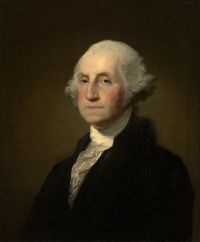


For more than a century, a core tenet of American statecraft was the principle of non-involvement in the political affairs of other nations [1]. This doctrine, famously articulated as a warning against “foreign entanglements,” was not merely a pragmatic policy but a foundational ideal rooted in the nation's unique geographical circumstances and revolutionary identity [4, 7]. Separated from the epicenters of European conflict by a vast ocean, the United States envisioned a future distinct from the Old World's cycle of wars, driven by the ambitions of rival empires [3, 6]. This stance was widely perceived as a moral and strategic advantage, allowing the young republic to focus on its own development and prosperity, insulated from disputes in which it believed it had no inherent interest [2]. The prevailing conviction was that this deliberate separation was the surest path to preserving American liberty and fortune .
Yet, this cherished ideal of isolation existed in a state of perpetual tension with the practical demands of a growing nation. While political separation was the goal, commercial connection was a necessity . The very prosperity that isolation was meant to protect depended increasingly on international trade, creating a paradox that would shape the course of American foreign relations [9, 10]. The notion of constructing a figurative wall around the nation, while appealing, was challenged by the realities of an interconnected global economy . Early on, astute observers began to recognize that the sheer size and burgeoning economic power of the United States would make perpetual detachment an untenable long-term strategy, hinting that its isolated situation could not forever secure it from the world's conflicts [20].
The Foundational Ideal of Isolation
The philosophical cornerstone of American isolationism was laid by the nation's founders, most notably in George Washington's Farewell Address, which counseled extending commercial relations while maintaining as little political connection as possible with foreign nations . This doctrine was perfectly suited to a country whose physical remoteness from the “seat of war and discord” in Europe was its greatest strategic asset . Unlike the powers of Europe, which were locked in close proximity and constant rivalry, the United States enjoyed a natural buffer that made a policy of non-intervention uniquely feasible . The primary objective was to avoid being drawn into Europe’s dynastic and colonial struggles, which were seen as having no bearing on American interests but posed a significant threat to its peace and sovereignty .
This policy reflected a deep-seated belief that America's destiny was to forge a new kind of civilization, unburdened by the historical conflicts of the Old World . While foreign affairs initially occupied a significant place in the nation's politics during its formative years, the overarching goal was to achieve a state of separation that would allow for independent development [5]. The prevailing attitude was that the United States could remain secure in its own strength, and that troubles abroad, however unfortunate for others, represented a potential opportunity for expanding American trade rather than a call to arms . This stance was viewed not as neglect, but as a principled and disinterested policy that best served the nation's material prosperity and security .
The ideal of isolation proved remarkably resilient, often reasserting itself even after the nation was drawn into major international conflicts. For many Americans, the primary lesson of the First World War was not the necessity of collective security, but the wisdom of avoiding such overseas quarrels in the future [8]. The experience reinforced the desire to retreat from the world stage, a sentiment that manifested in the interwar policy of isolationism . This powerful impulse to remain aloof from global political machinations was more than a mere policy; it was an ingrained element of the national character, sustained by the belief that America's role was to be an observer of, not a participant in, the conflicts that periodically ravaged other parts of the globe .
The Unavoidable Pull of Commerce
The doctrine of political isolation was fundamentally challenged by the non-negotiable reality of America's economic ambitions. The need for foreign commerce created an inherent and persistent tension, as national prosperity became increasingly dependent on the very global connections the founders had cautioned against . Maintaining and expanding foreign trade required stable international relations and the confidence of other nations, subtly pulling the United States into the web of global affairs . The vitality of the domestic economy, from manufacturing to agriculture, was directly linked to overseas markets, meaning that the financial and tariff policies adopted by European powers could have serious repercussions at home [16].
As the United States industrialized, its economic interests expanded far beyond its borders, transforming it from a continental economy into a global commercial power. The pursuit of new foreign markets for its ever-increasing volume of manufactured goods became a national priority [17]. This economic expansion meant that principles like the freedom of the seas and the concept of the “open door” were no longer abstract ideals but vital necessities for American prosperity . The nation's growth into a great creditor, exporting not just goods but capital, further deepened its stake in global stability [15]. This rise was not unnoticed, sparking a degree of fear in Europe of an “American invasion of trade,” which in turn reinforced the need for a more assertive American posture to protect its commercial access [11].
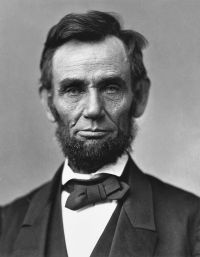
Protecting these burgeoning economic interests necessitated a more active and interventionist foreign policy. The defense of American property and citizens abroad—whether missionaries in the Ottoman Empire or traders across the globe—required diplomatic engagement and, at times, the projection of power [13]. To support its worldwide trade relations, the nation found it necessary to hold strategic points beyond its own shores, a clear departure from a purely continental focus [12]. Even the nation's internal cohesion was framed in terms of global commerce, with Abraham Lincoln arguing that national unity was essential to ensure access to international trade routes through the continent's major ports [14]. Economic imperatives thus became a powerful force, steadily eroding the foundations of political isolation.
The Mantle of a World Power
By the dawn of the 20th century, the cumulative pressures of industrial development, commercial expansion, and the acquisition of overseas territories made the traditional policy of isolation practically obsolete [18]. The United States had, perhaps faster than its own people realized, transformed into a world power for whom the old rules of non-association were no longer adequate or even possible [23, 24]. This shift, long in the making, meant the nation had inevitably taken its place among the great powers, becoming a key player in international questions that could no longer be settled by European nations alone [19]. Even as early as 1805, observers like Mercy Otis Warren had predicted that the nation's sheer scale would eventually make permanent isolation an illusion .
The strategic logic underpinning isolationism was completely inverted by the realities of modern warfare and global interdependence. In a world of rising imperial dictatorships and complex alliances, isolation was no longer a shield but a vulnerability [21, 28]. The idea that conflicts in distant lands had no bearing on American security was rendered dangerously naive [27]. As articulated by leaders like Franklin Roosevelt, peace had become indivisible; a breach anywhere threatened peace everywhere . Later, Dwight D. Eisenhower would argue that America's own security could not be guaranteed in isolation but depended on alliances with other dependable, freedom-defending nations . In this new strategic environment, detachment was seen as an invitation to war [25].
The United States was thus confronted with a new and permanent reality: it could no longer stand aloof from the currents of world politics [29, 30]. The choice was not whether to engage, but how to shape that engagement. The nation could either pursue a course of competitive imperialism, driven by financial interests, or it could work toward a system of international cooperation to mediate economic rivalries and prevent conflict . A return to a hermit-like existence was deemed neither safe nor possible, as the nation’s vital interests were now global in scope [26]. In an intricately connected world, the old ideals of national sovereignty and “noble Isolation” were increasingly viewed by reformers as insufficient and even irresponsible [22].
The history of American foreign policy is the story of a nation's gradual and often reluctant evolution from a self-contained republic to an indispensable global power. The foundational principle of avoiding foreign entanglements, born of a unique geographic position and a desire to escape the endless conflicts of Europe, served as the nation’s guiding star for over a century . However, this ideal was perpetually tested by the irresistible pressures of economic expansion, which demanded open markets and international engagement, slowly binding the nation’s prosperity to the world it sought to keep at a distance . Ultimately, the realities of global interdependence and the strategic imperatives of the 20th century rendered isolation untenable, forcing the United States to assume the responsibilities and burdens of its newfound status .
This historical trajectory has bequeathed a lasting paradox to the American political soul. The foundational impulse toward isolation has never been fully extinguished, and it continues to resonate in contemporary debates about the nature and extent of the nation's international commitments . While the practical impossibility of a return to the past is widely acknowledged, the tension between the allure of non-involvement and the demands of global leadership remains a central theme in its foreign policy discourse. The question for the United States is no longer whether it should act as a world power, but how it should navigate the complex responsibilities that come with that role, forever shaped by the memory of an ideal it could not sustain .