AI-generated from sources
The Enduring Paradox, U.S. Policy and Cuban Sovereignty
In Brief
- U.S. policy toward Cuba has consistently exhibited a dichotomy between stated goals of liberation and humanitarianism and underlying strategic, economic, and geopolitical interests.
- Early U.S. interventions, exemplified by the Platt Amendment, limited Cuban sovereignty under the guise of paternalistic oversight, ensuring American dominance in the region.
- The Cold War era dramatically redefined U.S.-Cuba relations, with the comprehensive economic embargo serving as a primary tool to contain perceived communist threats, often at a significant human cost.
- The enduring paradox of U.S. policy continues to fuel mistrust and shapes ongoing debates about normalization and the future of genuine Cuban self-determination.
Main authors


The relationship between the United States and Cuba has long been defined by a deep and persistent contradiction. Officially, American policy has consistently been framed in the language of liberation, humanitarianism, and the promotion of a free and prosperous Cuban nation [1, 5]. This narrative, particularly potent during the late 19th century, cast the United States as a benevolent protector, intervening to end the suffering of the Cuban people under oppressive foreign rule [2, 8]. This expressed commitment to Cuban welfare suggested a policy guided by idealistic principles, positioning the U.S. as a champion for the oppressed in its own hemisphere .
Beneath this surface of altruism, however, lies a more complex and often conflicting set of motivations rooted in strategic self-interest, geopolitical anxiety, and economic ambition. From its earliest engagements, U.S. policy has been shaped by a desire to secure its regional dominance, protect commercial interests, and prevent any instability that might threaten its southern flank [7, 9]. This has frequently resulted in policies, most notably the long-standing economic embargo, that have had a profound and often devastating human impact on the very people the United States claimed to be helping [24, 28]. Consequently, U.S. actions have been perpetually caught between an outward-facing commitment to Cuban liberty and the inward-facing imperatives of its own national security and economic power, creating a legacy of mistrust and perceived hypocrisy [26].
Benevolent Intervention and Imperial Ambition
The initial impetus for American involvement in Cuba at the turn of the 20th century was articulated through a powerful narrative of humanitarian duty. Reports of cruelty and suffering under Spanish colonial rule galvanized public opinion in the United States, with widespread calls for intervention in the name of civilization [4]. Political figures and civic groups framed the issue in moral terms, denouncing Spanish actions as inhuman and portraying U.S. aid as the natural role of a great, free republic sympathetic to the oppressed . President William McKinley’s administration justified its military action by citing the need to end the devastation, protect American citizens and commerce, and alleviate the human catastrophe unfolding on the island .
This humanitarian rhetoric, however, operated in tandem with deeply entrenched strategic and economic interests that had long defined America's view of Cuba. For decades, the island had been an object of American solicitude, viewed as a potential acquisition to expand U.S. influence and, prior to the Civil War, slaveholding territory . Observers like Francisco García Calderón noted that Cuba's strategic location as the key to the Gulf of Mexico and the future Panama Canal made it indispensable to American imperial ambitions . This perspective, echoed by American thinkers, was sometimes described with an air of inevitability, as if Cuba were subject to a political law of gravitation that would naturally pull it into the orbit of the United States [14].
The justifications for U.S. dominance were often paternalistic, tinged with anxieties about Cuba's capacity for self-governance. A prominent fear among some American commentators was that an independent Cuba could devolve into a state of racial and political chaos, becoming a "second San Domingo" that might threaten the stability of the United States itself [6]. This concern over potential disorder was coupled with economic motivations, as some early filibustering expeditions were seen as driven by cupidity and a desire for personal gain rather than pure idealism [3]. The confluence of these factors—humanitarian concern, strategic calculation, economic desire, and racial anxiety—created a complex and often contradictory foundation for America's nascent Cuban policy, one that left Cubans themselves uncertain of U.S. intentions [10].
The Constraints of Liberated Sovereignty
Following the Spanish-American War, the declared U.S. mission to secure Cuban freedom quickly gave way to a policy of constrained sovereignty, reflecting a profound American skepticism about the island's capacity for self-rule. The prevailing view among American policymakers was that leaving Cuba to its own devices would result in civil war and chronic anarchy, which would inevitably demand a more forceful U.S. intervention later under less favorable circumstances [11]. This perspective framed American oversight not as a violation of Cuban independence but as a necessary, if paternalistic, duty to ensure a stable and orderly government [13]. This logic extended to other U.S. interventions of the era, drawing parallels between the perceived immaturity of governance in Cuba and in the Philippines [12, 15].
This paternalistic outlook was formally institutionalized in the Platt Amendment, a set of provisions that severely limited Cuba's autonomy. By consenting to these terms, the new Cuban government granted the United States the legal right to intervene in its affairs to preserve independence, maintain order, and protect life and property [17]. The amendment also ensured that Cuba could not enter into agreements that might impair its sovereignty or allow its territory to be used as a base for actions against the United States, and it mandated a commercial reciprocity treaty that would bind the two nations' economies [20]. These measures effectively transformed Cuba into a U.S. protectorate, where its national sovereignty was secondary to American strategic and economic interests.
The imposition of these constraints fostered deep resentment among many Cubans, who saw American policy as hypocritical. Having fought for genuine independence, they chafed under what they perceived as the rule of a new foreign "schoolmaster" [16]. This sense of betrayal was compounded by economic policies that seemed to prioritize American commercial supremacy over Cuban prosperity. The delay by the U.S. Congress in establishing fair commercial reciprocity, for example, caused significant economic distress on the island, a failure that some contemporary historians viewed as a shirking of a clear moral duty [19]. The U.S., while speaking of a disinterested friendship with its "sister nations," was simultaneously pursuing a policy to control the Cuban market and foster its own supremacy in the region, a duality that defined the paradoxical nature of its relationship with the newly liberated island [18].
Cold War Geopolitics and the Human Cost of Containment
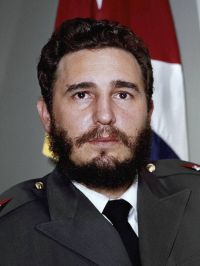
The Cuban Revolution of 1959 and the subsequent alignment of Fidel Castro's government with the Soviet Union dramatically reoriented U.S. policy, replacing the logic of paternalistic oversight with the rigid imperative of Cold War containment. As articulated by President John F. Kennedy, the primary U.S. objection to the new Cuban government was not its drive for social and economic reform, but its domination by what was termed a foreign-backed tyranny [22]. Cuba was re-imagined as a strategic threat, a base for Communist agents just 90 miles from American shores and a pawn in an international conspiracy that had turned the island into a potential target for nuclear war [23]. This geopolitical reframing provided the enduring justification for a policy of isolation and hostility.
The principal instrument of this policy became the comprehensive economic embargo, designed to cripple the Cuban economy and undermine its government. For decades, the official rationale for this blockade has been presented as a tool to promote democracy, encourage the rule of law, and pressure the Cuban government to end human rights abuses [27]. National security has also remained a key justification, with successive administrations maintaining that a potential mass migration from a destabilized Cuba would endanger the United States [25]. This hardline stance treats Cuba's political system as a non-negotiable threat to hemispheric stability .
However, critics of the embargo argue that its primary effect has been to inflict widespread suffering on the Cuban people. International observers have documented how U.S. sanctions have contributed to severe shortages of essential goods like food and medicine, exacerbating economic crises on the island . This humanitarian fallout has fueled the Cuban counter-narrative, articulated by figures like Fidel Castro, which decries U.S. policy as a form of "hypocritical Pan-Americanism" aimed at maintaining the dominance of American monopolies over the interests of Latin American peoples . More recently, this long-standing policy has faced re-evaluation within the U.S. itself. President Barack Obama, for example, called for an end to the embargo, arguing that a policy that had failed to achieve its goals for 50 years was past its expiration date and that a new approach of engagement was needed [21].
Throughout its long and turbulent history with Cuba, U.S. policy has been animated by a fundamental and unresolved tension. On one hand, it has consistently employed the language of idealism, framing its actions as efforts to secure freedom, protect human rights, and promote prosperity for the Cuban people . This narrative of benevolent intervention has served as the public justification for major policy decisions, from the Spanish-American War to the modern-day push for political change. On the other hand, these idealistic goals have been persistently subordinated to the strategic imperatives of American national interest—first through a desire for regional hegemony and economic control, and later through the all-consuming logic of Cold War anti-communism .
The result has been a series of policies that have often contradicted their stated aims, limiting the very sovereignty they were supposedly designed to protect and inflicting hardship on the population they claimed to support . From the paternalism of the Platt Amendment to the punishing isolation of the economic blockade, the pursuit of U.S. strategic advantage has consistently shaped the reality of Cuban life. As contemporary debates over lifting the embargo or normalizing relations demonstrate, this central paradox remains at the heart of the U.S.-Cuba relationship, leaving the future of the two nations dependent on the perennial struggle between American strategic anxieties and the professed ideal of genuine Cuban self-determination .