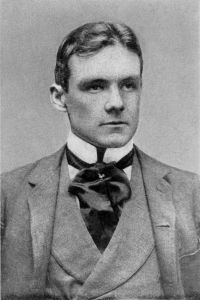
Richard Harding Davis

Richard Harding Davis

Summary

Portrait of Richard Harding Davis Richard Harding Davis,  Cuba in War Time

“ But since the revolution came to Cuba the beauty of the landscape is blotted with the grim and pitiable signs of war. The sugar cane has turned to a dirty brown where the fire has passed through it, the centrals are black ruins, and the adobe houses and the railroad stations are roofless, and their broken windows stare pathetically at you like blind eyes. War cannot alter the sunshine, but the smoke from the burning huts and the blazing corn fields seems all the more sad and terrible when it rises into such an atmosphere, and against so soft and beautiful a sky. ”
Source: Gutenberg

Portrait of Richard Harding Davis Richard Harding Davis,  Cuba in War Time

“ Its trunk swells in the centre and grows smaller again at the top, where it is hidden by great bunches of green plumes, like monstrous ostrich feathers that wave and bow and bend in the breeze as do the plumes on the head of a beautiful woman. Standing isolated in an open plain or in ranks in a forest of palms, this tree is always beautiful, noble and full of meaning. It makes you forget the ugly iron chimneys of the centrals, and it is the first and the last feature that appeals to the visitor in Cuba. ”
Source: Gutenberg

Portrait of Richard Harding Davis Richard Harding Davis,  Cuba in War Time

“ But why should we not go a step farther and a step higher, and interfere in the name of humanity? Not because we are Americans, but because we are human beings, and because, within eighty miles of our coast, Spanish officials are killing men and women as wantonly as though they were field mice, not in battle, but in cold blood—cutting them down in the open roads, at the wells to which they have gone for water, or on their farms, where they have stolen away to dig up a few potatoes, having first run the gauntlets of the forts and risked their lives to obtain them. ”
Source: Gutenberg

Get perspective with Kwize: daily news enlightened by great literature