Summary

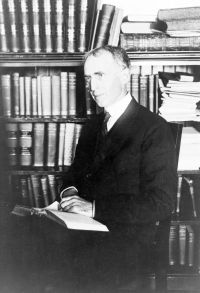
Portrait of Charles A. Beard Charles A. Beard Contemporary American History, 1877-1913

The enemy is, therefore, the trust; it is the trust which prevents everybody who would from becoming his own master in some small business; it is the trust that has taken away the "freedom" which we once had in the United States. The remedy is inevitably the dissolution of the trusts, the prohibition of unfair practices in competition—then will follow as night the day that perfect freedom which is as new wine to a sick nation. With competition "restored" and maintained by government prosecution of offenders, no one need have a master unless he chooses.
Source: Gutenberg

Portrait of Charles A. Beard Charles A. Beard Contemporary American History, 1877-1913

He was impatient with the hue and cry that was raised, "when it is proposed to shift this burden from those who cannot bear it to those who can; to divide it between consumption and wealth; to shift it from the laborer who has nothing but his power to toil and sweat to the man who has a fortune made or inherited." The protective tariff, he added, had made colossal fortunes by levying tribute upon the many for the enrichment of the few; and yet the advocates of an income tax were told that this accumulated wealth was a sacred thing which should go untaxed forever.
Source: Gutenberg

Portrait of Charles A. Beard Charles A. Beard Contemporary American History, 1877-1913

I shall not slander the fair State of Massachusetts, nor the State of New York, by saying that when its citizens are confronted with the proposition, 'Is this nation able to attend to its own business?'—I will not slander either one by saying that the people of those States will declare our helpless impotency as a nation to attend to our own business. It is the issue of 1776 over again. Our ancestors, when but 3,000,000, had the courage to declare their political independence of every other nation upon earth.
Source: Gutenberg

Get perspective with Kwize: daily news enlightened by great literature