AI-generated from sources
The Global Web of Wires, The Unseen Complexity of Telephony
In Brief
- Early telephony combined Bell’s elegant principle of converting sound to electricity with a vast, complex infrastructure relying on intricate machinery and thousands of human operators.
- The telephone transcended its initial novelty to become an indispensable social utility, democratizing communication and significantly reducing the isolation of rural life.
- The shift from centralized wireline systems to the decentralized, open-protocol architecture of the Internet initiated a new era of connectivity and innovation, yet highlighted persistent global digital divides.
- Today, the telephone is integrated into a converged global network, presenting complex challenges for governance, national security, and ensuring equitable access in a digitally reliant world.
Main authors
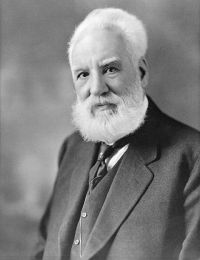
The act of speaking with another person across a great distance via a telephone feels intuitively simple, a seamless extension of human conversation. This perception, however, belies a profound and ever-evolving technological complexity. The foundational principle—the conversion of sound waves into electrical impulses and back again—was a breakthrough of stunning elegance [1]. Alexander Graham Bell’s core insight, reportedly born more from his deep understanding of acoustics than of electricity, demonstrated that a relatively simple mechanism could replicate the intricate vibrations of the human voice [2, 3]. This initial principle, established in the late 19th century, has remained remarkably consistent even as the instruments themselves have undergone dramatic improvements [4]. Yet, this apparent simplicity of concept marked the beginning, not the end, of a journey into intricate systems engineering.
Transforming this elegant principle into a practical, scalable service required the immediate creation of a vast and complex infrastructure that was anything but simple [5]. The nascent telephone network quickly grew into a hybrid entity, a system that was part machine and part human [10]. At its core was the telephone exchange, a mechanism so intricate that it defied easy description, an evolving pyramid of inventions with millions of concealed parts [6, 7]. This mechanical complexity was animated by human labor, particularly that of the thousands of telephone operators who served as the indispensable 'human part' of the communication machine, weaving a dynamic web of conversation [8]. The selection and training of this workforce became a significant industrial undertaking in its own right, highlighting the tension between a clean scientific discovery and the messy, labor-intensive reality of its societal implementation [9].
The Human Component in the Electrical Machine
The invention of the telephone hinged on a singular, powerful realization. Alexander Graham Bell understood that a mechanism capable of transmitting the complex vibrations of any sound could also transmit human speech . His breakthrough was to translate the physical waves of sound into corresponding waves of electricity, which could then be sent along a wire and reconstituted as identical sound waves at the other end . This achievement stemmed from what Bell himself suggested was a path few could have picked, one grounded more in the science of sound than in established electrical theory . Although the first instrument was crude, its underlying concept proved so robust that it remained the unchanged foundation upon which all subsequent telephonic technology was built .
The transition from a pair of connected instruments to a public utility necessitated the creation of the telephone exchange. This central hub was not a static invention but a continuously evolving organism designed to connect a growing web of users . Described by early 20th-century historian Herbert Newton Casson as the 'solar plexus' of the telephone system, the exchange was a marvel of the electrical world, a mechanism whose true complexity was hidden from public view . Its internal structure, a dense matrix of wires, lamps, and mechanical parts, was a testament to the immense engineering challenges that had to be overcome to make widespread communication possible .
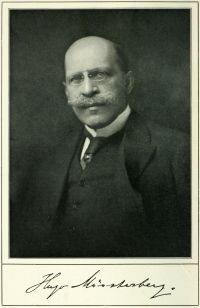
This intricate machinery could not function autonomously; it required a crucial human element to operate. The early telephone network was a symbiotic system of person and machine, with telephone operators acting as the living consciousness within the apparatus . These workers, primarily young women, manually forged connections, their actions likened to weaving a constantly changing pattern of communication that represented the pulse of a city's life . The scale of this operation was enormous, with a single company employing tens of thousands of operators. As psychologist Hugo Münsterberg noted, their recruitment and training became a major focus of industrial efficiency, impacting both corporate economics and the well-being of the employees themselves .
The resulting network was thus a unique, interlocking hybrid—a living entity whose human and mechanical parts were in constant flux . Progress demanded perpetual innovation, with engineers developing improvements to every component, from the transmitter to the switchboard . Consequently, the entire system underwent multiple complete rebuilds, with new technology replacing old without any interruption to service, much like the constant regeneration of cells within a living body . This dynamic underscored the central tension of early telephony: the journey from a simple, elegant principle to a reliable public service was a path of relentless, costly, and highly complex technological and human effort .
The Social Fabric of a Connected Nation
Once a subject of public ridicule, the telephone rapidly transformed into an indispensable fixture of modern life, its presence eventually taken for granted as a natural part of the environment [11]. Its adoption was remarkably democratic, reaching across societal divisions to connect factories and farms, mansions and cottages [12]. The telephone became an instrument for all people, serving as a common meeting place and a force against sectionalism . This was especially true in the United States, where the technology had a profound impact on rural life. Unlike in Europe, the American telephone network extended deep into country districts, breaking the isolation of farm life and acting as a powerful civilizing force through enhanced intercommunication [13].
The rapid expansion from a novelty to a societal necessity created immense logistical challenges. As telephone use exploded in urban centers, managing the sheer volume of calls required sophisticated organizational strategies, such as dividing cities into distinct exchange districts [14]. Early industrialists and observers quickly realized that the utility of the network was directly proportional to its size; its value grew exponentially with each new subscriber added [15]. This created a powerful incentive for expansion, but also gave rise to a new class of complex problems centered on management, capital investment, and the strategic organization of a high-speed, specialized workforce [18].
Building and maintaining a system of such scope and efficiency was a monumental task. Foreign experts often lauded the American telephone system, acknowledging it was built not by seasoned artisans, but by pioneers who contended with a complete lack of precedent, destructive natural elements, and financial challenges [16]. According to Herbert Newton Casson, achieving effective service was not merely a matter of technology, but of proper management and adequate capital investment, a lesson some nations with state-run systems struggled to learn [17]. Furthermore, the user played a role in the system's efficiency; Casson observed that public carelessness, such as calling incorrect numbers, contributed significantly to delays and errors that were often wrongly attributed to the operators [20].
The insatiable demand for connectivity often outpaced the network's ability to supply it, creating a paradox of scarcity for what was becoming a vital service. In early 20th-century Tokyo, for example, the government-controlled system had a waiting list of thousands, and the right to a telephone line became a valuable asset to be passed down in a will [19]. This situation highlighted the fundamental tension between public demand and the immense resources required to build and scale the infrastructure. Answering the riddle of how to grow the system to meet universal demand without losing efficiency or innovation became the defining challenge for the next generation of telecommunications leaders .
From Wires to Wireless, The New Architecture of Communication
The evolution of communication technology can be seen as a direct response to the expanding needs of society [21]. The progression from the telegraph to the telephone and eventually to wireless telegraphy represented successive steps in achieving swifter, more immediate interaction . This trajectory culminated in the latter half of the 20th century with the emergence of the Internet. By the mid-1990s, the Internet was poised to become the planet's unifying communications infrastructure, rapidly absorbing older, proprietary networks and establishing itself as the dominant technological paradigm [22].
At the heart of this new paradigm was a radical shift in network architecture. Unlike the centralized, controlled telephone system, the Internet was built as a decentralized network running on open protocols that no single company or country owned [23]. Thinkers like James Boyle celebrated this design—a 'dumb network' with 'smart terminals'—as the very reason for the explosion of creativity and communication it enabled . This open, accessible structure facilitated further innovation, such as the development of self-assembling wireless networks and internet-based phone services. As Eben Moglen observed in 2006, these technologies began to create a 'perfect storm' that directly challenged the business models of traditional wireline telecommunication providers [24].
The advent of digital and wireless technologies promised a new path to global connectivity, particularly for the developing world. In regions with inadequate or nonexistent landline infrastructure, it became more practical to 'leapfrog' directly to advanced cellular networks [25]. Mobile phones became the primary—and sometimes only—link to the Internet for entire communities, with single devices often shared among villagers . Despite this potential, a stark digital divide persisted. As researcher Marie Lebert highlighted, basic teledensity remained heavily skewed toward wealthy nations, with half the world’s population having never even made a phone call, underscoring that universal access was far from a reality [26].
This technological transformation prompted new strategic and policy considerations for governments worldwide. Recognizing information and communication technology (ICT) as a key engine for economic growth, nations began building up telecommunications infrastructure and deregulating markets to foster competition, which dramatically lowered costs for services like international calls [27]. The convergence of telephony, data, and internet networks into a single 'network of networks' also necessitated new frameworks for national security and emergency preparedness [28]. For institutions like the U.S. Department of Defense, this converged 5G ecosystem presents both risks and opportunities, including the strategic advantage of allowing military traffic to 'hide in plain sight' within civilian data flows [29]. This new reality places a mandate on policymakers to accelerate the deployment of advanced telecommunications capabilities to all citizens by promoting competition and removing barriers to infrastructure investment [30].
The journey of telephonic communication is one of escalating abstraction, where each layer of innovation conceals the immense complexity beneath. It began with Alexander Graham Bell’s elegant principle of converting voice to electricity, a concept that immediately demanded a vast, hybrid infrastructure of intricate machinery and essential human operators to function at scale . The subsequent growth of this network transformed it from a mere novelty into the connective tissue of society, reshaping rural and urban life while simultaneously creating profound challenges of management, investment, and scale . This centralized model eventually gave way to the decentralized, open-protocol architecture of the Internet, a paradigm shift that unleashed unprecedented connectivity but also laid bare the persistent digital divides separating the connected from the unconnected .
Today, the telephone is no longer a distinct device but a function absorbed into a converged global network of data, media, and voice. The foundational challenge of faithfully transmitting a voice across distance has been solved and superseded by far more complex problems. The contemporary task is one of managing this interconnected network of networks, a utility that is now synonymous with societal infrastructure itself . This raises critical questions of governance, national security, and equitable access in a world where the ability to communicate is inextricably linked to economic opportunity and social participation . The simple act of a call now engages a global system whose complexity, once hidden in wires and switchboards, is now embedded in protocols, spectrum policies, and the very code that shapes modern life.