AI-generated from sources
The Neanderthal Enigma and the Fluidity of Human Origins
In Brief
- Early theories depicted Neanderthals as a distinct, degenerate species that went extinct without interbreeding with modern humans.
- New genetic evidence has revealed significant interbreeding between Neanderthals and early Homo sapiens, challenging the long-held
- replacement
- model of human evolution.
- The classical biological definition of a species, based on absolute reproductive isolation, has proven too rigid to account for the complex genetic exchanges observed in natural history.
- Humanity's genetic history is a dynamic mosaic formed by the intermingling of closely related lineages, not a linear progression of entirely separate species.
Main authors

The once-stable concept of human evolution as a linear progression of distinct species has been fundamentally unsettled by the revelation of a more complex and interwoven past. Traditional biological definitions centered on reproductive isolation, where natural barriers were thought to prevent the blending of separate species, have long shaped our understanding of life's development [14, 19]. This framework implied clear divisions between ancestral hominin groups. Yet, emerging evidence of interbreeding between lineages such as Neanderthals and early Homo sapiens compels a radical rethinking of these boundaries, suggesting they were far more porous than previously imagined [1, 4]. This revised narrative challenges the very idea of a static species, replacing it with a more fluid model of genetic exchange and shared ancestry among closely related groups [11].
This modern understanding stands in stark contrast to a long and contentious history of scientific debate. For over a century, the question of whether different human groups could or did interbreed was a central battleground for competing theories of human origins, most notably in the conflict between monogenists and polygenists [17]. The Neanderthal, in particular, served as a focal point for these disputes. Early interpretations frequently cast them as a separate, often 'degenerate,' species that was ultimately replaced by modern humans, leaving no genetic trace [2, 6, 10]. The journey from viewing Neanderthals as an evolutionary dead end to recognizing them as contributors to the modern human genome reflects not only the progress of scientific discovery but also the profound influence of pre-existing theoretical frameworks on the interpretation of the fossil record.
The Shifting Status of Neanderthals in the Human Lineage
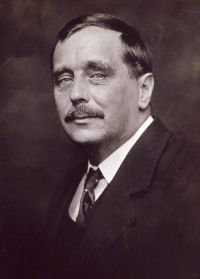
In the early 20th century, the dominant scientific narrative positioned Neanderthals as a distinct species, Homo Neanderthalensis, that existed apart from the direct ancestors of modern humans [3]. This perspective, championed by influential voices like H. G. Wells, depicted a history of replacement rather than integration, in which anatomically modern humans, or 'true men,' conquered Neanderthal territories without interbreeding . In this view, Neanderthals represented an evolutionary offshoot that ultimately went extinct, contributing nothing to the subsequent human gene pool . This interpretation was often buttressed by physical analyses that emphasized their supposed 'crudeness' or framed them as a degenerate race that vanished from the earth .
However, this extinction-without-a-trace model was never universally accepted. Even as it held sway, dissenting scholars proposed alternative scenarios that placed Neanderthals much closer to the main line of human descent. The researcher Aleš Hrdlička, for instance, argued against the idea of a simple replacement, suggesting instead that Neanderthals partly evolved into later human forms and contributed to the ancestry of primitive Homo sapiens populations, perhaps even the Crô-Magnons . This perspective implied that traces of Neanderthal ancestry could persist in modern Europeans, a direct contradiction of the dominant narrative . Similarly, the anatomist Arthur Keith advanced the view that the Neanderthal type was ancestral to modern humans, not a separate, failed experiment [8].
The debate over the Neanderthal's place in our family tree was deeply enmeshed with the broader scientific quest for the 'missing links' that would connect modern humanity to its primate ancestors [5]. As new hominin fossils were unearthed, each was slotted into a constantly shifting genealogy. Some discoveries, such as the Piltdown remains, were at times elevated as the direct ancestors of Homo sapiens, thereby pushing Neanderthals to a side branch on the evolutionary tree . This constant re-evaluation meant that Neanderthals were variously interpreted as a direct forebear, a distant cousin, or a degenerate offshoot, depending on the theoretical lens through which the fossils were viewed .
Ultimately, the controversy surrounding the Neanderthal reflects a fundamental tension in interpreting a sparse fossil record. Whether they were a distinct species without issue or a population that eventually merged with Homo sapiens through some form of union remained an open question for decades . While some late 19th-century thinkers acknowledged the Neanderthals' antiquity, they still situated them within a broader, relatively homogenous human species fundamentally distinct from apes [9]. This long history of contradictory interpretations—seeing evidence for both continuity and complete separation—set the stage for the genetic revelations that would later confirm a history of intermingling, validating the once-minority view that Neanderthals were not merely a dead end but a part of our own complex heritage [7].
The Species Concept and the Crucible of Human Hybridity
At the heart of the debate over human origins lies the fundamental question of what constitutes a 'species.' The classical biological definition, influential for centuries, relied heavily on the principle of reproductive isolation . According to thinkers like Charles Lyell, nature erects barriers between species, either through a mutual aversion to mating or, more decisively, through the sterility of any hybrid offspring . The mule, born of a mare and a jackass, served as the paradigmatic example of this biological law: an offspring could be produced, but the hybrid line could not perpetuate itself, thus preserving the integrity of the parent species [16]. This criterion of mutual, long-term fertility became a primary test for determining species boundaries .
This very test was wielded as a key weapon in the fierce 19th-century anthropological debate between monogenists and polygenists . Monogenists, who argued for a single origin of all humankind, pointed to the fact that all human races can interbreed and produce fertile descendants as conclusive proof of their status as a single species [12]. In their view, this universal prolificacy confirmed that humanity's diverse forms were merely varieties of one original stock [18]. For polygenists, who contended that the primary races were distinct species created independently, the evidence of fertile unions presented a significant theoretical challenge .
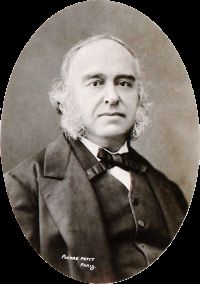
The seemingly straightforward criterion of fertility was, however, subjected to critical scrutiny that revealed its limitations. The French physician and anthropologist Paul Broca, for instance, argued that the ability to produce fertile—or 'eugenesic'—offspring was not an absolute indicator of species unity [15]. He noted that some distinct animal species were known to produce fertile hybrids, which meant that the monogenists' core physiological argument was not as solid as it appeared. Broca posited that if even one instance of a non-eugenesic human crossing could be demonstrated, the entire scientific basis for monogenism would collapse [20]. This critique introduced a more nuanced understanding, one in which reproductive compatibility is not an all-or-nothing proposition but exists on a spectrum, with degrees of infertility varying widely across nature [22].
More recent evolutionary science has further complicated this picture, largely abandoning fertility as a simple, definitive test. It is now understood that the failure of geographically distant populations of a species to interbreed does not prove they are distinct species, especially if they remain connected through a chain of interbreeding intermediate populations [21]. Conversely, the capacity to form fertile hybrids does not automatically merge two groups into one species . The concept of a species has thus shifted from a static, primordial category to a dynamic one, shaped by gene flow and reproductive history . Even the social dynamics of human populations have been viewed through this lens, with one early 20th-century biologist likening the American 'melting pot' to a hybrid population whose ability to form a new, homogenous 'species' depended on erecting barriers against too-rapid influx from parent stocks [13].
Interbreeding Isolation and the Dynamics of Evolution
From a Darwinian standpoint, genetic exchange plays a dual role in evolution. Within a population, free intercrossing is a powerful force for cohesion and stability. By blending individual traits, it promotes uniformity and can enhance the overall vigor and fertility of the group [26]. The resulting offspring are more likely to thrive and multiply, ensuring the persistence of the race or species . In contrast, the integrity of a species depends on the rarity of crossing with other distinct groups. Were such interbreeding to become frequent, the boundaries between the species would dissolve, and they would merge into a new hybrid entity, effectively ceasing to exist in their original forms [29].
Conversely, prolonged isolation and a dwindling population can pose a significant threat. Charles Darwin observed that when a species becomes rare and confined, close interbreeding often leads to a loss of vigor and fertility, accelerating its path toward extinction [25, 27]. This mechanism has been invoked to explain the decline of various animal populations throughout history . Hybridization, on the other hand, can sometimes be beneficial, producing offspring that are an improvement on their ancestors due to the combination of dominant genes—a phenomenon known as hybrid vigor [23]. Alfred Russel Wallace further refined this idea, suggesting that the negative consequences of interbreeding are not absolute but may be offset by factors like strong selective pressures or changing environmental conditions [28].
The long-term fate of hybrid populations remains a complex and debated topic. It is often unclear whether the crossing of two distinct races produces a stable, new race or if the resulting 'half-breeds' eventually revert to one of the ancestral types [24]. Without consistent selective pressures, such as those imposed by artificial breeding or strong sexual selection, human populations can appear to be a 'confused medley' of composite forms, lacking long-term stability . This dynamic is central to the evolutionary process of divergence, where new, improved varieties are formed and gradually supplant older, less adapted breeds, which then decrease and face extinction . This logic, once applied to fraternities and races, extends naturally to species, creating an unbroken chain of reasoning that points toward an evolutionary interpretation of all life [30].
Evolutionary dynamics are therefore governed by a delicate balance between gene flow and isolation. Reproductive behaviors and natural selection work in concert to maintain the integrity of a species while simultaneously providing the raw material for divergence and the formation of new ones . The concept of a species is not static but is constantly being shaped by these opposing forces. This modern understanding of the 'fluidity of kin' provides a powerful framework for comprehending the tangled web of human ancestry, where the lines between closely related groups were never impermeable walls but rather permeable membranes allowing for the complex genetic exchanges that define our history .
The scientific journey from dismissing Neanderthals as a brutish, unrelated species to embracing them as ancestors reflects a paradigm shift in our understanding of human evolution . This transformation was driven not only by new fossil and genetic discoveries but also by a necessary revision of the species concept itself. The classical definition, founded on the seemingly absolute barrier of reproductive isolation, proved too rigid to capture the complexities of the natural world . Historical debates, such as the monogenist-polygenist controversy, and the critical deconstruction of fertility as a perfect species marker, paved the way for a more sophisticated model . In this new framework, human populations are viewed as dynamic entities shaped by the constant interplay between the homogenizing force of intercrossing and the diversifying pressures of isolation .
Acknowledging this hybrid past does more than simply redraw our family tree; it challenges foundational narratives of human identity, purity, and progress. The realization that modern humans carry a genetic inheritance from hominins once considered extinct dissolves any simple story of linear advancement and outright replacement . It reveals that humanity has always been a mosaic, a product of mingling and merging between closely related lineages. The biological challenges of managing a 'melting pot,' as once described in taxonomic terms, resonate with enduring social and cultural questions about identity and integration . The fluidity of species in our deep past serves as a powerful reminder of the intricate and shared connections that have always defined the human story.