AI-generated from sources
The Scientific Mind and the Telepathic Enigma
In Brief
- Early telepathy research, despite its ultimate dismissal, served as a crucible for refining scientific methodology and confronting the limits of psychological explanation.
- The debate over telepathy was defined by a tension between mystical interpretations and attempts to naturalize it as an as-yet-undiscovered aspect of the physical world.
- Methodological critiques of telepathy experiments, exemplified by the Clever Hans case, significantly advanced the understanding of unconscious bias and stringent experimental design.
- The sustained inquiry into telepathy prompted a critical re-evaluation of scientific materialism and expanded the perceived scope and definition of the science of the mind.
Main authors
Telepathy, as a concept, emerged at the crossroads of popular fascination and burgeoning scientific inquiry, embodying a tension between mystical belief and the principles of natural law [1, 4]. At the turn of the 20th century, the central question animating both public and scholarly debate was whether the purported transference of thought was a verifiable human faculty or a persistent delusion [6]. This ambiguity positioned telepathy not as a fringe curiosity, but as a critical test case for emerging psychological sciences, forcing a confrontation with the fundamental nature of consciousness and communication itself.
The subsequent investigation into this phenomenon served as an unexpected crucible for scientific methodology and philosophy. Early proponents sought to naturalize telepathy, arguing it was not a supernatural power but a misunderstood, perhaps vestigial, aspect of the natural world—a kind of "far feeling" that operated on principles as yet unknown [2, 5, 7]. This attempt to bring an ostensibly 'supernormal' power within the bounds of a mechanical universe set the stage for a contentious but intellectually productive inquiry [3]. In its pursuit, researchers inadvertently sharpened their understanding of the subconscious mind, experimental bias, and the very boundaries of scientific explanation.
Between Mysticism and Natural Law
In the late 19th and early 20th centuries, the concept of telepathy captured the public imagination, representing a cluster of phenomena that defied easy explanation . The term itself became a site of intellectual conflict. For some, it signified a mystical process that operated outside the established, mechanical interconnection of cause and effect . This view resonated with what the psychologist Joseph Jastrow described as a persistent human tendency toward mystical and egocentric interpretations of reality, a remnant of a more primitive worldview . The general reader, intrigued but lacking critical tools, looked to emerging experts for definitive answers on whether thought-transference was an established truth or a widespread illusion .
In response to these mystical interpretations, a counter-movement sought to naturalize telepathy, framing it as an element of the natural world that was simply not yet understood . Thinkers like William J. Long proposed that it could be a survival of an ancient faculty, an inheritance rather than a novel power, despite its association with the "Hottentotish credulity" he observed in occult circles . This impulse to situate telepathy within a conventional framework also appeared in philosophical discourse, where one argument in The Monist redefined the phenomenon entirely. It suggested that all sensation is a form of "far feeling," as when the eyes perceive distant stars, thereby rendering the soul itself a "telepathic machine" operating within the known order of mechanical causation .
This fundamental tension between supernatural and naturalistic explanations defined the core mission of organizations established for psychical research . Their primary task was to ascertain whether a form of communication could occur between minds without using the recognized channels of sensation . Proponents challenged the prevailing skepticism by drawing parallels to other scientific mysteries, such as the nature of electricity or the origins of thought, arguing that a phenomenon's mysteriousness was not a valid reason for disbelief . The essential consideration, they contended, was not whether telepathy fit existing models of the universe, but simply whether the reported facts were real .
The Unconscious and the Rigors of Experiment
The formal investigation of telepathy, particularly by groups like the Society for Psychical Research, became a powerful, if indirect, method for exploring the deeper strata of the human mind [15, 22]. Advocates such as R. Osgood Mason proclaimed that telepathy had graduated from a mere fancy to a legitimate scientific theory, supported by a growing body of experiments [13, 14]. Some, like Israel Zangwill, saw it as a grand unifying principle capable of explaining a vast array of historical mysteries—including ghosts, witchcraft, and clairvoyance—by attributing them to the hidden workings of the subconsciousness [8]. This framework centered on the concept of a "subliminal self," an intelligent inner agent responsible for telepathic communication and other phenomena that occurred beyond the reach of the ordinary senses [17, 19].
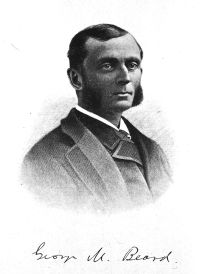
However, this research program was met with formidable skepticism, and the ensuing methodological critiques had the unintended effect of advancing experimental psychology [10]. Critics voiced concerns that credulity was outpacing evidence, risking a return to the superstitions that had fueled historical episodes like the witchcraft trials [9]. Writing in the late 19th century, George Miller Beard systematically outlined the sources of error that could corrupt such research, including chance, coincidence, and, most importantly, the involuntary influence of the subject's mind on their own body [20, 21]. This last point was crucial, as it showed how subjects could unconsciously deceive investigators, producing results that seemed to confirm a hypothesis but were actually driven by subtle, unintentional cues .
The case of Clever Hans, a horse thought to possess mathematical abilities, became a pivotal illustration of these experimental pitfalls. The meticulous investigation by Oskar Pfungst revealed that the animal was responding not with intellect but to nearly imperceptible, involuntary movements made by its human interlocutors [11]. This discovery served as a powerful lesson in experimental design and the pervasive nature of unconscious cuing, with direct implications for the study of telepathy and muscle-reading [12]. Consequently, the challenge for psychical researchers became separating genuine thought-transference from artifacts of sensory leakage and experimenter bias, a task that demanded increasingly stringent and sophisticated protocols [18].
The persistent debate over telepathy ultimately forced a broader re-evaluation of psychological principles [16]. Proponents argued that mainstream psychology had been too restrictive, focusing on ordinary mental functions while arbitrarily dismissing a rich field of unusual phenomena as 'abnormal' . Skeptics like Joseph Jastrow remained unconvinced that any conclusive evidence for telepathy had been presented, but he conceded that if such a process were ever incontestably established, the science of psychology would necessarily have to be revised . The struggle over telepathy was therefore not merely about a single contested faculty, but about the very scope and definition of the science of the mind.
Redefining Scientific Boundaries
The controversy surrounding telepathy fundamentally challenged the established boundary between the natural and the supernatural [28, 29]. Many investigators approached the subject from a naturalist standpoint, working from the premise that phenomena labeled "supernatural" were simply expressions of natural laws not yet discovered or understood . This perspective, articulated by authors like Otis Adelbert Kline, noted that technologies such as the telegraph or moving pictures would have seemed miraculous to a previous age, their supernatural status dissolving only with familiarity [30]. This intellectual effort, which Frank Podmore described as "The Naturalisation of the Supernatural," aimed to absorb seemingly anomalous events into the expanding framework of scientific explanation [23].
This push for naturalization brought the debate into direct conflict with the philosophy of materialism, which dominated scientific thought [24, 27]. Skeptics highlighted the profound physical problems with telepathy, chief among them the absence of any known sense organ or physical mechanism capable of transmitting or receiving thoughts [25]. Conversely, some proponents, such as J. Arthur Hill, interpreted this very lack of a physical basis as evidence against materialism. They argued that telepathy's failure to conform to physical laws—like the inverse square law governing energy waves—suggested it was a non-physical process occurring directly between minds, independent of the brain . Such a conclusion, if proven, would dismantle the materialist worldview .
Ultimately, the debate over telepathy became a revealing case study in the sociology and psychology of science itself. Figures like William James and Andrew Lang criticized what they perceived as the dogmatic resistance of the scientific establishment to even examining the evidence [26]. Lang argued that many scientists had, consciously or not, adopted the belief that the field of 'psychical' phenomena was definitively closed, assuming that all events must have an already-known physical cause . James advocated for a more open and dispassionate method, warning that the "rigorously scientific mind," with its strong presumptions about the proper order of nature, risked dismissing potentially valuable evidence simply because it was unconventional . The pursuit of telepathy thus served as a mirror, reflecting the inherent biases and philosophical commitments that shape the process of scientific inquiry .
The historical arc of telepathy research provides a compelling narrative of scientific ambition and its unintended consequences. What began as an effort to empirically validate a 'supernormal' power evolved into a sophisticated, if inconclusive, interrogation of the mind, method, and the nature of reality . While proponents gathered experimental and anecdotal evidence , the critical scrutiny of their work by skeptics revealed the profound influence of unconscious bias and sensory leakage, thereby contributing valuable insights to the emerging discipline of experimental psychology . In the process, concepts like the subliminal self moved from the esoteric fringes toward the center of psychological discourse, highlighting the hidden complexities of human consciousness .
In retrospect, the most enduring legacy of the telepathy debates may not be the verification of an anomalous phenomenon, but the philosophical questions it posed to scientific materialism . By pushing at the accepted limits of the physical world, the inquiry forced a critical re-evaluation of what constitutes valid evidence and how science should engage with phenomena that resist easy explanation . Though telepathy itself has largely been relegated to the margins of scientific investigation, its story remains a powerful testament to how the pursuit of the unknown, even when it fails to find its object, can profoundly refine our understanding of both the world and the intellectual tools we use to explore it.