AI-generated from sources
The enduring debate over innate sex differences: From biological imperative to individual variation
In Brief
- Historically, deterministic theories posited that innate biological distinctions dictate fundamentally separate mental architectures and, consequently, rigid social roles for men and women.
- Experimental psychology challenged these claims, empirically demonstrating that individual variation within each sex vastly outweighs the average differences between the sexes as groups.
- Rigorous scientific studies concluded that there is no reliable innate sex difference in average intellectual ability or variability, effectively abandoning the hypothesis among evidence-based researchers.
- Observed disparities in achievement are primarily attributed to disparate social environments, unequal educational opportunities, and historical conditioning, rather than fixed psychological limitations.
Main authors

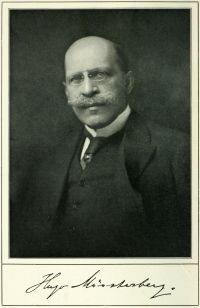
The intellectual history of psychology and sociology is marked by a persistent and often contentious debate over the nature and significance of differences between the sexes. This discourse has traditionally been split between two opposing poles. One perspective posits that fundamental, innate psychological distinctions between men and women are not only real but are also essential determinants of their respective social roles and capacities [1, 2, 3]. Proponents of this view often argue from biological and physiological first principles, suggesting that the very structure of society is, and should be, a reflection of these inherent differences.
Conversely, a powerful counter-argument has emerged, particularly from the field of experimental psychology, challenging the magnitude and immutability of these alleged distinctions. This school of thought contends that observed differences are often minor, highly variable, and profoundly shaped by social environment and educational opportunities [4, 5, 6]. From this viewpoint, the vast spectrum of individual variation within each sex far outweighs the average difference between them, rendering categorical social and vocational segregation scientifically unjustifiable [7, 8]. The central question animating this long-standing dialogue is therefore not simply whether differences exist, but what their source is—nature or nurture—and what moral and practical conclusions should be drawn for the organization of society.
The Biological Imperative and the Argument for Innate Difference
Theories emphasizing innate sex differences often begin with the assertion that distinct biological and parental functions necessarily imply corresponding mental and emotional distinctions . The argument, articulated by thinkers like Herbert Spencer, is that evolutionary fitness for different reproductive roles has sculpted fundamentally different psychological architectures in men and women . This line of reasoning extends physical dimorphism into the realm of the mind, suggesting that the biological realities of sex pervade every mental process and dictate a natural social order [9]. From this perspective, peculiarities of the female physical organization are believed to determine a "radically different mode of mental existence" , making psychological divergence an a priori expectation.
This belief in deeply rooted difference informs a vision of society where social roles are not arbitrary constructs but expressions of natural law. For instance, Charles Dudley Warner argued that an advanced civilization requires an increase, not a decrease, in the distinctions between the sexes, viewing physical divergence as merely an outward sign of a more profound mental and spiritual separation . This framework can lead to the conceptualization of males and females as belonging to distinct psychological categories, a pattern perceived to hold true across the broader animal kingdom [10]. The study of these general group characteristics was seen as a necessary background for organizing economic and social life [11].
Even within this deterministic camp, some theories offer more complexity than a simple binary. The work of Otto Weininger, for example, introduced the idea that 'male' and 'female' are abstract types and that any given individual is a unique mixture of these two principles [12]. This allows for man-like women and woman-like men, explaining behaviors that defy traditional stereotypes [13]. However, this model still anchors character in innate, intelligible principles rather than social conditioning [14]. While some thinkers concede that the ultimate essence of psychological sex differences may be unknowable [15], they maintain that the age-long history of divergent roles and experiences must have had a formative influence on the very nature of intelligence in each sex [16].
The Counter-Argument from Experimental Psychology and Individual Variation
In direct opposition to theories of innate group difference, a substantial body of work from experimental psychology has emphasized the primacy of individual variation. The foundational finding of this research is that the differences between individuals of the same sex are consistently found to be far greater than the average differences between the sexes as a whole [17]. This empirical evidence challenges the utility of broad generalizations, suggesting they obscure more than they reveal about actual human capabilities.
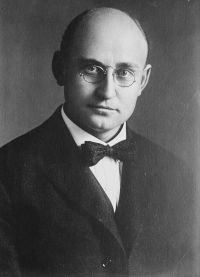
Harry L. Hollingworth, a prominent voice in this area, stated that after decades of scientific study, the hypothesis of an innate sex difference in average intellectual ability had been effectively abandoned by psychologists who base their conclusions on evidence [18]. Rigorous experiments controlling for social and racial factors failed to show any reliable difference in variability between men and women, leading to the conclusion that, in terms of aptitude and ability, the range of talent within each group is virtually identical [19]. This scientific turn directly refuted older theories that attempted to link supposed intellectual inferiority to physical traits like cranial size [20].
This conclusion is reinforced by an understanding of heredity. Researchers have pointed out that no mental trait has ever been proven to be sex-limited in its inheritance; sons inherit from their mothers just as daughters inherit from their fathers [21]. This fact makes it biologically implausible for natural selection to have evolved a specific female intellect perfectly and exclusively suited for domestic vocations [22]. The practical outcome of this research is a rejection of any scientific basis for differentiating vocations on the grounds of sex [23, 24]. The existing division of labor, from this viewpoint, is seen not as a product of innate psychology but as a historical artifact of physiological realities, primarily the role of women in bearing children .
The Decisive Role of Environment, Education, and Opportunity
Bridging the gap between these two perspectives is the argument that social environment, not innate character, is the primary force shaping the observed differences in behavior and achievement between men and women. John Morley identified the tendency to regard character distinctions as innate and indelible as a major impediment to social progress, arguing that most differences are the natural result of disparate circumstances . This view suggests that what are often superficially judged to be innate characteristics are, in fact, expressions of profoundly different social conditioning and expectations [25].
From this standpoint, education emerges as the most critical variable. Proponents argue that women's historical lack of progress is a direct consequence of being denied equal educational and professional opportunities [26]. The provision of an identical curriculum for both boys and girls is thus presented as a fundamental step toward achieving true equality and social unity, as it removes the artificial distinctions that foster discord [27]. The Universal House of Justice, for instance, advocates for prioritizing the education of women and girls, not merely for their own sake, but as the most effective strategy for diffusing knowledge and its benefits throughout all of society [28].
This focus on opportunity directly informs the debate on vocational fitness. Without scientific data demonstrating innate psychological limitations, there is no justification for the traditional assumption that a woman's future must lie in the domestic sphere [29]. The equal competence shown by women in academic settings when given the chance is seen as proof of equal natural gifts, not as evidence of overstraining lesser talents . Therefore, the challenge is not to fit individuals into preconceived gender roles, but to collect the necessary data and create social structures that allow for a true assessment of vocational aptitudes regardless of sex .
The discourse surrounding sex differences reveals a profound tension between deterministic theories rooted in biology and empirical findings that highlight individual plasticity and environmental influence. One tradition infers a fixed psychological and social destiny from the physical facts of sex, viewing gendered social structures as both natural and necessary . In stark contrast, another tradition, armed with the tools of experimental psychology, dismantles these categorical claims, revealing a reality in which individual variation consistently overshadows average group differences .
While the philosophical debate over the ultimate origins of gendered behavior may never be fully resolved , the practical implications of the collected evidence point overwhelmingly toward the importance of equal opportunity. The consistent finding that there are no significant innate sex differences in intellectual ability or variability undermines any rationale for limiting social or vocational roles based on sex . The historical record suggests that when barriers are removed, particularly in education, women achieve on par with men, indicating that past disparities were products of circumstance, not nature . Ultimately, the synthesis of these perspectives suggests that human progress depends less on enforcing traditional distinctions and more on fostering a society where individual capacity, in all its diversity, is the sole criterion for success [30].