AI-generated from sources
The ill-fitting boot: How private property obstructs universal access to quality goods
In Brief
- The poor quality of universally needed goods (like durable footwear or clothing) is analyzed not as a technical failure, but as a systemic outcome of private property prioritizing profit over collective necessity.
- Private ownership of essential resources, particularly land, acts as a barrier, forcing wages down and diverting society’s productive power toward artificial luxuries and monopolistic control.
- A crucial critique distinguishes between owning personal items (property for use) and owning the means of production (property for exploitation), arguing the latter allows the idle to levy ‘tribute’ on workers.
- The institution of private property is not viewed as a sacred right but a mutable social construct that must be judged by its social results and reformed if it fails to ensure collective well-being.
Main authors

The persistence of poor-quality and ill-fitting footwear, a seemingly mundane issue of manufacturing or personal choice, can be viewed as a potent symbol of a deeper systemic problem [1, 2]. While guidance on the proper care of patent leather or the ideal shape of a boot's toe box speaks to a concern for quality and function, the reality for many is far from this ideal [3, 4]. The existence of shoddy goods is not necessarily a failure of technical skill or material availability, as there is ample labor, intelligence, and resources like leather in the world to produce comfortable and durable items for all [5]. Instead, this widespread deficiency points toward a structural impediment rooted in the modern organization of economic life [6, 7].
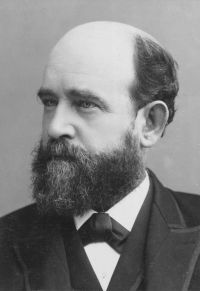
The central thesis advanced by a significant current of social and economic thought is that the institution of private property, particularly in land and the means of production, systematically obstructs the satisfaction of universal human needs [8, 9]. This perspective reframes the problem away from individual products and toward the economic logic that governs their creation and distribution. Production is oriented not toward fulfilling primary necessities like adequate clothing and shelter, but toward the accumulation of private wealth, often through the creation of artificial luxuries and monopolistic control . The debate thus centers on whether private property is a sacred and inviolable right that stimulates industry, or a socially constructed institution that must be judged by its fruits and reformed when it proves detrimental to the common good [10, 11]. This inquiry explores the argument that the ill-fitting boot is a direct consequence of an economic model where private claims stand in the way of collective well-being .
The Mechanics of Obstruction: How Ownership Impedes Production
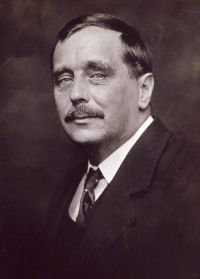
The primary mechanism by which private property obstructs the provision of necessary goods is through the erection of barriers at every stage of production . As H. G. Wells illustrates, an effort to produce boots for those who need them is immediately confronted by a series of ownership claims. The cattle, the leather, and the land over which the herd ranges are all designated as private property, and access is denied until a price is paid [12]. This principle extends beyond footwear to housing, transportation, and food, creating a system where essential resources are monopolized [13]. This monopolization of land, the ultimate source of all wealth and the field of all labor, is identified as a root cause of poverty, forcing wages down even as productive power increases [14]. The entire process is built upon a foundation where the community's access to its own resources is mediated by the claims of private owners [15].
This system's logic is driven by profit rather than need. The relentless strife for accumulation means that economic activity is directed toward increasing personal holdings—be they gold, merchandise, or land—rather than ensuring a baseline of quality and availability for all [16]. The aim becomes gain, not the growth or well-being of the individual or the community [17]. Consequently, production is skewed towards what is most profitable, which is often unnecessary luxury and
The Moral and Social Consequences of an Ownership-Based Society
Beyond the material deprivation it can cause, the institution of private property is argued to exert a corrosive effect on both individual character and social cohesion. Critics contend that the possession of property is often
Deconstructing and Reimagining Property
To address these systemic failings, many thinkers begin by deconstructing the concept of property itself, arguing that it is not an inherent quality of an object but a socially defined relationship [18]. As a social construct, it is therefore open to examination and must be judged by its expediency and its results . If private property fails to produce good social outcomes, its legitimacy comes into question. This perspective challenges the idea of property as a sacred, unassailable right, reframing it as a mutable institution that has evolved over time, beginning when individuals started producing for themselves rather than for the common use of a tribe or family [19, 20].
A crucial distinction is drawn between different forms of property. The critique is not typically aimed at personal possessions—such as a walking stick—but at the private ownership of the means of production, which enables those who own but do not work to levy a massive tribute on the earnings of those who do [21]. This is the difference between owning property for use and owning property to exploit the users [22]. Similarly, a sharp line is drawn between wealth generated through productive labor and land, which is seen as a
The seemingly simple problem of an ill-fitting boot, when examined through a critical economic lens, reveals itself as a symptom of a profound societal contradiction. The analysis presented by various thinkers suggests that the capacity to produce high-quality, universally accessible goods is consistently undermined by an economic structure predicated on private ownership of essential resources . The logic of this system prioritizes accumulation over need, profit over well-being, and individual claims over the common good . The resulting misery is not an accident but an inherent outcome of a system where land, materials, and machinery are controlled by a few, creating obstacles that prevent the satisfaction of the basic requirements of the many .
The proposed resolutions do not call for the abolition of all personal belongings, but for a fundamental reorganization of society's relationship to productive and natural wealth [23]. The argument is that true individualism is crushed, not fostered, by a system that confuses a person with their possessions [24]. By challenging the legitimacy of private property in the means of life, these critiques advocate for a new social arrangement where the immense productive capacity of modern society is harnessed for public benefit [25, 26]. In such a system, a comfortable and durable pair of boots would cease to be a commodity subject to the whims of the market and become a simple, guaranteed provision for every member of the community.