AI-generated from sources
The enduring dilemma: Reform or revolution?
In Brief
- The debate between reform and revolution centers on whether societal ills are treatable symptoms within the existing framework or signs of a terminal system requiring complete replacement.
- Advocates for gradual reform view change as an organic, evolutionary process best pursued through parliamentary means, often using reform strategically to preempt dangerous radical upheaval.
- The revolutionary imperative argues that political liberty is meaningless while economic power remains with 'irresponsible private rulers,' necessitating the abolition of capitalism and establishment of collective sovereignty.
- The conflict is fundamentally economic, driven by the struggle over property and the control of the means of existence, creating an ongoing tension between political and economic priorities.
Main authors

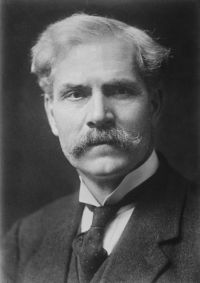
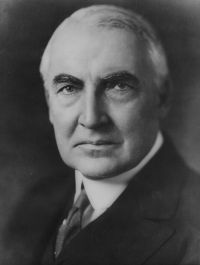
When a society's foundational structures begin to fail, sacrificing the interests of the many for the benefit of a few, a fundamental question arises: should the system be repaired or replaced? [1]. This dilemma creates a deep political and ideological schism, pitting advocates of gradual, evolutionary change against proponents of a radical, revolutionary leap. On one side are those who view societal transformation as an organic process, best pursued through established political channels and incremental reforms [2, 3]. They advocate for adjustment and restoration, viewing abrupt, revolutionary action as a dangerous pathology [4].
On the other side are those who diagnose the system itself as the disease, arguing that superficial reforms are insufficient to cure a terminal condition [5]. For them, a complete overthrow is not a matter of choice but of necessity, especially when political liberties are rendered meaningless by an entrenched and unaccountable economic power structure [6]. This perspective defines revolution not as mere chaos, but as the deliberate construction of a new social order founded on different principles, such as the sovereignty of the working class and the abolition of capitalism [7]. The conflict is therefore not simply about the pace of change, but about the fundamental diagnosis of society's ills and the ultimate vision for its future, a conflict rooted in the economic control over the very means of existence [8].
The Doctrine of Evolution: Reform as a Bulwark Against Chaos
The case for gradualism rests on the belief that society functions as a complex organism, and that profound change must therefore also be organic and evolutionary . Proponents of this view contend that the proper arena for social transformation is the parliamentary process, where change can be managed, debated, and implemented without shattering the social fabric . This approach eschews what it sees as the heroics of radical upheaval in favor of healing and adjustment, seeking serenity and restoration rather than agitation and revolution . Change is envisioned as a steady, deliberate process of institutional improvement, not a violent rupture with the past.
From this perspective, reform often serves a dual purpose. While it can be a genuine response to public outcry over corruption or inefficiency [9, 10], it is also frequently deployed as a strategic tool to forestall a more dangerous alternative. The ruling classes may be prompted to enact reforms—such as raising wages or improving working conditions—when faced with widespread unrest, viewing such concessions as necessary to avoid a revolution [11]. Similarly, gradual reforms, such as changes to land laws, can be presented as a prudent alternative to the revolutionary upheaval that might be precipitated by mass starvation and desperation [12]. The universal demand for reform can thus be channeled into the creation of commissions and other mild official measures that give the appearance of progress while preserving the core structures of power [13].
However, this reliance on gradualism is not without its critics. Some argue that a prerequisite for any meaningful social or economic reconstruction is a thorough reform of the political system itself, suggesting a specific sequence for change [14]. Yet, others point to a deeper psychological barrier, wherein populations become conditioned to wait for majority approval before challenging unjust laws. This deference to the status quo can lead to a belief that resistance is a remedy worse than the disease, a perception that is itself fostered by the government, which benefits from this legislative patience and fails to anticipate the need for more fundamental change [15].
The Revolutionary Imperative: When the System Itself is the Disease
In stark opposition to the gradualist model, the revolutionary imperative begins with the premise that some systems are beyond repair. In such cases, the entire edifice of government and society must be overthrown and replaced . This necessity becomes acute when it is understood that formal political power is merely an outwork, and that the true citadel of power—the economic system—remains in the hands of private, irresponsible rulers. From this viewpoint, a revolution is the moment the people decide they must seize the citadel itself or else abandon all the progress their ancestors made .
Advocates for revolution see it not as a descent into anarchy but as the conscious establishment of a new, more just social order. This new order is often envisioned as one where the sovereignty of the working class is recognized and humanity is freed from the structural injustices of capitalism . This transformation is not an arbitrary event but the culmination of a historical process, the moment when a new form of society that has been developing within the womb of the old one is finally born through a strenuous, organized effort [16]. Such a leap only becomes possible after the existing system has exhausted all its pretenses and fully revealed itself as an irreconcilable enemy of human liberty and happiness, thereby creating the necessary momentum for its final overthrow [17].
This break with the past is often framed in radical terms, as a defiant, shameless, and proud crime against a sacred but corrupt order [18]. While acknowledged as an inherently violent process, this violence is justified as a necessary response to the ongoing, systemic violence of the status quo [19]. For a revolution in government to be truly effective, it must be accompanied by a corresponding revolution in the state of civilization itself, embedding new principles into the habits and culture of the society [20, 21]. However, some warn that if a revolution results merely in a change of dictators without genuine social improvement, it is not worth the immense cost in human life and cultural values .
The Primacy of the Economic: The Engine Room of Change
Underpinning the entire debate between reform and revolution is the paramount question of economics . The conflict is ultimately driven by the struggle over property and the control of the means of existence [22]. For many social critics, systemic problems like endemic poverty cannot be solved without a complete overhaul of the economic system, specifically the abolition of private property in land and productive resources [23]. The perceived failure of private capitalism is what fuels the demand for a social revolution, a system that held back progress until it was overthrown, at which point long-suppressed industrial and mechanical forces could be unleashed to transform the human condition [24].
A critical disagreement emerges over the relationship between economic and political change. One deterministic view holds that major political revolutions are the consequence, not the cause, of profound economic transformations. According to this logic, attempting to achieve a socialist society through a primarily political revolution is a utopian endeavor, as history demonstrates that political structures flow from the economic base [25]. The revolution, in this sense, is merely the formal recognition of a new economic reality that has already taken shape.
Conversely, another school of thought insists that political reform must precede any deep economic reconstruction . This position argues that a dysfunctional, undemocratic political system is incapable of implementing the necessary economic changes. This creates a strategic crossroads: does a movement for radical change focus first on seizing the state to then reshape the economy, or does it work to transform the economic relations of society, believing political change will inevitably follow? This fundamental tension between the political and the economic lies at the heart of the schism between reformist and revolutionary strategies.
The Unresolved Tension: Progress as Evolution or Rupture
The divergence between the paths of reform and revolution stems from two fundamentally different diagnoses of social crisis. The first sees societal ills as manageable problems that can be addressed through adjustment and healing within the existing framework . The second sees the framework itself as the source of oppression and concludes that it must be demolished and rebuilt . Advocates for gradualism warn that revolution is a chaotic and destructive force incapable of producing the organic, society-wide change required for a truly new order . In contrast, revolutionaries argue that reforms are merely cosmetic measures designed to placate the masses and preserve an fundamentally unjust system .
This enduring debate reflects a deeper uncertainty about the nature of human progress. Is it best understood as a linear, evolutionary process, or one defined by periodic and necessary ruptures? [26]. While some see revolution as the engine of history, others voice profound skepticism. Some question the very premise of collective action, suggesting the only meaningful change is an internal, individual revolution of the heart, rendering political action by bullets or ballots futile [27]. Others question the efficacy of revolution in addressing widespread economic privation that is not simply a matter of unjust distribution, suggesting it is a weapon better suited to fighting political tyranny than general scarcity [28]. As long as systemic crises persist, society will continue to grapple with this unresolved tension, caught between the hope of gradual improvement and the demand for a radical new beginning.
The historical tension between gradual reform and radical revolution is not merely a debate over tactics, but a clash of worldviews concerning the nature of social change itself. One perspective, rooted in an evolutionary model, sees progress as an organic process that must be carefully managed through existing institutions to avoid the chaos of collapse . It advocates for adjustment and restoration, prioritizing stability and consensus . This approach often manifests as a response to public pressure, offering concessions designed to relieve unrest and thereby preserve the fundamental order .
In direct opposition stands the revolutionary worldview, which posits that certain systems are inherently irredeemable and must be completely overthrown . It argues that true progress requires a fundamental rupture, a leap to a new social and economic paradigm built on principles of collective sovereignty rather than private control . This perspective views reform as an illusion that perpetuates injustice by failing to challenge the core structures of power . Ultimately, the choice between these paths hinges on a society's diagnosis of its own condition: whether its ailments are treatable symptoms or signs of a terminal illness requiring the radical, uncertain surgery of revolution.