Summary

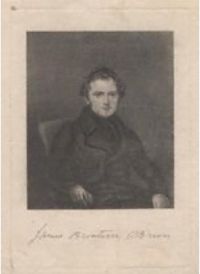
Portrait of James Bronterre O'Brien James Bronterre O'Brien The rise, progress, and phases of human slavery

It is not accounted more beautiful for having produced an Aspasia, more illustrious for having given birth to a Phedon, more brave for having turned out a Spartacus from amid its ranks. Whatever may have been its intelligence, its patient endurance, its wisdom, its parts, it was never honoured with the title of ‘sons of the gods,’ like the noble race; and Plato himself, though he had felt what slavery was under King Dionysius, cast in its teeth the famed Homeric verse, in which it is told that the slave has but the half of a human soul.
Source: Gutenberg

Portrait of James Bronterre O'Brien James Bronterre O'Brien The rise, progress, and phases of human slavery

Tracing history back to its fountain-heads, before systems came to disturb them, we discover a countless variety of unmistakable signs to show that two distinct classes, not to say races, made up the aggregate of souls in every ancient community of which history makes mention. One is the master-class; the other, the slave-class. The first possesses; the second is possessed. This aboriginal condition of humanity appears, as an historical fact, universal. There is no ancient tradition, there is no authentic record purporting to be history, that does not make mention of masters and slaves.
Source: Gutenberg

Portrait of James Bronterre O'Brien James Bronterre O'Brien The rise, progress, and phases of human slavery

To pretend that the rights of property exist in a country where such a monetary system coexists with private ownership of the soil, is a monstrous perversion of language. It is not the rights of property, but the wrongs of robbery, that these land and money laws tend to conservate.
The prime necessity of man is to live: he cannot live without corn, unless in the lowest condition of the savage; but he may not only live, but live in comfort, without gold or silver. They are not the “staffs of life,” however in our ignorance we may bow the knee to them as to graven images.
Source: Gutenberg

Get perspective with Kwize: daily news enlightened by great literature