AI-generated from sources
Thucydides: Not a realist, but a diagnostician of imperial tragedy
In Brief
- The Melian Dialogue is strategically positioned by Thucydides as a dramatic prelude to Athenian catastrophe, revealing the limits of power politics rather than endorsing it.
- Thucydides' goal was to create a 'possession for ever' by offering an exact knowledge of the past to understand future recurring patterns, necessitating a critical context for the Athenian arguments.
- The historian emphasizes that war and the abandonment of justice lead to political and moral disintegration (stasis), where concepts like moderation are inverted and discarded.
- The brutal subjugation of Melos, followed immediately by the catastrophic Sicilian Expedition, demonstrates the tragic retribution for the empire's supreme hubris and rejection of moral restraint.
Main authors
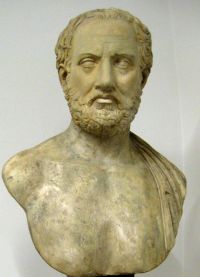
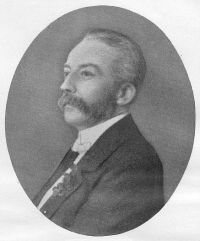

Thucydides' account of the Peloponnesian War, particularly the Melian Dialogue, presents a fundamental paradox for students of history and politics. On one hand, the unvarnished arguments of the Athenian envoys serve as a foundational text for political realism, articulating a worldview where power is the only true arbiter in relations between states [1, 2, 3]. The principle that the strong do what they can and the weak suffer what they must appears as a timeless, if brutal, law of nature. Yet, to read Thucydides as a simple advocate for this cynical doctrine is to ignore the profound narrative and analytical structure in which he embeds such episodes.
The historian himself professed an aim that transcends mere chronicling: to create a work that would be a "possession for ever," offering an exact knowledge of the past as a key to a future that will inevitably resemble it [4]. This purpose was facilitated by a unique historical method that combined a scrupulous dedication to factual accuracy with a powerful, almost literary, sense of dramatic composition [5, 6, 7]. Speeches and events are carefully shaped to reveal deeper truths about political motivations and the unchanging aspects of human nature [8].
This raises the central question: was Thucydides a realist theorist, using the war to illustrate the immutable laws of power, or was he a tragic narrator, chronicling the moral and political self-destruction of an empire? The starkness of the Melian episode, immediately preceding the catastrophic Sicilian Expedition, suggests that the historian is doing more than reporting a political theory; he is staging a tragedy, challenging the reader to see the connection between the open rejection of justice and the subsequent arrival of ruin [9].
The Athenian Doctrine of Unrestrained Power
The core of the realist interpretation of Thucydides rests on the explicit arguments made by his Athenian speakers. In the dialogue with the Melians, the Athenians refuse to engage in "specious pretences" about justice or rights, stating plainly that such considerations are only relevant between equals; otherwise, power dictates the terms . This position is not an anomaly but a consistent feature of the Athenian imperial mindset throughout the narrative. They argue that it has always been a law of nature for the weaker to be subject to the stronger, a principle they did not invent but merely follow .
This worldview is presented not as a matter of choice but of necessity, driven by what the Athenians identify as the three strongest motives: fear, honor, and interest [10]. Having acquired an empire, they believe they cannot relinquish it without risking their own security, creating a dynamic in which they must constantly scheme to extend their dominion or face the danger of being ruled themselves [11]. This logic traps Athens in a cycle of expansion and domination. Their empire is described as a despotism over unwilling subjects, maintained not by goodwill but by sheer strength [12].
The Athenians even acknowledge that their rule can be galling to their allies and that their subjects resent any perceived injustice, regardless of the overall moderation they might show [13, 14]. Yet, this awareness does not lead to a change in policy. Instead, it reinforces the belief that power, not equity, is the only reliable foundation for their state. The relentless ambition of Athens, which never rests and is checked by no reverse, stands in stark contrast to the cautious, conservative nature of their Spartan rivals [15, 16]. This dynamic, as portrayed by Thucydides, presents a clear and compelling case for the primacy of power in international affairs.
The Art of History and the Voice of the Author
To understand Thucydides' ultimate purpose, one must look beyond the words of his characters to the methods of the author himself. His own experience, particularly his twenty-year banishment for a military failure, was a crucial factor in the creation of his history [17]. This exile afforded him the unique opportunity to associate with both sides of the conflict, enabling him to watch the course of events with a degree of quiet detachment and impartiality that would have been impossible for a historian embedded within a single warring state [18, 19, 20]. This broader perspective is fundamental to his ability to analyze events with such intellectual grasp [21].
Thucydides was not a passive recorder of events. He consciously elevated his work beyond a simple chronicle that might please the ear, aiming instead for a deeper, more analytical truth . This involved a strenuous effort to mould language to express complex ideas, sometimes resulting in an intricate and difficult style [22]. He famously took liberties in reconstructing speeches, not to invent facts, but to capture the general sense of what was said and to ensure the arguments were in tone with his larger narrative . This authorial shaping is not a flaw but a deliberate method for transforming a series of events into a coherent story with dramatic and instructional power .
His ultimate goal was to dissect human nature under the pressures of war and politics, believing that as long as humanity remains the same, the patterns he observed would recur . The narrative is thus structured to highlight these recurring patterns, framing events within a cause-and-effect chain that often culminates in tragedy. His genius lies in his ability to make great events tell their own story greatly, using a dramatic reserve that heightens the power of his immortal history . It is this narrative craftsmanship that suggests his role is not merely to report the realist argument, but to place it within a critical, often tragic, context.
War as a Corrupting Force on Politics and Morality
A central theme that complicates a purely realist reading of Thucydides is his profound analysis of the moral and political disintegration caused by war. He describes war as a "rough master" that removes the easy supply of daily wants and brings men's characters down to the level of their bleak fortunes [23]. This is most vividly captured in his account of the civil strife, or stasis, that swept through the Greek world. In this state of societal breakdown, the very meaning of words became inverted to suit partisan ends: reckless audacity was rebranded as loyal courage, prudent hesitation as specious cowardice, and moderation as a cloak for unmanliness [24].
This moral decay extended to all facets of human interaction. Oaths were abandoned, and success through perfidious vengeance was prized as a mark of superior intelligence [25]. The war created a climate where the most depraved and least thoughtful individuals often prevailed, as they would resort to hasty violence while their more refined opponents were still deliberating [26]. The plague in Athens produced a similar breakdown of social norms, as the indiscriminate nature of death led many to abandon their belief in divine justice and human laws, rushing into hedonism before a common doom consumed them [27].
Thucydides also shows how this degradation infected the political process itself. He portrays a public sphere where citizens become spectators at debates, easily swayed by clever rhetoric and new-fangled paradoxes while despising commonplace wisdom [28]. Orators, in turn, are driven by fear or ambition, sometimes resorting to calumny to frighten opponents rather than engaging in honest argument [29, 30]. The city is deprived of its best advisers because the system rewards extremism and punishes caution . This depiction of a society unraveling from within is not a neutral observation; it is a powerful critique of the consequences of abandoning moral and political restraint.
The Tragic Arc: From Melos to Sicily
The full weight of Thucydides' narrative purpose becomes clear when the Melian Dialogue is viewed not in isolation, but as the dramatic prelude to the disastrous Sicilian Expedition . The brutal subjugation of Melos—where all adult men were executed and the women and children enslaved [31]—represents the practical application of the Athenians' unblushing doctrine of might and expediency . In this moment, Athens fully embodies the principle of preferring might to right, an act of insolence that great and sudden good fortune can inspire in a people [32].
Immediately following this act of supreme hubris, Thucydides narrates the Athenian decision to invade Sicily. The debate in Athens reveals a state driven by ambition and a blind confidence in the future, with many underestimating the risks of grasping for a new empire before the old one is secure [33, 34]. The historian positions the Melian affair as a moral and political tipping point. By explicitly casting aside the pretense of justice , the Athenians set themselves on a course for ruin. The narrative structure strongly implies that the catastrophic failure in Sicily is the direct consequence, the dramatic retribution, for the arrogance displayed at Melos.
The Athenian arguments at Melos, therefore, function less as a statement of Thucydides' own political philosophy and more as a diagnosis of the imperial mindset at its most extreme. He shows how a state, convinced of its own power, can use sovereign reason to thrust aside any inconvenient truths . By juxtaposing the clinical logic of power with its devastating human and strategic consequences, Thucydides masterfully crafts a cautionary tale. The tragedy of Athens is not that it was defeated, but that it brought its ruin upon itself by abandoning the very principles of moderation and justice that had once been a source of its strength [35].
Ultimately, Thucydides defies simple categorization as a political realist. While he documents the arguments of power politics with unparalleled clarity and intellectual honesty , his larger project is to embed these arguments within a narrative that demonstrates their tragic and corrosive effects. He shows that a politics devoid of justice and moderation leads not to stability and security, but to civil strife, moral collapse, and imperial overreach . His work is a deep investigation into the human condition, revealing how war and the pursuit of power can strip away the sentiments that sustain a healthy political community.
The Melian Dialogue is thus the centerpiece of a profound historical drama, not a dispassionate theoretical treatise. It is the moment where Athenian imperial logic reaches its purest and most ruthless expression, serving as the moral catalyst for the subsequent catastrophe . Thucydides' hope that his work would be a "possession for ever" was grounded in this belief: that by understanding the tragic fall of Athens, future generations could recognize the perennial dangers of unchecked ambition and the cyclical nature of human political folly . He is not merely the first realist; he is the first and greatest diagnostician of the tragic paradoxes of power.


