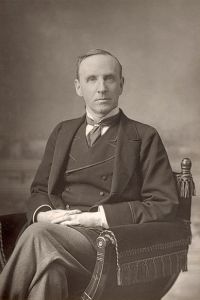
John Morley

John Morley

Machiavelli (1897)

Summary

Portrait of John Morley John Morley,  Machiavelli (1897)

“ Are we to test the true civilisation of a State by anything else than the predominance of justice, right, equality, in its laws, its institutions, its relations to neighbours? Is one of the most important aspects of national policy its reaction upon the character of the nation itself, and can States enter on courses of duplicity and selfish violence, without paying the penalty in national demoralisation? What are we to think of such sayings as d'Alembert's motto for a virtuous man, 'I prefer my family to myself, my country to my family, and humanity to my country'? ”
Source: Wikisource

Portrait of John Morley John Morley,  Machiavelli (1897)

“ You must regard policy as a whole. The ruler as an individual is, like other men, 'no more than the generation of leaves, fleeting, a shadow, a dream.' But the State lives on after he has vanished. He is a trustee for times to come. He is not shaping his own life only, but guiding the long fortunes of a nation. Leaves fall, the tree stands.
Such is the defence of reason of State, of the worship of nation and empire. Everything that policy requires, justice sanctions. There are no crimes in politics, only blunders.
”
Source: Wikisource

Portrait of John Morley John Morley,  Machiavelli (1897)

“ In our age, when we think of the chequered course of human time, of the shocks of irreconcilable civilisations, of war, trade, faction, revolution, empire, laws, creeds, sects, we seek a clue to the vast maze of historic and pre-historic fact. Machiavelli seeks no clue to his distribution of good and evil. He never tries to find a moral interpretation for the mysterious scroll. We obey laws that we do not know, but cannot resist. We can only make an effort to seize events as they whirl by, and to extort from them a maxim, a precept, or a principle, to serve our immediate turn. ”
Source: Wikisource

Get perspective with Kwize: daily news enlightened by great literature