Montesquieu

Definition and stakes

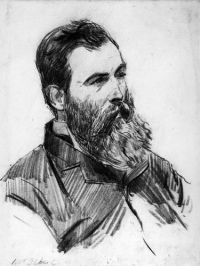
Portrait of Pierre-Joseph Proudhon Pierre-Joseph Proudhon,  What is Property? — Second Memoir

“ Montesquieu’s work, like the works of all French writers, is skilfully composed,—spirited, witty, and filled with wise observations. He pleases, interests, instructs, but leads to little reflection; he does not conquer by depth of thought; he does not exalt the mind by elevated reason or earnest feeling. In vain should we search his writings for knowledge of antiquity, the character of primitive society, or a description of the heroic ages, whose morals and prejudices lived until the last days of the republic. ”
Source: Wikisource

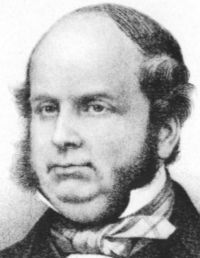
Portrait of François Guizot François Guizot,  A Popular History of France from the Earliest Times…

“ Good men had themselves sometimes lent a hand to the work, beyond what they had intended or foreseen, perhaps; Montesquieu, despite the wise moderation of his great and strong mind, had been the first to awaken that yearning for novelty and reforms which had been silently brooding at the bottom of men’s hearts. Born in 1689 at the castle of La Brede, near Bordeaux, Montesquieu really belonged, in point of age, to the reign of Louis XIV., of which he bears the powerful imprint even amidst the boldness of his thoughts and expressions. ”
Source: Gutenberg

Anne C. Lynch Botta,  Handbook of Universal Literature…

“ PROGRESS OF SKEPTICISM.—The first powerful attack on the manners, institutions, and establishments of France, and indeed of Europe in general, is that contained in the "Persian Letters" of the Baron de Montesquieu (1689-1755) ; in which, under the transparent veil of pleasantries aimed at the Moslem religion, he sought to consign to ridicule the belief in every species of dogma. But the celebrity of Montesquieu is founded on his "Spirit of Laws," the greatest monument of human genius in the eighteenth century. ”
Source: Gutenberg

Get perspective with Kwize: daily news enlightened by great literature