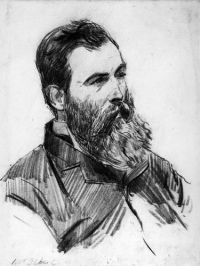
Courtenay Ilbert

Courtenay Ilbert

Montesquieu (1904)

Summary

Portrait of Courtenay Ilbert Courtenay Ilbert,  Montesquieu (1904)

“ The relativity of laws—that is Montesquieu's central doctrine. There is no one best form of state or constitution: no law is good or bad in the abstract. Every law, civil and political, must be considered in its relations to the environment, and by the adaptation to that environment its excellence must be judged. If you wish to know and understand the spirit of a law, its essence, its true and inner meaning, that on which its vitality and efficiency depend, you must examine it in its relations to all its antecedents and to all its surroundings. ”
Source: Wikisource

Portrait of Courtenay Ilbert Courtenay Ilbert,  Montesquieu (1904)

“ The diversity of laws which was found intolerable in France at the end of the eighteenth century, and in Germany at the end of the nineteenth century, has long made itself felt as a serious and as a remediable nuisance in matters of commerce throughout the world, and in many parts of the domain of commercial law we have either attained to or are within measurable distance of that common code of laws which is the dream of comparative jurists. ”
Source: Wikisource

Portrait of Courtenay Ilbert Courtenay Ilbert,  Montesquieu (1904)

“ If you want to be read, still more if you want to be widely read, you must be readable. In Montesquieu's time, books on political and legal science were, as a rule, unreadable. But the Spirit of Laws was, and still is, an eminently readable book. No one before Montesquieu had dealt in so lively and brilliant a manner with the dry subject of laws and political institutions. ”
Source: Wikisource

Get perspective with Kwize: daily news enlightened by great literature