AI-generated from sources
Hero or Circumstance, the Victorian Quarrel over Whether Great Men Make History
In Brief
- Neither pure hero-worship nor pure determinism survived the Victorian debate: the champion of great men wrote of the minister his age awaited that the enterprise was ready for him, if he was ready for it, and the prophet of social evolution granted that a few teachers of new truths could change more than any king.
- William James, the American philosopher, proposed in 1897 to treat geniuses as Darwin treated spontaneous variations: their origin lies beyond social science, and what matters is how the man and his environment act on each other.
- The conditions under which one will can tip events recur across these texts: a leader only half a step ahead of his contemporaries, a crisis or a war that creates the post of a strong executive, and a following looking for someone to save it.
- A great man cannot always save a situation: Sidney Hook, a philosopher of history writing in 1943, rejected the determinist claim that heroes are always variations in detail, but held that sometimes they are, and that no leader can always obviate the accumulated consequences of past folly.
Main authors

Few sentences have kept a quarrel going as long as Thomas Carlyle's claim that universal history is, at bottom, “the History of the Great Men who have worked here” [1]. Writing in 1943, a century after Carlyle's lectures on heroes, the philosopher Sidney Hook still called the role of the great man one of the most fascinating theoretical questions of historical analysis [1]. The question sounds simple. Does a single will bend the course of events, or do events merely select the person who will seem to bend them? Behind it lay a fear about history itself. A contributor to The Atlantic Monthly warned in 1863 that if a science of history required making man a mere serf of circumstance, it would amount to the extinction of everything in history that inspires [2].
The Victorian age produced two opposite answers. One was Carlyle's hero-worship, which made the able man the master of his age and the masses his charge. The other came from a scientific temper—Herbert Spencer's sociology, the statisticians of crime, later the socialist historians—which made the individual a product of his time. Neither held in its pure form. Carlyle himself said of the minister his age awaited that the enterprise was ready for him, “if he is ready for it” [3], and Spencer granted that a few teachers of new truths could change more than any king [4]. The more durable move came from William James, who in 1897 proposed treating great men as Darwin treated spontaneous variations: unexplained in their origin, and significant only through their relation to an environment [5]. It did not settle the quarrel. It turned a question of principle into a question of conditions—when, and under what pressure, can a single person tip a situation?
Carlyle and the Cry for a True Leader
For Carlyle, the hero was less a historical hypothesis than a political remedy. In Chartism, published in 1840, he heard beneath the democratic turbulence and the jangle of the ballot-boxes a single prayer, common to all hearts at all times: the wish for a true leader rather than a sham one [6]. The self-government of a multitude by a multitude was, to him, an impossibility; government by the wisest was what a bewildered Europe was struggling towards [6]. In the Latter-Day Pamphlets he went further. All that democracy had ever meant, he wrote, was the attainment of a truer aristocracy, the able men of every rank gathered like diamond grains from the general mass of sand [7].
His politics was of a piece with his theory of history, and one editor of his lectures read the practical lessons as deduced from the reading of history. The introduction to an edition of his lectures on heroes summed up the Carlylean great man as “not the creature of his age, but its creator” [8]. The same edition drew the political lesson. The masses, in this reading of Carlyle, can never safely be trusted with the intricate problems of their own welfare and must be guided, disciplined, at times driven; political machinery is only another delusion of a mechanical age [9]. The editor judged the doctrine hostile to science in its reading of history and hostile to democracy in its practical lessons, a resistance to the levelling spirit Carlyle saw spreading [8]. History and politics formed one argument. If the hero creates his age, the age owes him obedience.
A tension appears in Carlyle's own pages. In the Latter-Day Pamphlets he describes the minister that rational men everywhere seemed to be looking for, one who would attack the Augean stable of Downing Street and produce a real management of affairs; the alternative, as he read the omens, was a Chartist Parliament and the Deluge [3]. No man in his time, he judged, was more authentically called to a post of danger and honor. Then comes the condition: the enterprise is ready for him, “if he is ready for it” [3]. The clause is said of one awaited minister, not of the hero in general, and it is an exhortation rather than a doctrine; still, it puts the man under a condition, measured against a post of danger that is there before he takes it.
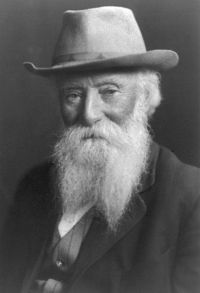
Others pressed on the hero's dependence, from two sides. John Burroughs, who wrote “woe to the people who have lost the secret of producing great men,” still observed that under any form of government only events themselves—the combination of circumstances we name fate or fortune—can place the exceptional man at the head of affairs; the worthiest man, he added, usually has other work to do and avoids politics, and Carlyle himself could not be induced to stand for Parliament [10]. William J. Long objected from the side of the followers. A man is followed, he argued, when the common ideal is written large in him and others see in him a truth they already revere, so that the leader is a representative of his people [11]. Carlyle's hero, by contrast, appears when humanity is in the Slough of Despond and drags or drives his subjects to a higher level [11]. Between a circumstance that places the hero and a people that authorizes him, little room remained for a creator owing nothing to anyone.
Spencer, Buckle and the Man as Product of His Time
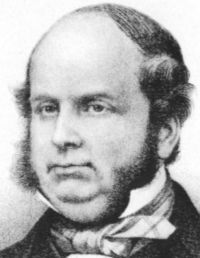
The opposite camp found its vocabulary in the new sciences of society, and above all in their regularities. Henry Thomas Buckle argued that criminal statistics, gathered by officials with every means of reaching the truth and no interest in deceiving, showed crime occurring according to “a fixed and uniform scheme”—a fact better attested, he claimed, than any other in the moral history of man [12]. Buckle was writing about crime, not about great men. The force of the argument lay in its method. If the act that seems most personal, the decision to break the law, behaves in the aggregate like a natural quantity, the historian might study masses rather than wills. It was this prospect that the Atlantic contributor dreaded: a science of history bought at the price of man's royalty [2].
Spencer turned the same reasoning on the individual. In First Principles he reminded the man of convictions that his sympathies and repugnances are not there for nothing: with all his capacities, aspirations and beliefs, he is “not an accident, but a product of the time,” a descendant of the past and a parent of the future [13]. Thomas Hill Green gave the idea its most precise form for the hero. The historic hero, strong to make the world new and exulting in his strength, draws his inspiration from a past he does not know and constructs a future that is not that of his own will or imagination [14]. The hero still acts in Green's sentence. What he loses is authorship. He becomes the channel through which a past he ignores turns into a future he did not choose.
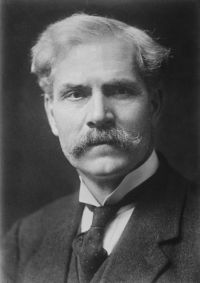
In the early 20th century the idea became the banner of a political camp. Ramsay MacDonald, writing in 1911, set a romantic history of heroes against a scientific history of peoples; the colossal historical figure was simply the man able to gather up in himself the life of his time [15]. Max Beer, in his studies of historical materialism, tied each outlook to a politics. The individualistic and aristocratic view makes the hero the creator of history, while the collectivist and democratic view makes him its instrument, conditioned by environment and time [16]. For Beer, the portrait of a hero tells us more about the longings of the people who handed it down than about real history [17]. Yet even he kept a task for the historian: to reconstruct the personal forces through which history has worked [17]. Determinism, in its most militant form, still needed persons to carry its forces.
Spencer's own position, however, was less fatalist than political. He did not deny that great men do good. The free-trade campaigners, he argued, had initiated a revolution wider than any begun by a modern potentate, and those who elaborate new truths are the real rulers, the virtual kings—a point on which he enlisted Carlyle himself [4]. What he rejected was the subordination of a nation to a man, a vicious state of things in his words, needful for a vicious humanity and to be outgrown as fast as possible [18]. He also gave the hero a history. In a rude society where war is the business of life, a ruler needs strength, courage, cunning and will, and the best is easy to pick out; as that unlimited authority ceases to be needful, it becomes impossible to get the greatest man to the top [19]. Spencer's great man is not abolished. He is assigned to certain kinds of society.
William James and the Darwinian Variation
William James cut through this opposition with a confession of ignorance. The causes that produce great men, he wrote in 1897, lie in a sphere “wholly inaccessible to the social philosopher” [5]. The social philosopher must accept geniuses as data, as Darwin accepts his spontaneous variations, and ask only how the environment affects them and how they affect the environment [5]. The move concedes something to each side. Against Spencer's product of the time, it refuses to deduce the genius from his society. Against Carlyle's creator, it makes the relation to the milieu the whole of the problem.
Darwin's own texts lend themselves to this division of labor. In The Descent of Man, published in 1875, he left an “unexplained residuum of change” to unknown agencies that occasionally induce strongly marked and abrupt deviations [20]. In the same passage he noted that among strictly social animals natural selection sometimes acts on the individual through the preservation of variations beneficial to the community [20]. The geographer Ellen Churchill Semple quoted Darwin to a broader effect: the conditions of life may be said not only to cause variability but also to include natural selection, for they determine whether this or that variety shall survive [21]. Transposed to history, the scheme James retained is clear. The variation arises for reasons the observer cannot give, and its future depends on what the community and its conditions make of it.
James drew a sharper consequence, aimed at explanations written after the fact. A theorist can always show, he wrote, that the quality each race developed was not incompatible with its habitat; what he cannot show is that this particular form of compatibility was the necessary and only possible one [22]. Naturalists know how indeterminate the harmony between a fauna and its environment is, since an animal can better its chances by growing aquatic, arboreal or subterranean [22]. James was writing of races and habitats, but the argument carries over to leaders. That a man suited his moment does not prove that the moment required him, nor that no other figure could have answered it.
The analogy, however, did not belong to James alone. Enrico Ferri claimed Darwin for socialism with the opposite emphasis: the soul of Darwinism, he argued, lies in the variability of individuals under the modifying influence of the environment, so that changes in surroundings cause correlative changes in individuals [23]. For Ferri the environment shapes the variation; for James it sifts what arises unaccountably. The same biology thus served both camps. What James gained was not a proof but a better-posed question. His great man is real and irreducible, yet his fate is decided in his relation to a milieu he does not control.
Half a Pace Ahead, the Conditions of a Tipping Point
If the milieu selects, the question becomes what it selects for. Grant Allen offered a precise answer in his distinction between the prophet and the leader. The prophet is too far ahead of his times; he discounts the future “at a ruinous rate” and takes the consequences, as the hard lives of the Old Testament prophets attest [24]. The leader stands abreast of his contemporaries, just half a pace in front, with the power to persuade the inertia of humanity into that half-step [24]. Allen's distance works as a selection criterion. The variation that succeeds is not the boldest but the one its environment can still absorb.
Crisis is a second condition, because it creates both the demand and the instrument. A contributor to The Atlantic Monthly in 1861 regretted that nearly half a century of prosperity had left the country, faced with a sudden danger, without a leader whom the people would trust implicitly and who could in some sense control events by the prestige of a great name [25]. The hedge matters: even in the hour of need, the great name governs events only in some sense. In 1898 the Popular Science Monthly observed that no war was ever fought without bringing a strong executive into existence or strengthening the one already there [26]. Spencer, too, tied the easy elevation of the best man to societies where war is the business of life [19]. The crisis does not produce the great man. It opens the post he will occupy.
Writing in 1943, half a century after James, Sidney Hook drew the lesson that both Victorian camps had resisted. The social determinists, he argued, are wrong to claim that heroes are always variations in detail [27]. But it matters to recognize that sometimes they are, if only to be cured of the illusion that a great man can always save a situation or obviate “the accumulated consequences of past folly” [27]. Hook added a tragic note. Men cannot undo the consequences of an event that could have been left undone [27]. The great man's power is real but conditional, and the conditions include the mistakes made before he arrives.
A following is the last condition, and perhaps the most decisive. For Hook, the glorification of a historical figure matters only when it allows him to do significant things he could not have done if unpopular or without a mass following; in the exigencies of political action, he observed, men are always looking for someone to save them, and whoever saves them is a hero [28]. The hero is thus partly made by the demand that seeks him. Alfred H. Lloyd put it as a paradox: great men make history, but only because they are alive in it before their birth and survive in it after their death [29]. A single will tips a situation when it finds that situation already leaning.
The Victorian quarrel over great men opposed two clean answers. One held that history is the work of exceptional individuals, the able men whom the masses should obey; the other held that every individual, hero included, is a product of his time and of social regularities that statistics can measure. Neither survived intact. Even the champion of heroes, hailing the minister his age awaited, wrote that the enterprise was ready for him, if he was ready for it. The evolutionary sociologist conceded that a handful of teachers of new truths can outweigh kings, while confining the rule of a single man to rude and warlike societies. William James's borrowing from Darwin kept what each side had right: the genius cannot be deduced from his society, but his effect is decided in his encounter with it.
What remains is a grammar of conditions rather than a doctrine. The leader must stand half a pace ahead of his contemporaries, not a mile; a crisis must open the post; a following must be looking for a saviour; and even the strongest will cannot always obviate the accumulated consequences of past folly. None of this diminishes the individual. It locates him. A great man is neither the author of his age nor its mere symptom, but a variation his age was ready to select.