AI-generated from sources
Wild Beast or Useful Engine, Who Answers for a Thing That Acts on Its Own
In Brief
- The common law of animals already held both answers to harm without fault: the keeper of a tiger or bear was liable simply for keeping it, while the owner of a horse or dog kept for use answered only for negligence or for a mischief he knew of.
- The line between dangerous and useful things has always been a policy choice that lawmakers can move: China's 2009 Tort Law makes the keeper of any domestic animal liable unless the harm came from the victim's intent or gross negligence.
- Industrial machinery pushed most of the workplace from negligence suits toward insurance, on the argument that an employer who pays for every accident will find it cheaper to guard his machines, though another speaker held that the liability to be penalized for negligence made employers more careful.
- Usefulness has rarely bought outright immunity: mill owners could flood a neighbor's land but paid its appraised value, and distributors of dual-use technology escape secondary copyright liability unless their product will be used almost exclusively to infringe or they actively induce infringement.
Main authors
Among the grounds of liability that Oliver Wendell Holmes set out in The Common Law, one stands apart: the keeping of a tiger, a bear or any animal of a species known to be ferocious. If it escapes and does damage, the owner is liable on the sole proof that he kept it [1]. Nobody asks whether the cage was well built. Holmes saw what makes the case strange. The owner's moment of choice lies far back in the chain of causes, at the decision to keep the beast, not at the moment it strikes [1]. A contributor to The Atlantic Monthly in 1861 described a different creature with the same troubling trait. You must know your engine's temper before driving it, he wrote, as you know your horse's, for very complicated machinery "appears to have a will of its own" [2]. He added that a mechanical reason lay behind the caprice, though hardly one man in a thousand could trace it [2].
Between the tiger and the engine lies the whole problem of things that act without a hand to guide each move. One tradition treats their keeper as an insurer: whoever chooses to harbor a dangerous thing answers for its escape, whatever care he took. The other holds that liability must rest on fault, lest the law punish the makers of useful things for harms they neither intended nor foresaw. The record of the common law, from the animal cases to the factory floor and the software trial, suggests that neither has ever won outright. What decides the matter is a classification made before any accident: is the thing a wild beast, or a useful engine kept for work? That classification has always been a choice of policy rather than a fact of nature. And usefulness, where it prevailed, rarely bought immunity; more often it bought a different way of paying.
The Tiger, the Bear and the Gentle Horse
The strict rule for dangerous animals was never a rule about care. A casebook on torts published in 1893 makes the keeping of the animal the heart of the wrong, and holds the owner to a rigorous standard on account of the danger to life and limb [3]. Its logic runs to the end. Since "negligence, in the ordinary sense, is not the ground of liability", the victim's own slight carelessness cannot serve as a defence either [3]. Fault is simply out of the picture. The opinion in Spring Company v. Edgar, written by Justice Nathan Clifford, borrows the same rule from the treatise writer Addison: whoever keeps an animal known to attack mankind is prima facie liable without any proof of negligence in securing it [4].
The useful animal lived under another regime. Clifford's opinion states it in a single clause: damage may be done by a domestic animal kept for use or convenience, and its owner is not liable in negligence unless he knew the animal was accustomed to do mischief [5]. Another court reprinted in the 1893 casebook applies to animals the ordinary care owed for any other property, the prudence of a reasonable person [6]. Usefulness, in other words, grants a presumption of innocence. It ends only with knowledge: once the keeper knows the animal's mischievous disposition, the gist of the action becomes the keeping itself [4].
Even the wild-beast rule was less uniform than its reputation. The same court that applied ordinary prudence to the horse spoke of an attack by an animal ferae naturae as raising a presumption of the keeper's negligence [6]. A presumption can be rebutted; the liability Holmes described for the tiger cannot [1]. Between these two formulas lies a real difference. In one, the keeper insures the public. In the other, he is merely suspected of carelessness until he proves otherwise.
Holmes himself refused to treat the boundary as natural. The ancient ground of responsibility, he observed, was the owner's property in the offending animal [7]. But liability for harm "of a kind not to be expected from such animals" was fixed on grounds of policy, little disturbed by tradition [7]. The point reaches well beyond dogs and bears. What counts as expected behavior is a social judgment about a species, and the line between tame and wild follows what a community is willing to live with.
That line can move, and a legislature can move it. The Tort Law of the People's Republic of China, enacted in 2009—more than a century after the American casebook—makes the keeper or manager of any domestic animal liable for the harm it causes [8]. He escapes or reduces that liability only by proving the victim's intent or gross negligence [8]. The useful animal has crossed over to the insurer's rule. The keeper's care no longer matters; only the victim's fault does.
Steam Engines, Careless Engineers and the Insurance Principle
The first instinct of the machine age was to place the blame on the person at the controls. James H. Maggard's manual Rough and Tumble Engineering warns that a careless or forgetful engineer is "a mighty poor risk for an insurance company" [9]. The life of the engine, he insists, depends entirely on its operator, and it is not worth trying to shift the responsibility for an accident onto anyone else [9]. This is the ethic of fault in its purest form. The engine has no temper that excuses the man, even if the Atlantic writer found its caprices real enough to the driver [2].
Yet the period also produced the image that undoes this ethic. Victoria C. Woodhull, lecturing on government, argued that the fault lay with the system more than with its administrators [10]. Her illustration was an engine. However skilful the engineer and watchful the fireman, an engine faulty in construction will explode; a perfect engine coupled to machinery unfit for its speed will fly in pieces [10]. She meant it as a metaphor. It nonetheless states the case against fault-based liability exactly: some harms come from the design of the system, beyond the reach of anyone's diligence.
The common law of the workplace long held to the fault side. One business textbook records that its "full rigor" had worked unfairly for the workingman in modern machine production, and that about 27 states had modified it by statute [11]. Outside those reforms, an injured employee still had to sue his employer for damages [11]. The 1911 Encyclopædia Britannica defines the master's duty precisely. He must provide fit tools and machinery and see them maintained, and he answers for breaching that duty—but his liability extends no further [12].
Reformers turned the insurer's rule into an argument about prevention. At a national conference on workmen's compensation, one speaker urged that the burden of accidents be shifted back upon the employer [13]. The employer would then prevent accidents, he reasoned, because guarding the machinery costs far less than paying damages to the injured and to the families of the dead [13]. Another participant at the same conference claimed a like virtue for fault. Citing German insurance figures, he held that the liability to be penalized for negligence makes the employer more careful of his workmen's lives [14]. Both speakers looked to deterrence, one setting it off with the accident itself, the other with the employer's lapse.
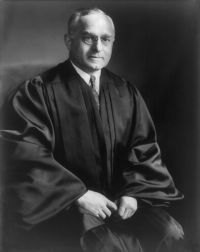
What carried the day was a bargain more than a principle. A third speaker set out its terms: substantial justice for the workingman, and an end to long and costly litigation, so that money would go to relief rather than to lawsuits [15]. In exchange, the worker should not be able to sue his employer and, having lost, fall back on compensation [15]. Felix Frankfurter later called the old regime a "cruel and wasteful mode" of dealing with industrial injuries, displaced in industry generally by the insurance principle [16]. He noted, though, that negligence still governed injuries to railroad employees, the workers closest to the emblematic engine [16]. As recently as 2019, the Supreme Court still described their remedy as owed when a railroad negligently fails to keep a safe railyard [17].
Mill Dams, Limited Companies and Regulated Robots
Usefulness has long bought a privilege, but it was a privilege to harm against payment rather than to harm for free. Persons building mills, D. C. Cloud records, were permitted to dam streams and take the flooded lands of adjoining owners for their own use, upon payment of a value fixed by appraisers [18]. Henry F. French turned the same statutes against the mills. If a legislature could let manufacturers flood land against its owner's will, it could equally order dams removed for agriculture, since the rights of mill-owners were "no more sacred than those of land-owners" [19]. The useful engine of the day was spared being stopped. It was not spared the bill.
The purest case for protecting enterprise from the cost of its risks comes from H. G. Wells. New machinery and new methods, he wrote, are experiments of unascertained value and no business for the State [20]. After money itself, no invention has done more for freedom and progress than the limited liability company, created for this "work of trial and adventure" [20]. The argument is about shielding the adventurers. Of those whom the experiments might injure, the passage says nothing at all.
A third answer bypasses the courtroom altogether. Writing in 1949 about what he called robot machines, Edmund Callis Berkeley expected them to fall under the most common American arrangement: private ownership and public regulation [21]. His models were railroads, banks, airlines, life insurance companies and telephone systems, and the aim was that such machines would never threaten the safety of people [21]. Regulation settles the question of risk before any accident, not after. The railroad, the industry where fault-based liability survived longest, was also his model of a safely governed engine.
The Garage Inventor and the Machine That Is No One
Software revived the old question in the form of dual use. A copyright opinion reported in the United States Reports warned that under a stricter rule, inventors in the garage, the dorm room or the corporate lab would face costly trials over any technology capable of infringement [22]. They could not predict how courts would weigh lawful against unlawful uses [22]. The rule it defended deliberately makes secondary liability hard to find where new technology is at issue. Distributors of dual-use products escape it unless the product will be used almost exclusively to infringe, or unless they actively induce infringement [23]. The structure is that of the domestic animal: no liability for the useful thing, unless mischief is its known nature [5, 4].
Later decisions pushed the immunity of the useful engine further still. Ruling on whether communication platforms had aided terrorist acts, the Supreme Court held that their "mere creation" is not culpable, any more than that of cell phones, email or the internet [24]. A contrary holding, it reasoned, would make any communication provider liable merely for knowing that wrongdoers used its services and failing to stop them [25]. That would run roughshod over the ordinary limits of tort and cut liability loose from its moorings in culpability [25]. The contrast with the old animal rule is instructive, though the two govern different harms. For the keeper of a vicious dog, knowledge was enough to make him prima facie liable without proof of negligence [4]. For the platform, knowledge of misuse is not enough even to make it a wrongdoer [25].
The insurer tradition never vanished from these debates. An opinion in Religious Technology Center v. Netcom, from 1995, summarizes a recommendation that Congress refuse to exempt online service providers from strict liability [26]. Exemption, the argument ran, would remove their incentive to reduce harm by educating users, requiring indemnification, purchasing insurance and developing screening technology [26]. This is the tiger rule recast in the language of incentives. Timothy K. Armstrong adds that copyright infringement is itself a strict liability offense, and that courts have carved out exceptions on public policy grounds even against the statute's literal text [27]. In copyright, strictness is the default and escape a matter of policy; of the animals, Holmes said that responsibility for harm not to be expected was itself fixed on grounds of policy [7].
A machine that acts on its own does not, for now, absorb any of this responsibility. In a dispute over the authorship of a work generated by a computer program, the Copyright Office's counsel argued that machines have no legal personality and that a machine functions as designed, "without motivation or reward" [28]. Such a machine cannot be an agent, and therefore cannot be an employee under the work-made-for-hire doctrine [29]. A 1980 study of space automation had already wondered whether intelligent, self-replicating robots might one day count as legal persons, and therefore as slaves [30]. Until that day, the machine remains a thing that someone keeps. Its acts fall back on a keeper, and the old choice between the tiger and the horse returns intact.
The common law has always held two answers to the harm done by things that act on their own. Whoever kept a beast of a species known to be ferocious paid for its escape whatever his care, while the owner of a horse or dog kept for use answered only for negligence or for a mischief he already knew of [1, 5, 4]. The line between them was never drawn by nature. Holmes traced it to policy; a Chinese code of 2009 moved every domestic animal to the strict side; workmen's compensation replaced the negligence suit with insurance in most of industry; and copyright law spared the distributors of dual-use technology unless their product served almost only to infringe or they induced infringement [7, 8, 16, 23]. Where usefulness prevailed, it rarely bought immunity. Mill owners could flood a neighbor's field but paid its appraised value; employers were spared lawsuits but carried the cost of accidents [18, 15].
A machine with no legal personality cannot carry its own blame, so the question it raises is an old one [28, 29]. Is it a tiger, whose keeper insures the public against its escape, or a gentle horse, whose owner answers only for his negligence or for a vicious streak he knew of? Each answer has its defenders. One side argues that strict liability gives keepers an incentive to educate users, insure and screen; the other, that inventors would face costly trials whose outcome they could not predict [26, 22]. The law has never really decided what a thing is. It decides what a community expects of it, and charges the keeper with the rest.