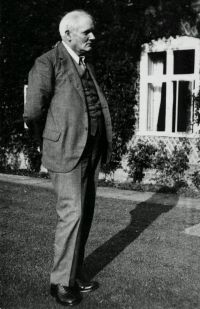
Alexis Rienzi

Biographical details

Alexis Rienzi,  The Russian Review (1916)

“ In the great Russian musical compositions, the national song does not serve merely as a theme, a subject. It dominates, it rules, it gathers about it the best of the ornamentation that a musical genius can produce for its appropriate setting. The composer merely embellishes it, as he truthfully and skillfully makes its meaning, its aim, and its origin apparent to the listener. It is not surprising, therefore, that Russian music, when at its best, is so profoundly national, so deep, so truthful, so humanly appealing. ”

Source: Wikisource

Alexis Rienzi,  The Russian Review (1916)

“ Russian music does not strive to please, to cater to the popular taste; its aim is to educate. Like the truthful historian, it tells the story of the Russian people, of its life, its beliefs, its sufferings, its love, and its spiritual might.
One need not be pessimistic about the future of Russian music. It is an outlook that is rich and full of promise. Already one can see the gratifying indications of a growing interest in the native art. The composers of the past generation have given it an impulse that will take Russia to the foremost ranks of musical achievement.
”
Source: Wikisource

Alexis Rienzi,  The Russian Review (1916)

“ In Russian folk-songs, words and music are closely linked. They are an invitation to the dance; they set the peasant's feet a-dancing and make him clap his hands. It is not the words so much, as the melody that makes the songs so infectious. Far more definitely than language can do it, the melodies express the true national spirit. It is this dinstinctive quality that the great Russian composers have recognized, and they have done well in taking the Russian folk-music as the basis for the development of a native school of music. ”
Source: Wikisource

Get perspective with Kwize: daily news enlightened by great literature