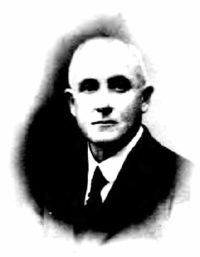
Algernon C. Swinburne and Margaret Bryant

Biographical details

Algernon C. Swinburne and Margaret Bryant 1911 Encyclopædia Britannica (1911)

These alone, among all of their day who have written of him without the disadvantage or advantage of a personal acquaintance, have clearly seen and shown us the manhood of the man. That ridiculous and degrading legend which imposed so strangely on the generous tenderness of Shelley, while evoking the very natural and allowable laughter of Byron, fell to dust at once for ever on the appearance of Lord Houghton’s biography, which gave perfect proof to all time that “men have died and worms have eaten them” but not for fear of critics or through suffering inflicted by reviews.
Source: Wikisource

Algernon C. Swinburne and Margaret Bryant 1911 Encyclopædia Britannica (1911)

The false Keats, therefore, whom Shelley pitied and Byron despised would have been, had he ever existed, a thing beneath compassion or contempt. That such a man could have had such a genius is almost evidently impossible; and yet more evident is the proof which remains on everlasting record that none was ever further from the chance of decline to such degradation than the real and actual man who made that name immortal.
Source: Wikisource

Algernon C. Swinburne and Margaret Bryant 1911 Encyclopædia Britannica (1911)

One thing hitherto inexplicable a very slight and rapid glance at his amatory correspondence will amply suffice to explain: how it came to pass that the woman so passionately beloved by so great a poet should have thought it the hopeless attempt of a mistaken kindness to revive the memory of a man for whom the best that could be wished was complete and compassionate oblivion.
Source: Wikisource

Get perspective with Kwize: daily news enlightened by great literature