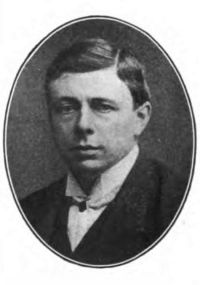
Arthur William Holland and Charles Lethbridge Kingsford and Philip Chesney Yorke and William Browning Smith and Mountstuart Elphinstone Grant Duff

Biographical details

Arthur William Holland and Charles Lethbridge Kingsford and Philip Chesney Yorke and William Browning Smith and Mountstuart Elphinstone Grant Duff 1911 Encyclopædia Britannica (1911)

The late Lord Arthur Russell once said to him, after he had been buying some property in southern England: “So you still believe in land, Lord Derby.” “Hang it,” he replied, “a fellow must believe in something!” He did an immense deal of work outside politics.
Source: Wikisource

Arthur William Holland and Charles Lethbridge Kingsford and Philip Chesney Yorke and William Browning Smith and Mountstuart Elphinstone Grant Duff 1911 Encyclopædia Britannica (1911)

The “education” of the party that had so long opposed all reform to the point of granting household suffrage was the work of another; but Lord Derby fully concurred in, if he was not the first to suggest, the statesmanlike policy by which the question was disposed of in such a way as to take it once for all out of the region of controversy and agitation. The passing of the Reform Bill was the main business of the session 1867. The chief debates were, of course, in the Commons, and Lord Derby’s failing powers prevented him from taking any large share in those which took place in the Lords.
Source: Wikisource

Arthur William Holland and Charles Lethbridge Kingsford and Philip Chesney Yorke and William Browning Smith and Mountstuart Elphinstone Grant Duff 1911 Encyclopædia Britannica (1911)

Richard could not well afford to quarrel with so powerful a noble, but early in 1485 Stanley asked leave to retire to his estates in Lancashire. In the summer Richard, suspicious of his continued absence, required him to send his eldest son, Lord Strange, to court as a hostage. After Henry of Richmond had landed, Stanley made excuses for not joining the king; for his son’s sake he was obliged to temporize, even when his brother William had been publicly proclaimed a traitor. Both the Stanleys took the field; but whilst William was in treaty with Richmond, Thomas professedly supported Richard.
Source: Wikisource

Get perspective with Kwize: daily news enlightened by great literature