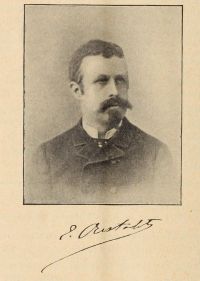
G.W. Murdoch

Biographical details

G.W. Murdoch The Zoologist (1902)

It is now generally admitted that there is no definite dividing line between what is called "animal instinct" and human reason, however highly developed and widely contrasted may be the manifestations of the latter. Here is a passage from Erasmus's colloquy on "Amicitia" (Friendship) , between Ephorinne and John (Erasmus himself) , in which he endows a Monkey with quite superior reasoning (contrivance after reflection) powers. The spelling is given as in the 1725 edition of Bailey:—
Clever Tactics of A Monkey.
Source: Wikisource

G.W. Murdoch The Zoologist (1902)

These are scattered profusely throughout all his works, and are invariably free from myth or poetic fable, so beautifully employed by Shakespeare, Ben Jonson, and other great writers of the "Spacious Age of Great Gloriana of the West." Erasmus's references, in fact, are mainly those of a field-naturalist. No doubt, apart from his intuitive love of wild life, faunal and floral, his habits afforded him great scope for very varied observations. Erasmus was a great traveller, and he wandered leisurely on horseback in many lands near and far.
Source: Wikisource

G.W. Murdoch The Zoologist (1902)

The Boy strikes him with the Rake, the Serpent rolls himself up; but he laid on, till having broke his Head, the Serpent stretched himself out, which they never do, but when they are dying; that's the Reason that you have heard the Apologist, concerning a Crab-Fish, who killing a Serpent that was his Enemy, when he saw him stretch'd out, says thus, You ought to have gone so when you were alive.
Source: Wikisource

Get perspective with Kwize: daily news enlightened by great literature