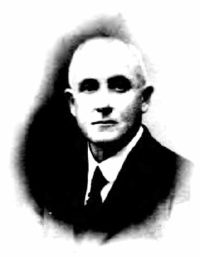
Graziadio Isaia Ascoli and Carlo Salvioni

Biographical details

Graziadio Isaia Ascoli and Carlo Salvioni 1911 Encyclopædia Britannica (1911)

But on the other hand it remains equally true that, so far as concerns a living confidence and uniformity in the use and style of the literary language—that is, of this Tuscan or Florentine material called to nourish the civilization and culture of all the Italians—the case is not a little altered, and the Italian nation appears to enjoy less fortunate conditions than other nations of Europe. Modern Italy had no glowing centre for the life of the whole nation into which and out of which the collective thought and language could be poured in ceaseless current for all and by all.
Source: Wikisource

Graziadio Isaia Ascoli and Carlo Salvioni 1911 Encyclopædia Britannica (1911)

There is no Old Italian to oppose to Modern Italian in the same sense as we have an Old French to oppose to a Modern French. It is true that in the old French writers, and even in the writers who used the dialects of Upper Italy, there was a tendency to bring back the popular forms to their ancient dignity; and it is true also that the Tuscan or literary Italian has suffered from the changes of centuries
Source: Wikisource

Graziadio Isaia Ascoli and Carlo Salvioni 1911 Encyclopædia Britannica (1911)

It is, on the contrary, by far the most distinctively Latin as regards the tradition both of form and function, although many effects of the principle of analogy are to be observed, sometimes common to Italian with the other Neo-Latin languages and sometimes peculiar to itself.
Those who find it hard to believe in the ethnological explanation of linguistic varieties ought to be convinced by any example so clear as that which Italy presents in the difference between the Tuscan or purely Italian type on the one side and the Gallo-Italic on the other.
Source: Wikisource

Get perspective with Kwize: daily news enlightened by great literature