Hans Trausil

Biographical details

Hans Trausil,  Poems — The Poetry of Rainer Maria Rilke (1918)

“ There is a period in the life of every artist when his whole being seems lost in a contemplation of the surrounding world, when the application to work is difficult, like the violent forcing of something that is awaiting its time. This is the time of his dream, as sacred as the days of early spring before wind and rain and light have touched the fruits of the fields, when there is a tense bleak silence over the whole of nature, in which is wrapped the strength of storms and the glow of the summer's sun. ”
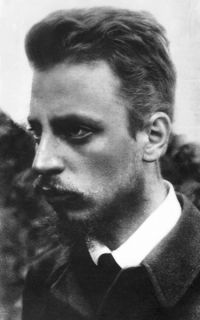
Source: Wikisource

Hans Trausil,  Poems — The Poetry of Rainer Maria Rilke (1918)

“ In The Book of Hours, Rilke withdraws from the world not from weariness but weighed down under the manifold conflicting visions. As the prophet who would bring to the world a great possession must go forth into the desert to be alone until the kingdom comes to him from within, so the poet must leave the world in order to gain the deeper understanding, to be face to face with God. The mood of Das Stunden-Buch is this mood of being face to face with God; it elevates these poems to prayer, profound prayer of doubt and despair, exalted prayer of reconciliation and triumph. ”
Source: Wikisource

Hans Trausil,  Poems — The Poetry of Rainer Maria Rilke (1918)

“ Rodin became to Rilke the manifestation of the divine principle of the creative impulse in man. Thus Rilke's monograph on Auguste Rodin will remain the poet's testament on Life and Art.
Rilke has lived deeply; he has absorbed into his artistic and spiritual consciousness many of the supreme values of our time. His art holds the mystic depth of the Slav, the musical strength of the German, and the visual clarity of the Latin. As artist, he has felt life to be sacred, and as a priest, he has brought to its altar many offerings.
”
Source: Wikisource

Get perspective with Kwize: daily news enlightened by great literature