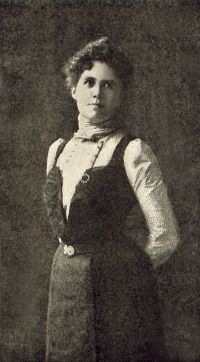
Helen Churchill Candee

Biographical details

Portrait of Helen Churchill Candee Helen Churchill Candee The Tapestry Book

But before the silks and wools go to the weaving they are treated to a beauty-bath in the dye-room. Hanks of wool and skeins of silk are but neutral matters, coming to the factory devoid of individuality, mere pale, soft bulk.
A room apart, somewhere away from the studio of design and the rooms where the looms stand stolid, is a laboratory of dyes, a place which looks like a farmhouse kitchen on preserving day. You sniff the air as you go in, the air that is swaying long bunches of pendulous colour, and it smells warm and moist and full of the suggestions of magic.
Source: Gutenberg

Portrait of Helen Churchill Candee Helen Churchill Candee The Tapestry Book

Master-weavers were many in the best years of tapestry weaving; indeed, a man must have attained the dignity and ability of that position before being able to produce those marvels of skill which were woven between 1475 and 1575 in Flanders, France and Italy. Their aids, the apprentices, pique the fancy, as Puck harnessed to labour might do. They were probably as mischievous, as shirking, as exasperating as boys have ever known how to be, but those little unwilling slaves of art in the Middle Ages make an appeal to the imagination more vivid than that of the shabby lunch-box boy of to-day.
Source: Gutenberg

Portrait of Helen Churchill Candee Helen Churchill Candee The Tapestry Book

Paul Baudry appeared at about this time striking a clear pure note of delicate decoration. The few panels that he drew for the Gobelins charm the eye with happy reminiscences of Lebrun, of Claude Audran, a potpourri of petals fallen from the roses of yesterday mixed with the spices of to-day.
But if the work of this talented artist illustrates anything, it is the change in the uses of tapestries. The modern ones are made to be framed, as flat as the wall against which they are secured. In a word, they take the place of frescoes. The pleasure of touching a mobile fabric is lost.
Source: Gutenberg

Get perspective with Kwize: daily news enlightened by great literature